Borderless Africa: A Freedom Deserved By All Africans.
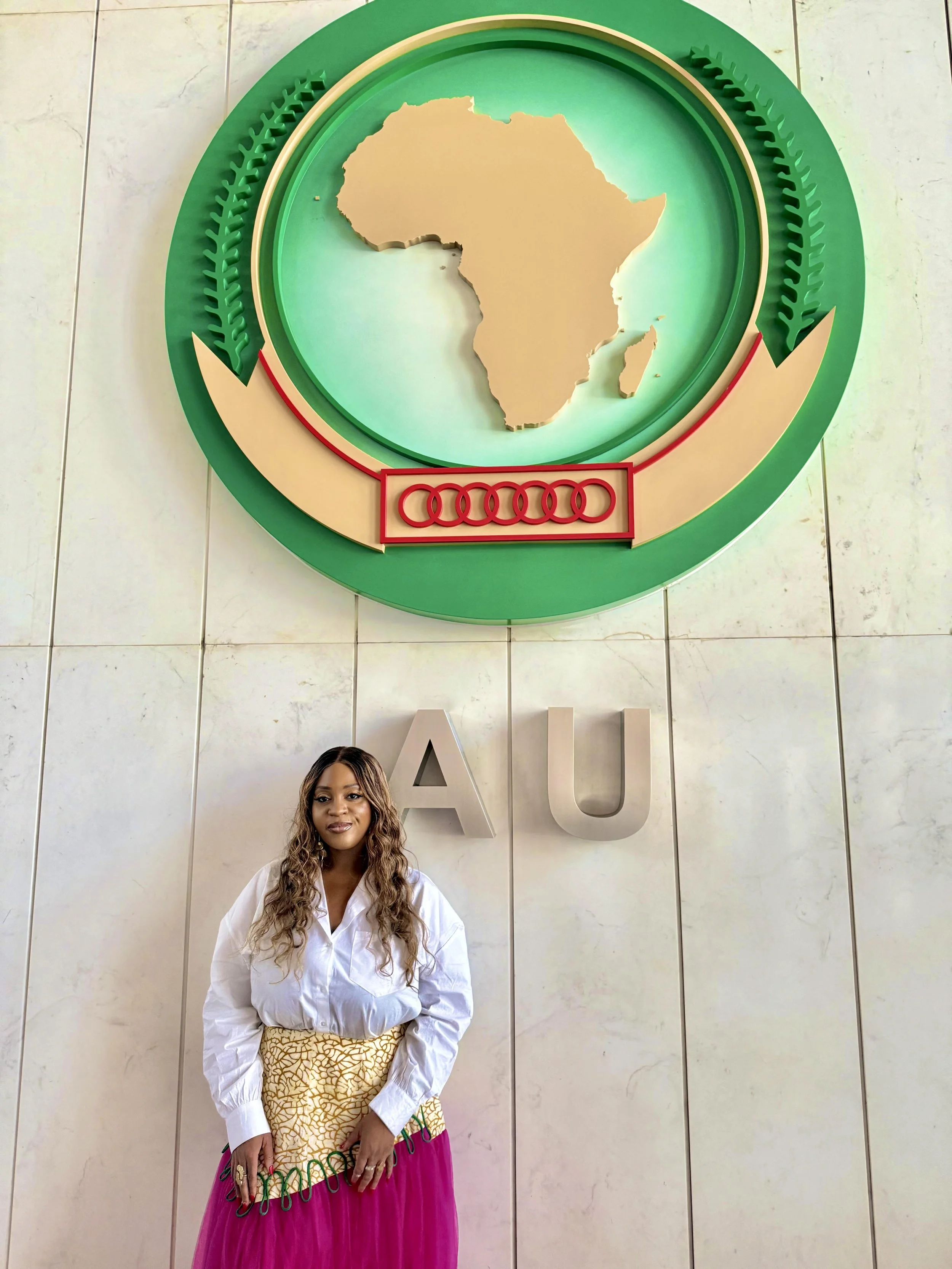
Joyce Oladeinde (co-founder of Crescendo Digital) at the Africa Union HQ
Travel deeply enriches the human experience, and should be made easier for all. This was my (Susannah Oluwaseun, of Postcards From The Diaspora) takeaway from my interview with Joyce Oladeinde. Joyce is a co-founder of Crescendo Digital, an agency dedicated to African tourism and hospitality PR and consulting services. Joyce’s passion for the African continent and travel is evident. Her voice exudes warmth when she speaks about her travel experiences, her co-founder at Crescendo Digital (Ziada Abeid), and the diversity found on the continent.
Whilst Joyce’s passion for travel existed from an early age, the flames of her passion were further fanned when she travelled in Africa after much-needed post-pandemic respite. It was evident from Joyce’s visit to Tanzania, Nigeria, and Kenya that the travel and hospitality industry had been deeply affected by the pandemic. It was also during this period that a brave DM led her to her co-founder in Tanzania. Their natural bond soon led them to working together for the first time in Arousha.

Official Logo for Crescendo Digital
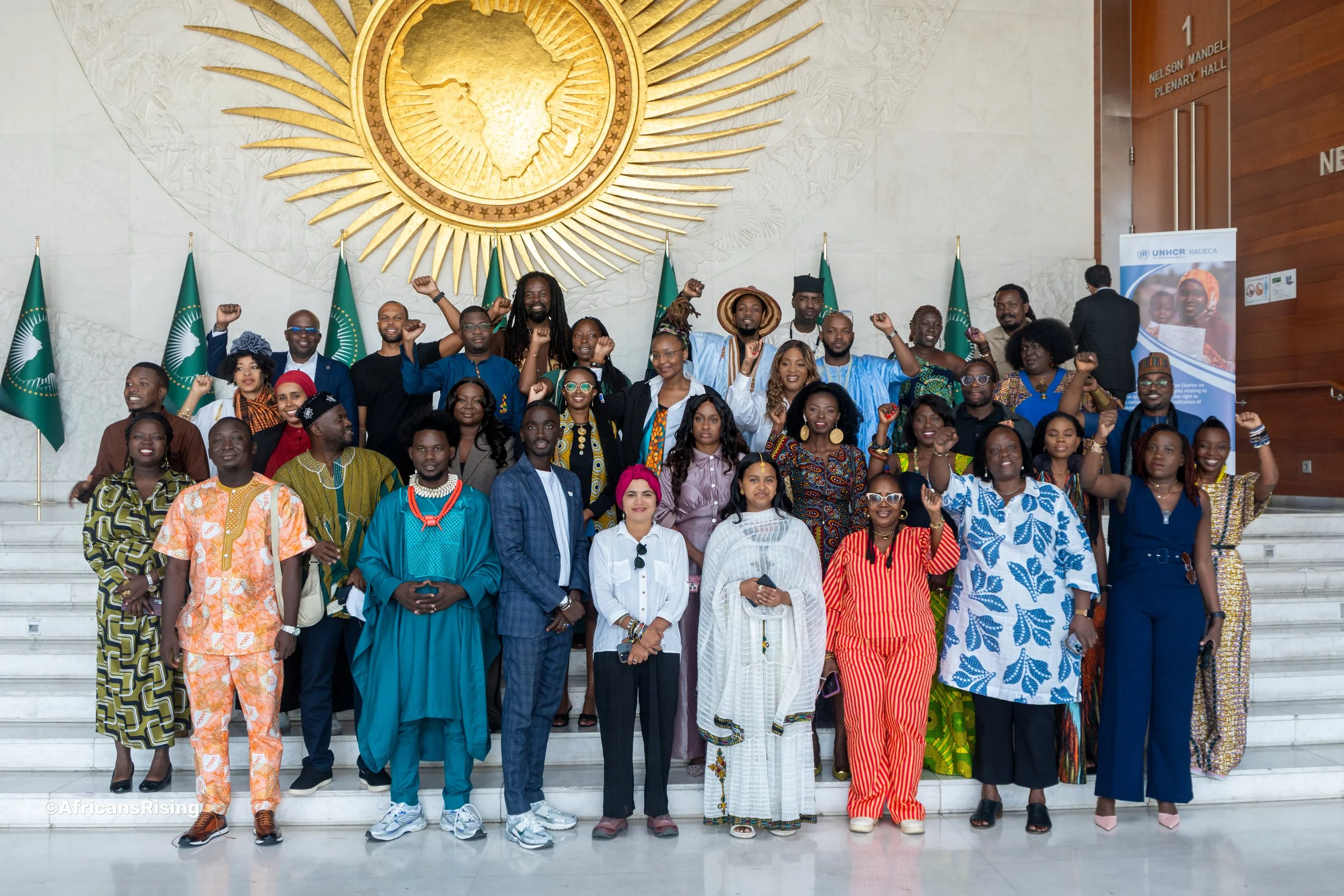
In November 2025, Joyce attended the High-Level Influencers Forum on Borderless Africa in Addis Ababa, Ethiopia. The event marked 141 years since the Berlin Conference, which divided the African continent. The African Union, on the other hand, was founded in 2002 with the ambition of promoting unity and solidarity among all 55 Member States. It was only fitting that the forum took place at the African Union Headquarters. For Joyce, being at the African Union Headquarters was a “moment of alignment where the work [Crescendo Digital has] been doing for years physically met with the institution shaping Africa’s future.”
The forum centred on the vision of a borderless Africa: free movement of people across the continent. Influencers, policymakers, and storytellers from across the continent attended, providing fresh perspectives and insights on African travel and integration. Attendees included four-time Grammy nominee Rocky Dawuni, a musician and humanitarian. Joyce remarked that the forum represented what a Borderless Africa could be: a space that encourages cross-border collaboration and entrepreneurship, and fosters a greater understanding of cultural identity across the continent.
Speaking to Joyce made the benefits of a borderless Africa clear. African tourism accounts for 8% of global tourism. Most of this travel is concentrated in Morocco, Egypt, South Africa, and Kenya. These countries are case studies of how tourism can boost the local economy. For example, Morocco, the most-visited country in Africa, welcomed 17.4 million international visitors in 2024, and tourism accounts for almost 10% of its GDP[1]. Similarly, Ghana’s Year of Return in 2019 boosted tourism, with a 45% year-on-year increase in visitors[2]. However, at times, countries are often easier for those outside the continent to access than those within.

High-Level Panel I - Political Leadership for Borderless Africa
Making international travel and trade possible is important: almost $80 billion is lost each year due to outdated border systems across the continent. Restrictive and fragmented visa policies often hamper travel and trade within the continent. Africans are facing some of the toughest mobility restrictions within their own continent, and that troubles Joyce. The tourism industry impacts other sectors, such as real estate, agriculture, and transportation, underscoring its importance to local economies. The diaspora also benefits from a borderless Africa, making it easier to travel and holiday on the continent. Joyce also highlighted that a borderless Africa means fewer people leaving the continent, with more people able to study and develop their careers on the continent rather than outside it. Trade and innovation are also bound to flourish with fewer restrictions, making cross-border collaborations easier.
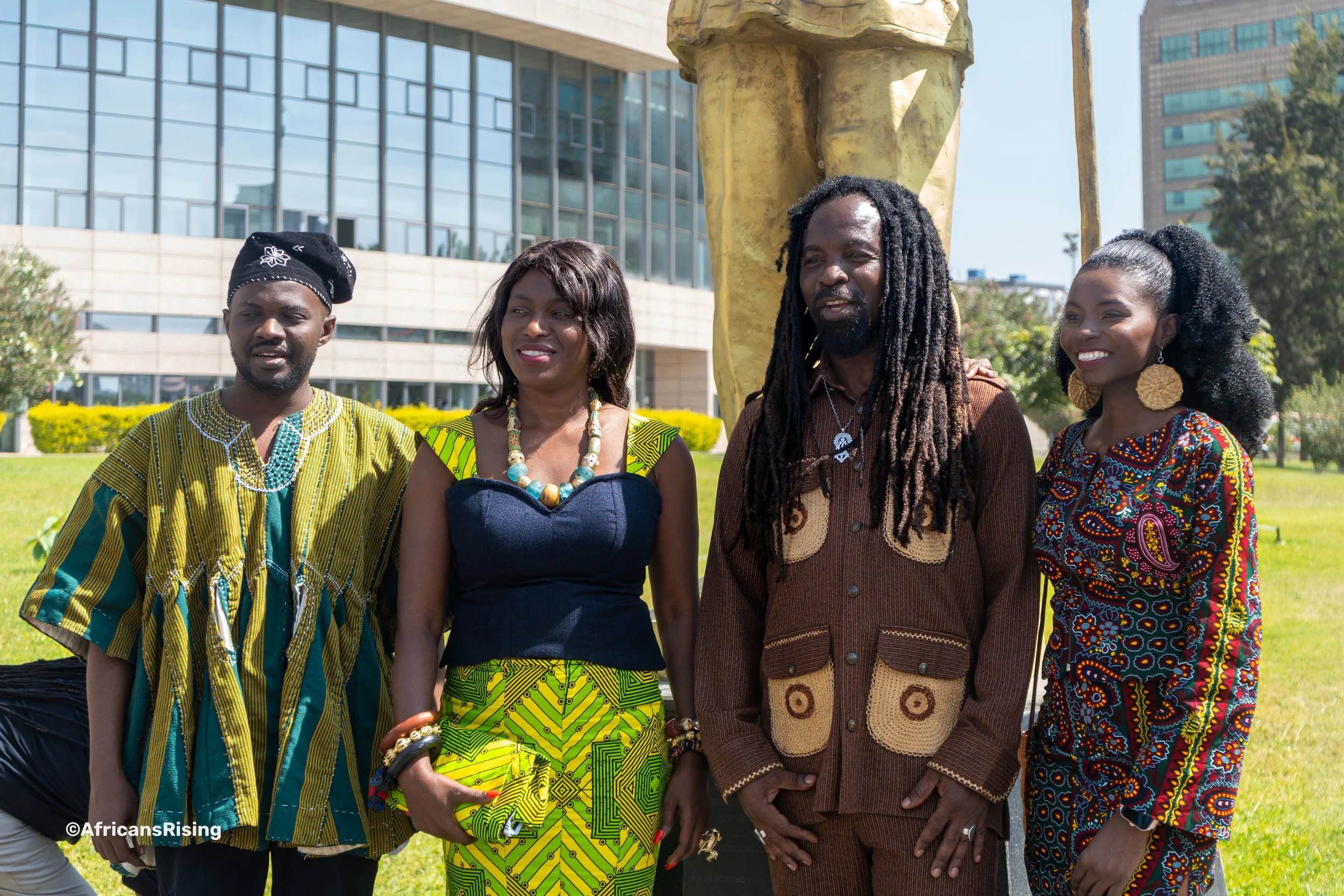
Image includes four-time Grammy nominee Rocky Dawuni - a musician and humanitarian
Joyce’s personal experience in Ethiopia also reminded me of what travel is fundamentally about: human experience. Ethiopia’s uniqueness came to life when Joyce visited for herself. She noticed the history, tasted culture through food and experienced traditional music and dancing. While she was already knowledgeable about Ethiopia’s historical significance (both ancient and modern), it was being on the ground that brought her knowledge to life. All Africans should have the opportunity to experience this on their own continent.
Joyce notes that there is no one-size-fits-all approach, emphasising that “every country on the continent has something unique to offer.” An integrated approach is required, from booking the trip to the local tour operators, hotels, and taxi drivers. The African continent is diverse and historically rich; some governments may need to refresh their strategies to ensure that they are tailored and effective.
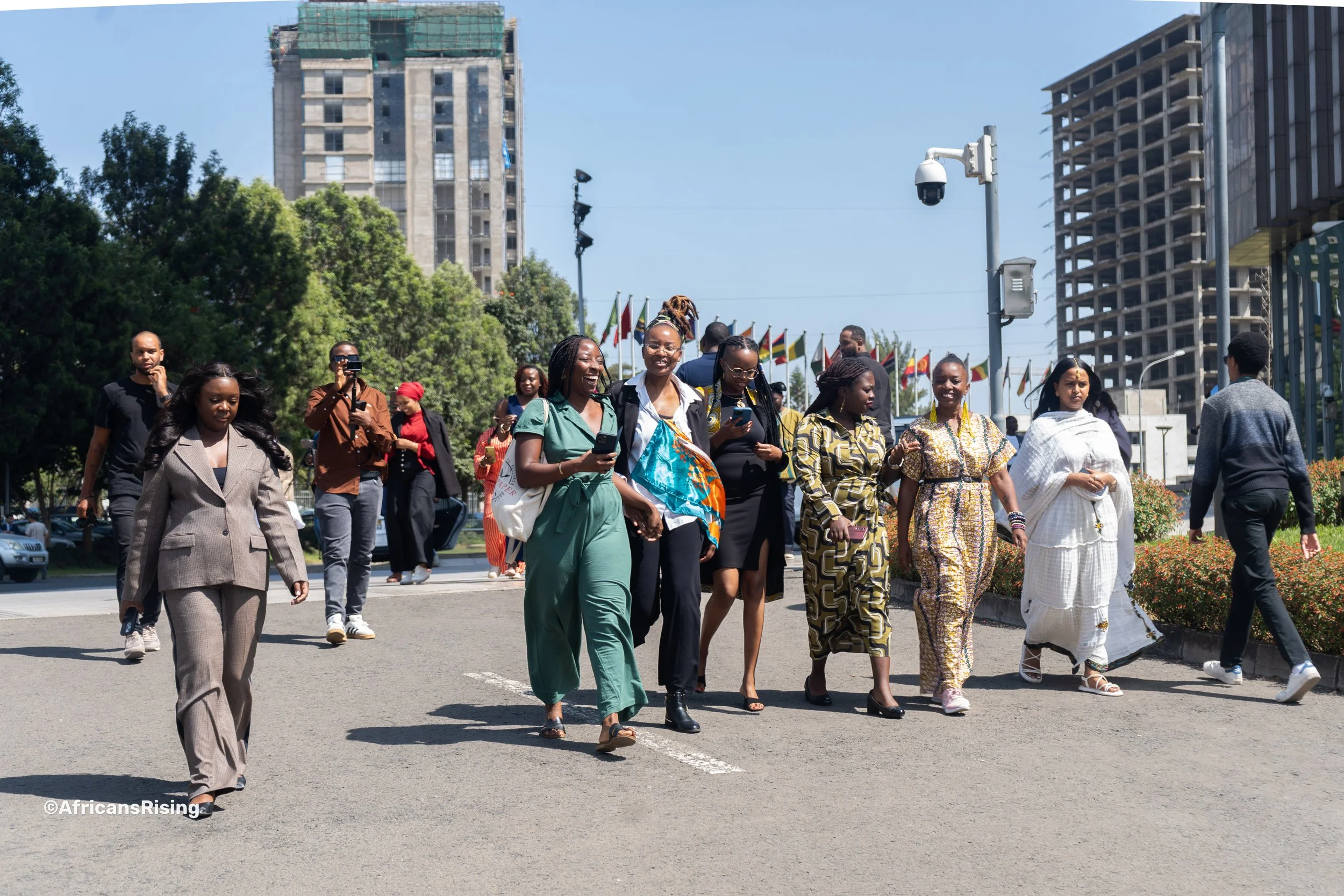
High-Level Influencers Forum on Borderless Africa 2025 at AU HQ
What then stands in the way of a Borderless Africa? The African Union adopted the Free Movement Protocol in 2018, but to date, only four countries have ratified it. Joyce chalks this down to insufficient integration. While Africans are aware of the continent's culture and history, there is little engagement among themselves, which in turn dampens travel and the drive for a borderless Africa. However, social media is playing a vital role in shedding light on parts of Africa that may have been overlooked and under frequented. Joyce explained that influencers can help amplify local voices and challenge false narratives and perceptions of African countries. The High-Level Influencers Forum on a Borderless Africa concluded with the signing of the Influencers Declaration on Borderless Africa, signalling attendees’ commitment to the movement.
Of course, challenges remain; intercontinental travel between African countries remains expensive and time-consuming. There are also security concerns, bureaucracy, and, in some cases, corruption, which hamper a borderless Africa. However, these challenges do not prevent a Borderless Africa from becoming a reality. Joyce believes that a Borderless Africa must be implemented systematically in a way that works for the African continent. Issues can be tackled one step at a time, and the reward far outweighs the challenges of implementation. Joyce summarised: “A Borderless Africa is fundamentally all about freedom. Freedom to move, to trade, to connect and build prosperity together.” Africans and the diaspora are deserving of this freedom. The amplification and humanisation of a borderless Africa may one day make this deserved freedom a reality.
This interview was conducted and drafted by Journalist Susannah Oluwaseun.
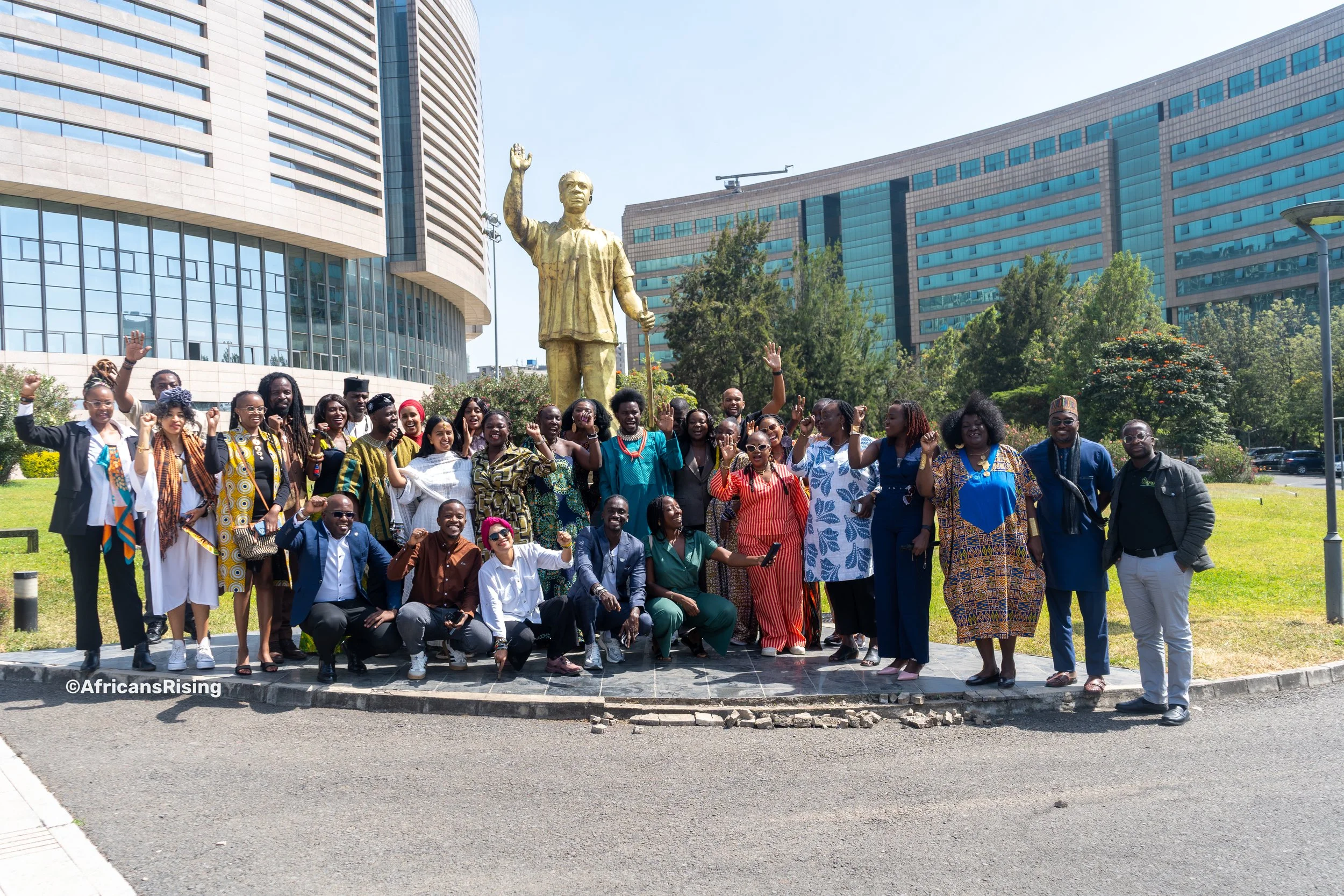
High-Level Influencers Forum on Borderless Africa 2025 at AU HQ
Sources
[1]https://www.untourism.int/investment/tourism-doing-business-investing-in-morocco#:~:text=Tourism%20is%20a%20crucial%20component,Value%20Proposition
[2] https://diasporafordevelopment.eu/cpt_practices/year-of-return-and-beyond-the-return/