Contemporary Congolese Fashion Culture Meets The American Dream: Akomi Affirms That Home Is Where The Heart Is
This article was drafted by Norman Busigu.
Historically referred to as the Garden of Eden, Congo (which sits within the Central African region) has been and continues to be revered for its seemingly infinite reserves of rich natural resources, biodiversity and serenely sculpted landscapes. But this wealth isn’t just found within its minerals; this celestial essence too exists within the very spirit of the Congolese people, who have harnessed this energy into renown cultural staples of artistic expression. For example, smooth and serenading Lingala songs sang across stadiums by the likes of Awilo Longomba and Fally Ipupa, to the distinctively vibrant La Sape aesthetics.
Someone etching their name and story into this proud lineage of Congolese legends in real time, is Gaby - the founder of the clothing brand Akomi. This being a black-owned self-funded brand, Gaby and his wife have boldly bet on themselves and doubled down on their dreams while putting their money where their mouths are.
Pictured: Akomi founder Gabi
Partially raised in the Ivory Coast, Gaby and his family departed for Salt Lake City (Utah, America) while he was the tender age of 10. In his words, this was the pivotal point in his life from which he began “moving between worlds”, and developed a nuanced appreciation of the cultural overlaps which exist between African and Black-American cultures.
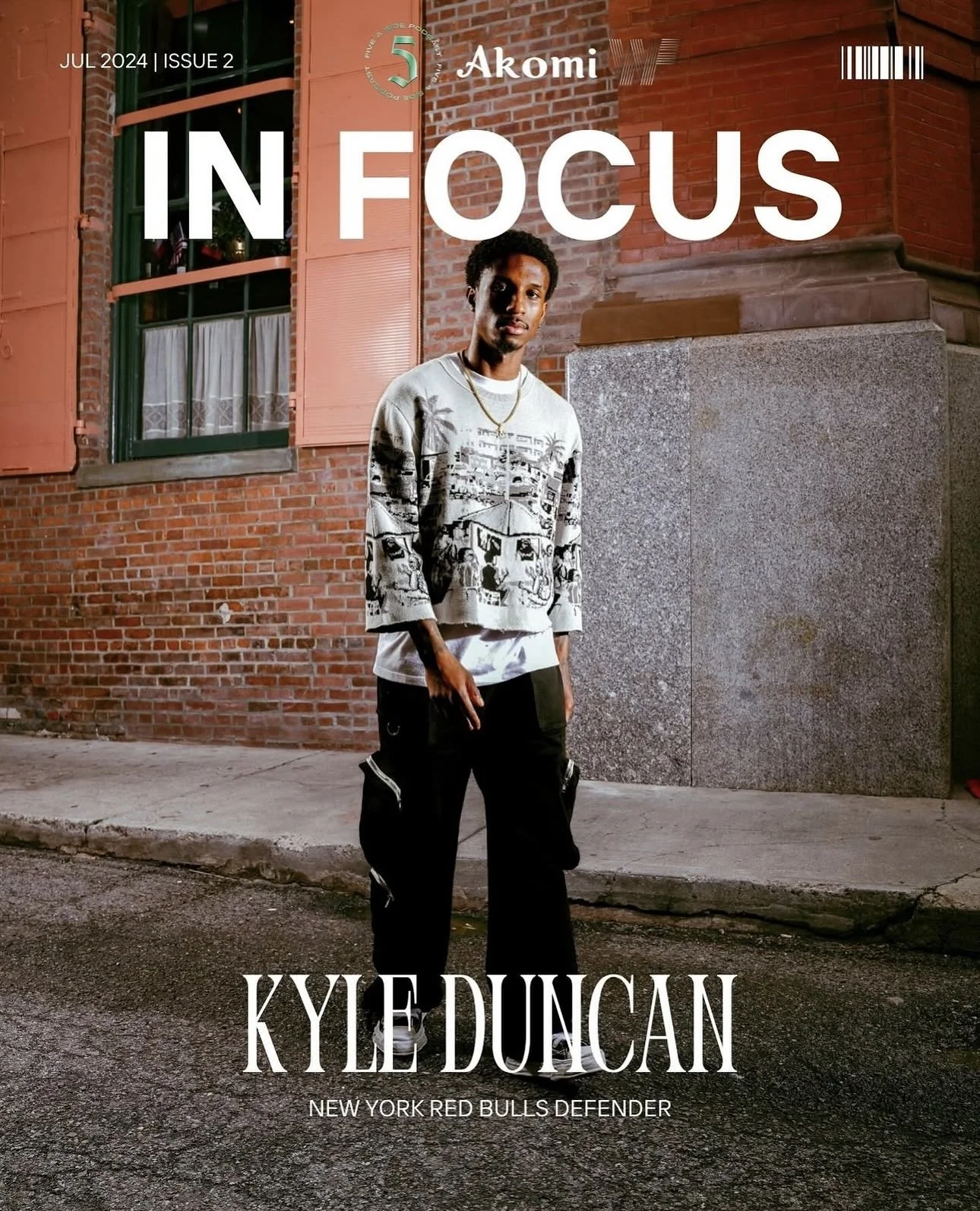
Pictured: Kyle Duncan x Akomi
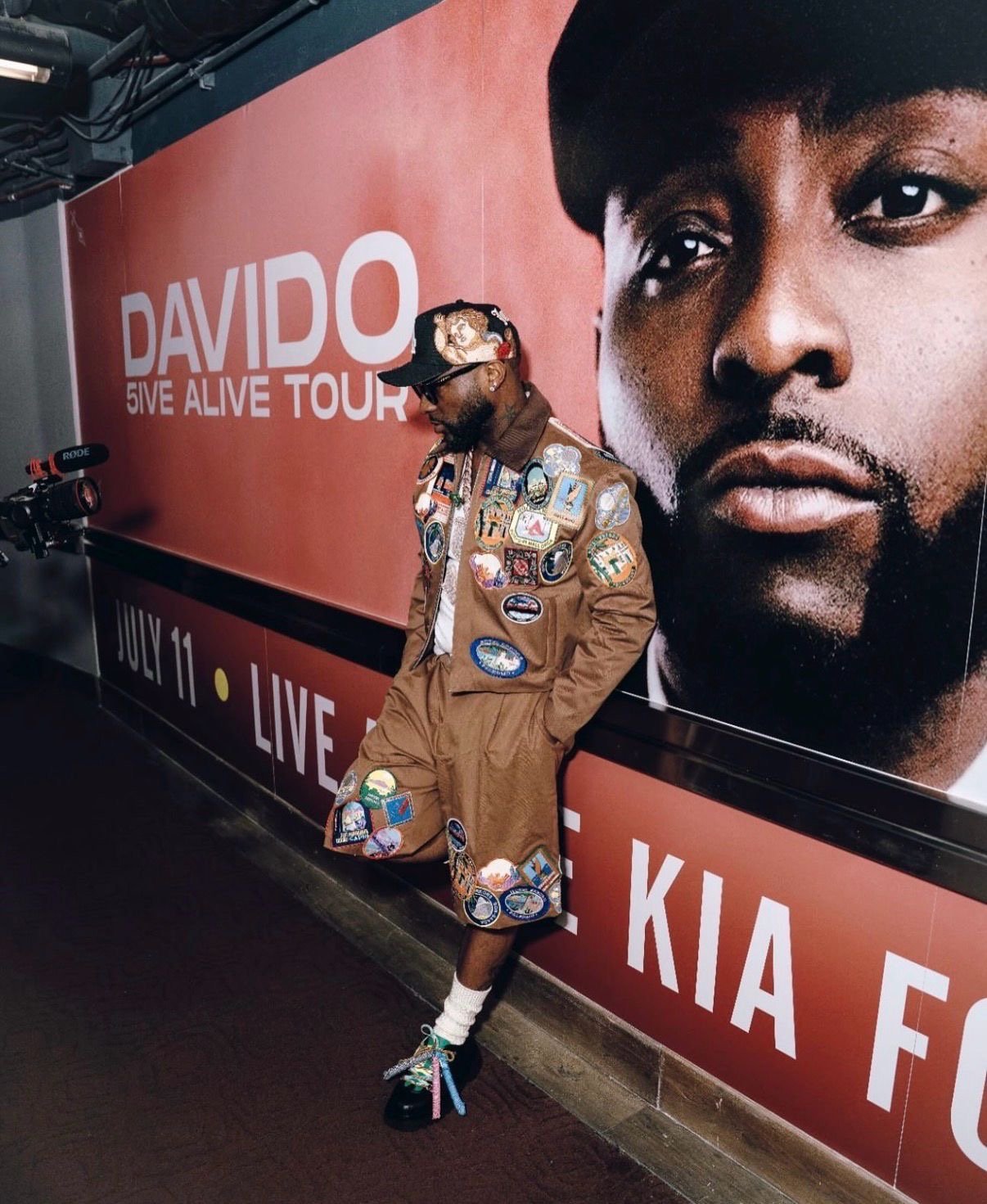
Throughout its 13-year journey, Akomi has impressively garnered powerful co-signs from the likes entertainment and sporting superstars such as Chris Brown, Cade Cunningham and Davido, as well as being showcased on global platforms such as ComplexCon. The core philosophy underpinning this brand is “arriving is the starting point”, which (in many ways) poetically represents Gaby’s life as an immigrant coming to America with very little and ambitiously hustling for the best life possible - against all odds.
The genesis of Gaby’s journey with fashion can be traced back to him keenly observing his mother – a seamstress - transforming textiles into living stories one a stitch at a time. This sparked a fascination with the power that fashion possesses to communicate stories to strangers. Throughout his career, Gaby has come to cherish the critical importance of keeping it real to authentically tell your story and genuinely grow your community.
Though his physical home is in the States, Gaby is adamant to prove that as a member of the diaspora, his geographical distance from the continent doesn’t mean that he’s disconnected from what’s happening on the ground in Africa. For him, home and heritage exist within the mind and soul, meaning that we as diaspora are never truly removed. Over time, he developed a burning desire to connect the dots between the diaspora and Black-American communities that he has identified. And this mission has manifested itself in the fashionable form of Akomi.
In the lead up to his upcoming drop for his highly anticipated Camo Boots in early June 2026, I recently caught up with Gaby… He is honest and forthcoming in detailing the lessons learned while running a black-owned business and how the fashion industry can evolve to become more inclusive for black creators. He also shares insights into his immigrant story (and Congolese heritage), life in Utah, the journey of Akomi, and much more…
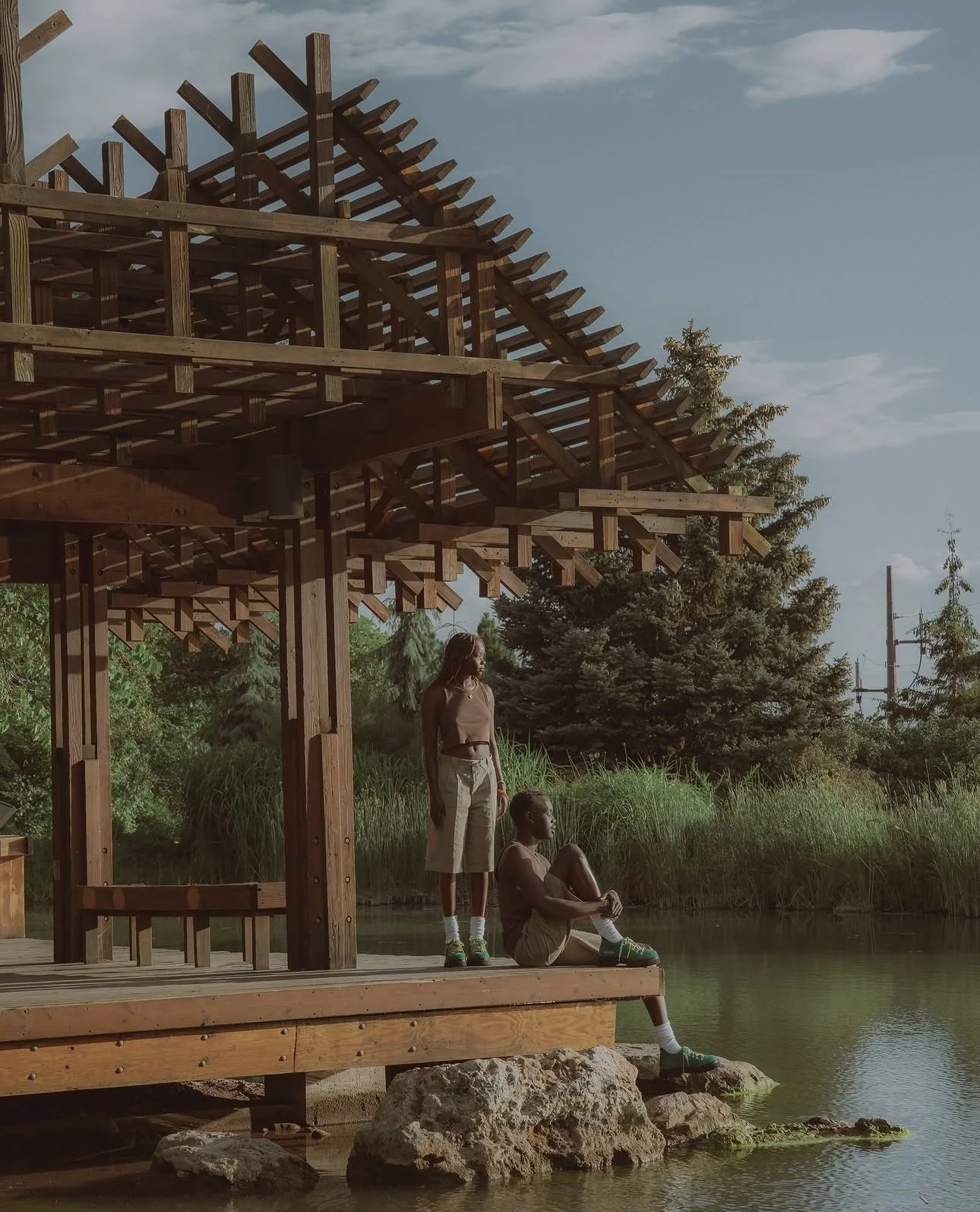
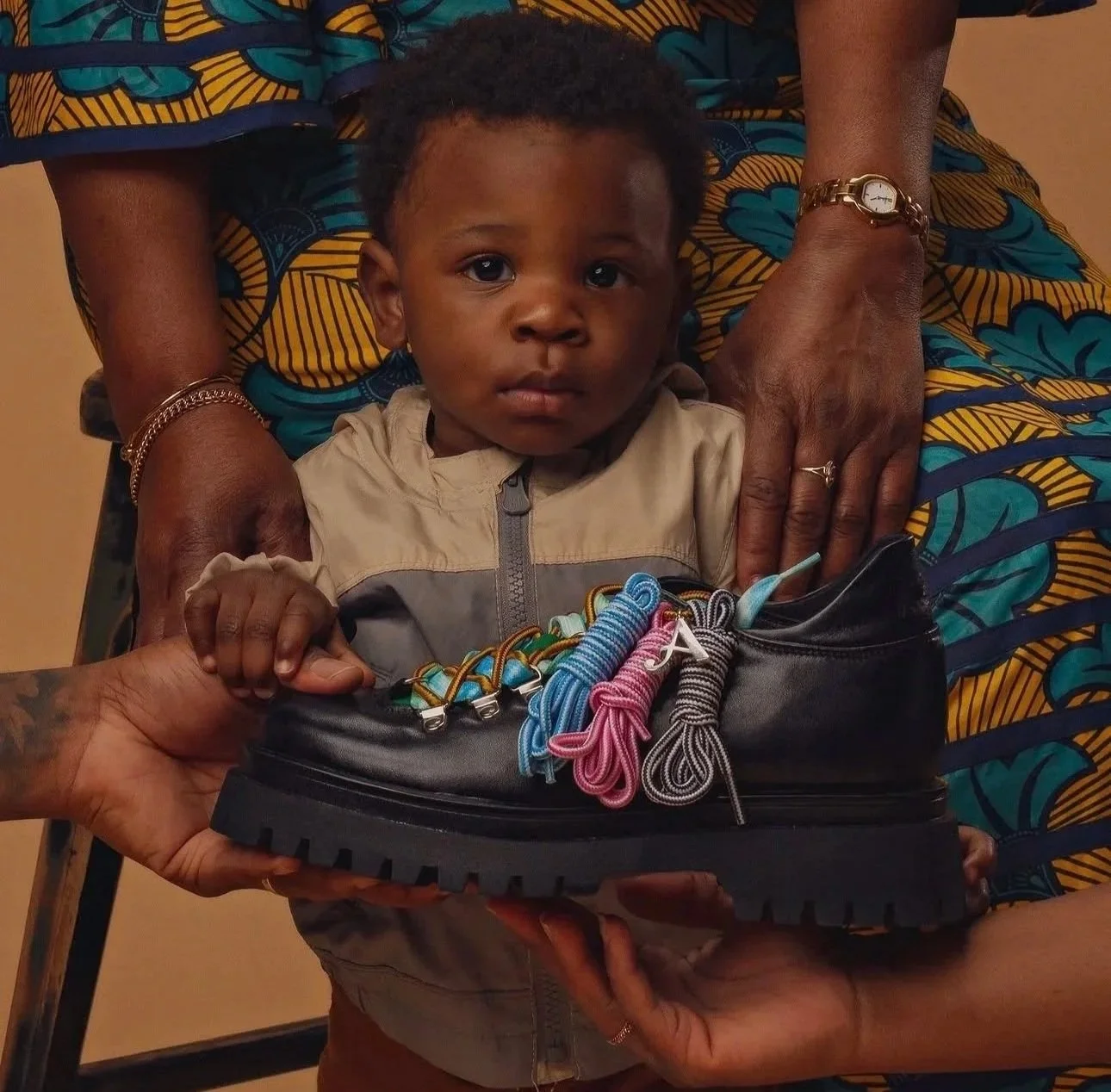
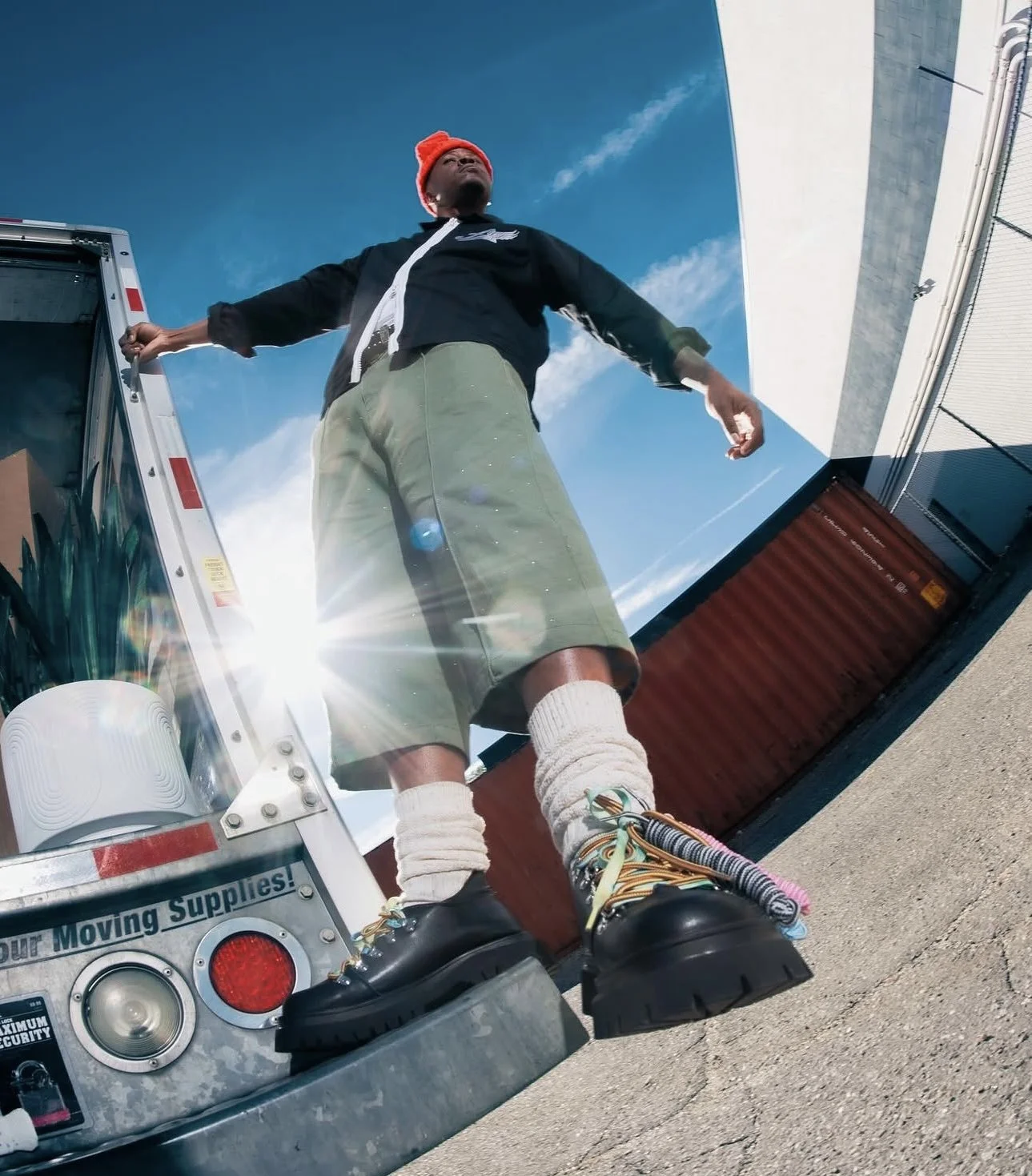
The Eden Boot by Akomi
***
The core philosophy of the Akomi brand is that “arriving is the starting point”. The very brand name “Akomi” means to arrive in Lingala… When did you first conceptualise this poetic ethos and decide that it will be the slogan that represents the brand?
The headspace I was in when trying to create the brand - more than anything I just wanted to make it original. This ethos didn’t just come to me as a sudden flash - it was forged over years, and was directly inspired by my reality of moving between worlds: a kid with Congolese roots living in the Ivory Coast, who then moved to America aged 10. For my entire life, I’ve been in transition. I played it off of this - and while the ethos sounds poetic, it’s my whole life… that’s where it comes from, because that’s how I live.
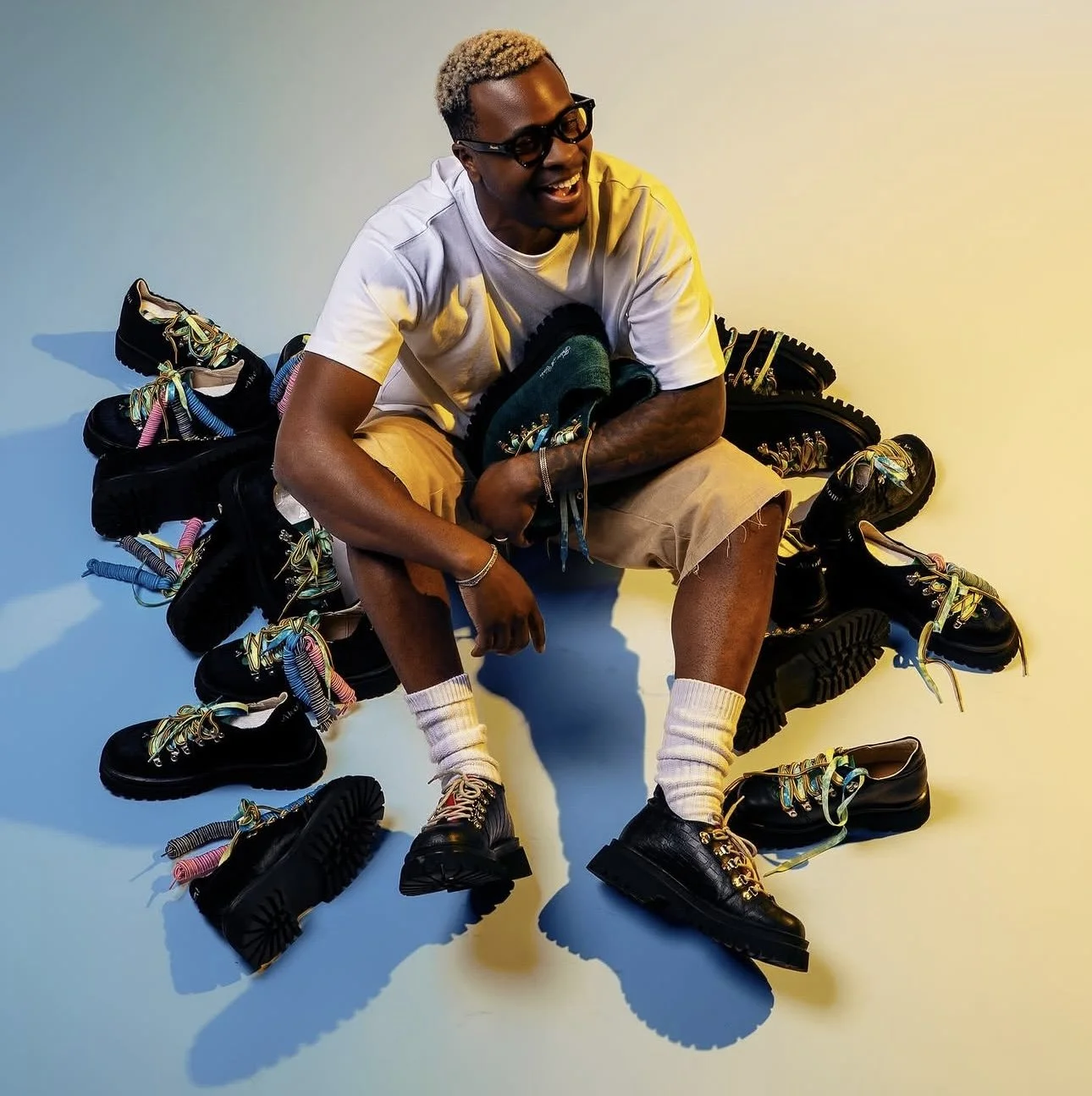
Pictured: Gaby - Founder of Akomi
What would you say in Akomi’s decade-plus journey has been the most important place your brand has “arrived” at so far?
I have to say, it was first coming to the USA. Over here Norman - and I really mean this - whatever you want to make possible - it’s possible! My parents instilled this into me. Where I initially grew up - its hard man… there are limits and glass ceilings which are very visible. Whereas here, ideas can truly be brought to life… back there, I may not have pushed as hard to try and make it - because of the challenges that are so big. Here, you can make what you want out of life. And if you look closely at successful Americans, be they NBA players, Movies stars, whatever it may be, you can see that they all just went for their dreams relentlessly - the American dream is instilled in us - it’s very real!
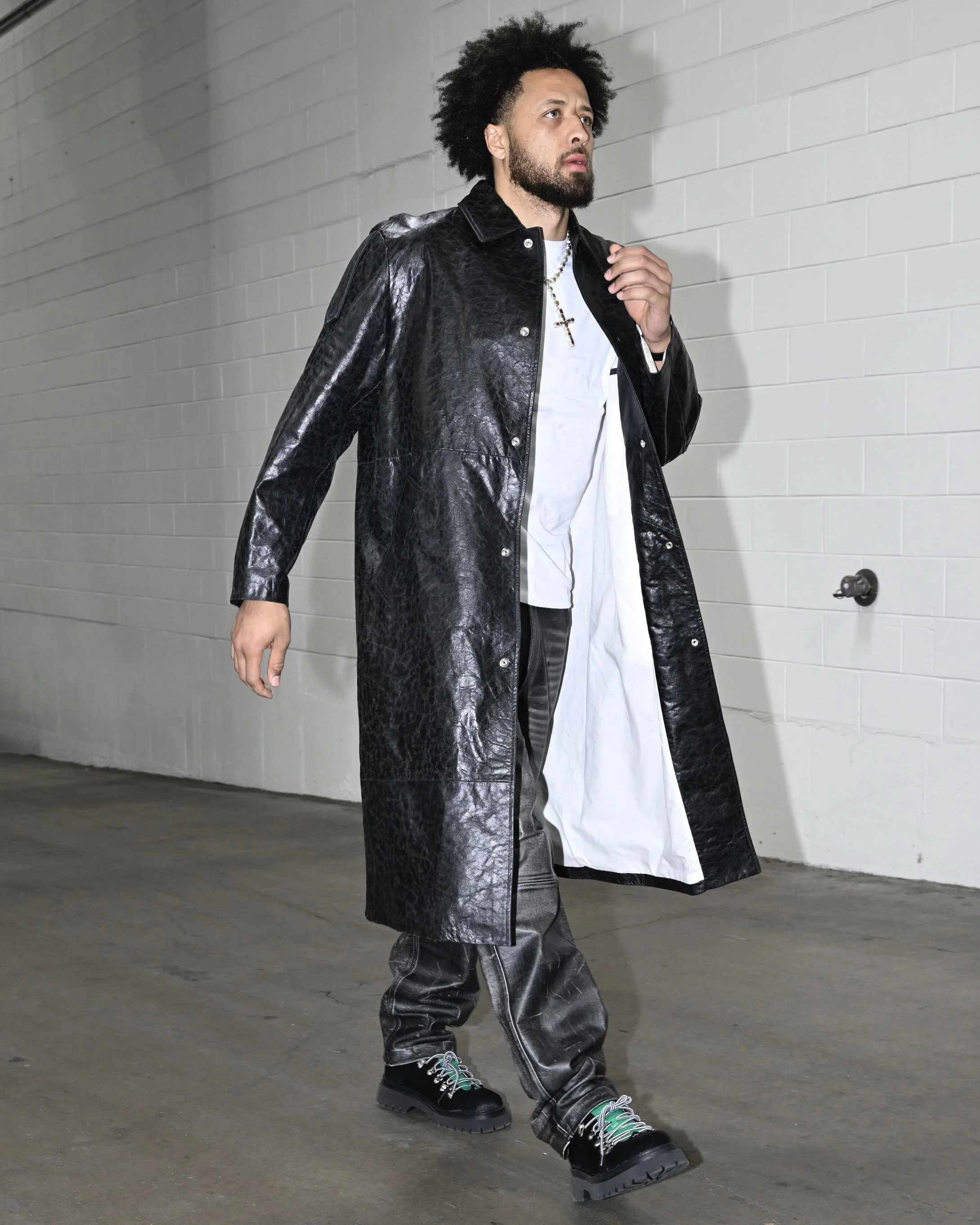
NBA player Cade Cunningham (Detroit Pistons) wearing Akomi Boots
Though you are based in Salt Lake City (Utah), you frequently travel to New York City for industry events, networking, etc. I am curious to gain some insight from your lens into the different (diaspora) energies found within each city, and how both inspire/influence your creative choices…
People are surprised when I say I come from Salt Lake City - like - “what the helly - where is that even!?” is what they usually say hahah! But with this, there comes an understated power. The African diaspora here in Salt Lake City is tight-knit and resilient - we always move forward… That energy forces me inward to have this hunger… It’s because I’m from here, I tend to be underestimated. Regardless, that motivates me to go so hard to make sure that you that will see me shine bright. So Norman, I believe that being from Salt Lake City is special. It gives me an advantage; it gives me a boost in energy that I can’t find anywhere else I go. I am challenged to go as hard as I can, but when I compare it to New York City – which is non-stop hustle and bustle - Salt Lake City is a place where I can slow down and build proper foundations… it’s a blessing because it means that no matter where I go, I can’t be uprooted.
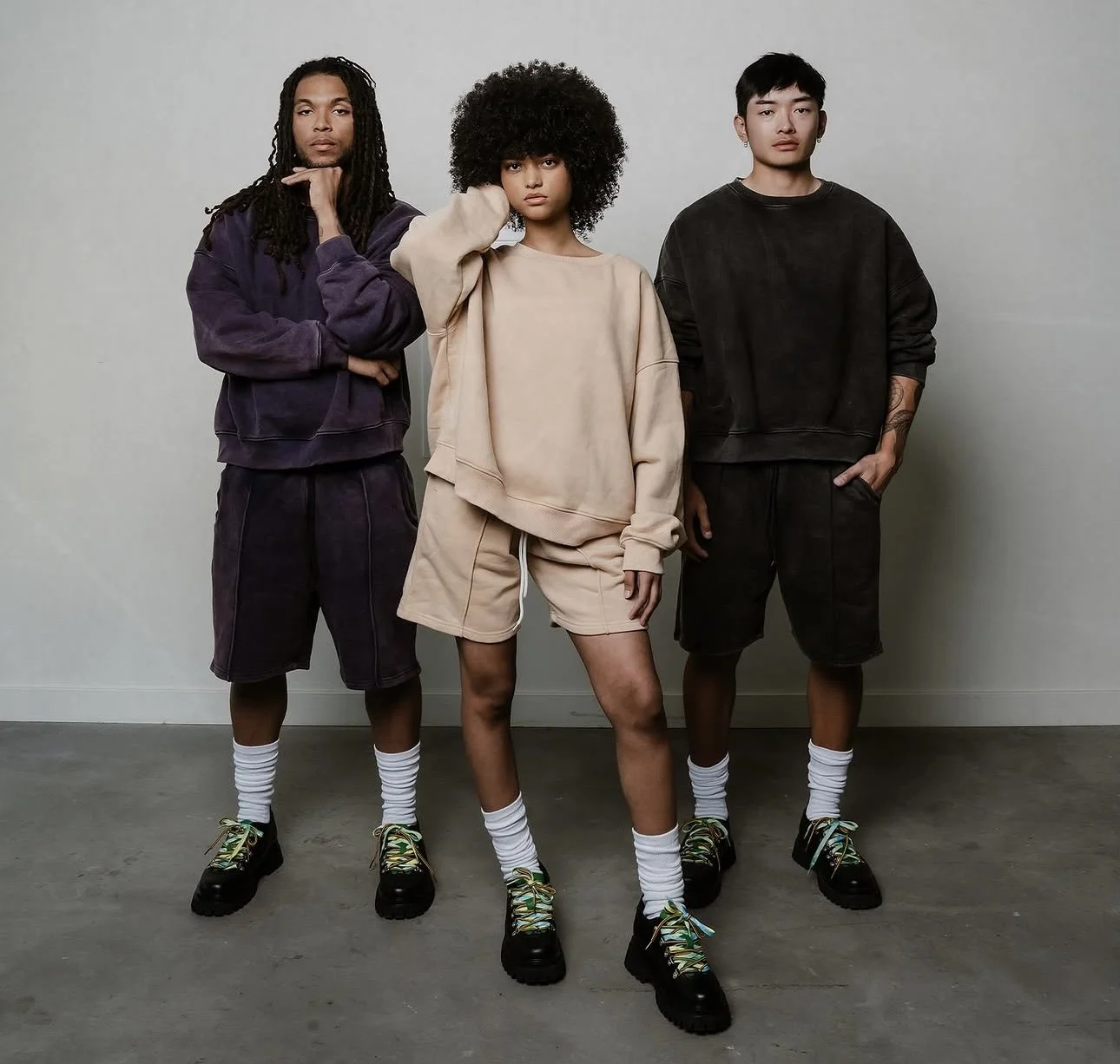
What I find so incredible about your brand is the cultural authenticity it maintains, despite you having not returned to Africa since leaving at age 10. I’m keen to understand how you - as a member of the diaspora - are able to remain so connected to fashion trends and creative communities in Africa. How do you then translate these feelings into your designs?
Although I haven’t been back to Africa since came here (America), the distance doesn’t mean I’m disconnected… over life, I’ve come to learn that heritage isn’t geographic – its embedded within so many things; if we take language and expressions as an example… expressions our people make like “ah-ah” - that’s home for me. And our food, and our music. These things aren’t restricted to a specific location. So although physically I’m far away, home and heritage are in the mind, and that’s what keeps connected. It’s not about the distance; heritage is in me, and not something I’m making up…
A-list names across sport and entertainment including Grammy winning Artist Chris Brown to NBA Detroit Pistons star Cade Cunningham have been seen proudly rocking your brand! What do such co-signs mean to you when they materialise, and why are they important in boosting both the credibility and visibility of your brand?
So… visibility is important for getting eyes on the product – and having those kind of names rocking the gear means that more people see it – which is a good thing. From a credibility standpoint, this is really important because people like Chris Brown and Cade Cunningham are cultural tastemakers. They don’t wear just anything: they wear the best of the best. By them wearing my brand, this helps to bridge the gap… when people see someone outside the African circles (for example a Chris Brown) is wearing it, this helps to connect us, as they are engaging with and endorsing African culture. Them doing this also makes a powerful statement that you don’t have to be African to wear this brand.
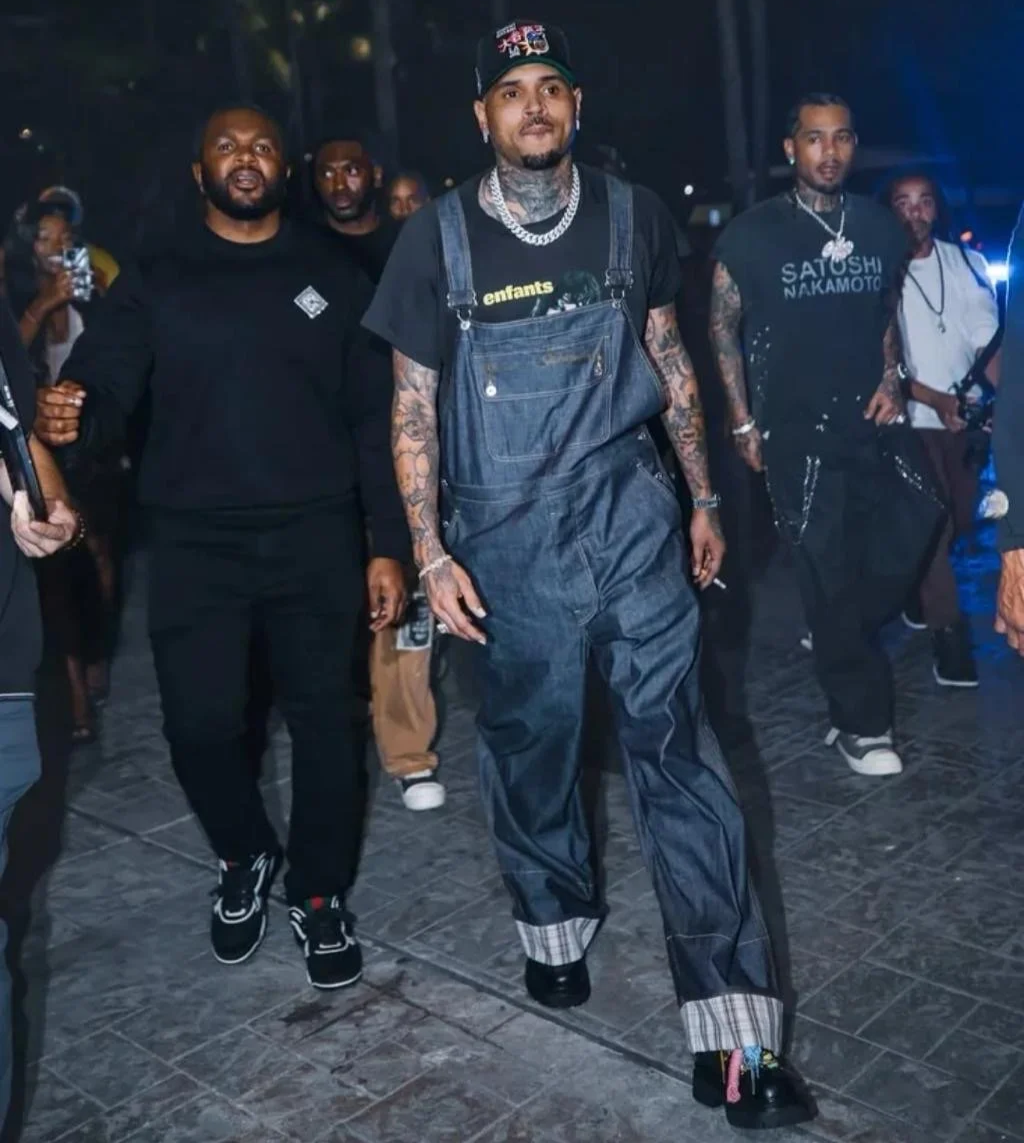
Grammy Winning Artist Chris Brown wearing Akomi
Do you have a dream co-sign that you are working towards achieving?
To be real, I don’t think in that way; my goal is to connect with the people… At the end of the day, it’s the always about the people… I want to authentically grow my community. Yeah, I’d say that’s my dream collaboration.
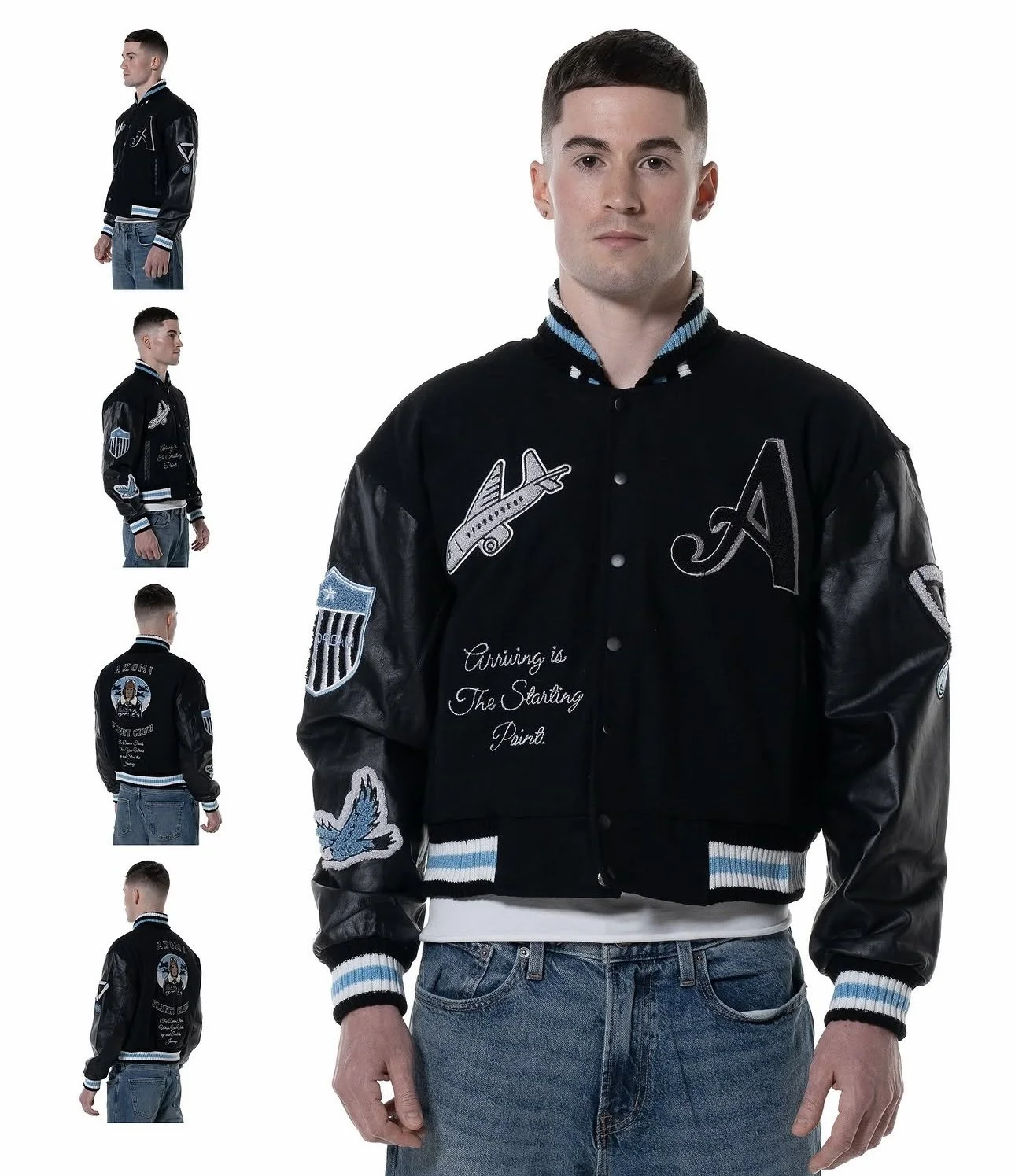
Mpepo Letterman Jacket by Akomi
What are the biggest challenges you’ve experienced as black owned fashion brand (for example, obtaining funding or access to cost-effective product manufacturing), and how have you overcome them?
I’d say… we have had to be really aggressive on the bootstrapping side of things (raising funds and capital). We started from the ground up – from dollar one… There was no external investment in the brand. We used our own money. Although it is challenging to maintain consistent growth over a long time when taking this path, the big positive of this is that we are able to control the narrative and moves that we make. On the manufacturing and production side of things – one of the biggest challenges is being taken seriously as an independent brand, and to get the factories/producers to believe in the vision. In the past, there have been situations that - in order to make premium product - we would have needed to order like 2000 pieces to show the manufacturer that we mean business - if you see what I mean. Over time, we have bounced around to find the right partnerships.
Norman, it’s a blessing to say that Akomi is 100% self-funded: I knew I had to put money up front to convince people that I want this business to succeed, and also for others who see us to appreciate our dedication and think to themselves how can they add value to Akomi in ways beyond money. We’ve previously been approached for an equity stake in Akomi, but the real question for us is what can one do for the brand to enable it to become what it needs to be. It’s just me and my wife right now… We know why we are doing this; we know every aspect of the brand inside and out. Our brand is a living breathing thing, and it’s amazing to see how the brand has progressed in a way that mirrors my life story– starting with nothing (having come to America an Immigrant) and building yourself up.
What needs in your view to change within the fashion industry to specifically give emerging black designers/black owned brands a fairer chance of achieving commercial and critical success in an extremely competitive American fashion market?
It’s definitely not creativity – we have plenty of that haha. Its knowledge and experience. In fashion industry – the hard truth is that nobody is handing out intel. You need to get in the trenches and work – really hard. The gatekeeping of information is a societal issue. Nowadays, I see people have the mindset and approach of “I need to connect with x celebrity/influencer, they’ll post about me/my brand, and I’ll blow up overnight”. The knowledge is there, but what I’ve learnt is that to obtain it, you need to be willing to wholeheartedly jump into the journey. That’s what I did – and I’m not saying I’m doing amazing or figured it out, but you need to start somewhere.
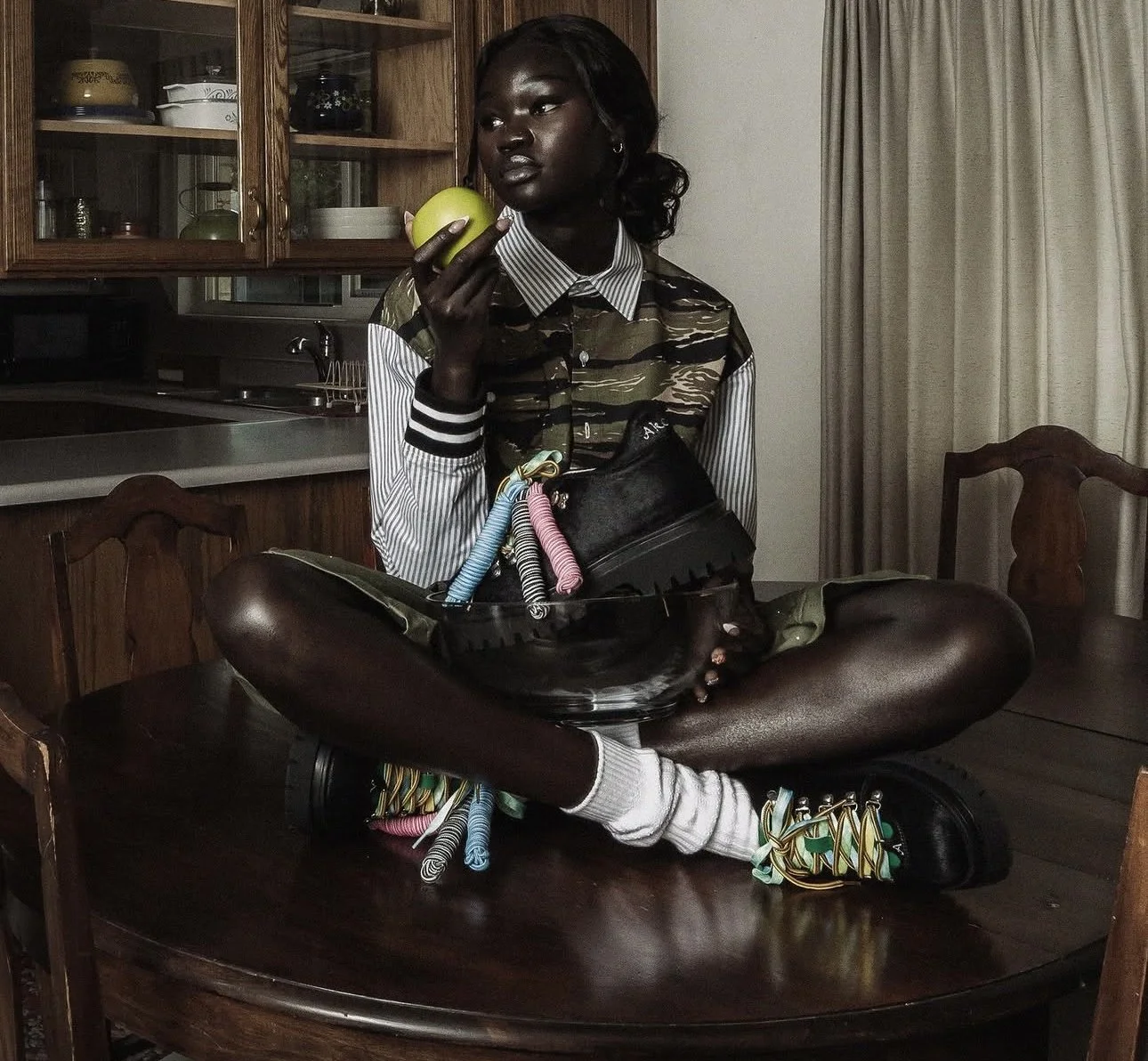
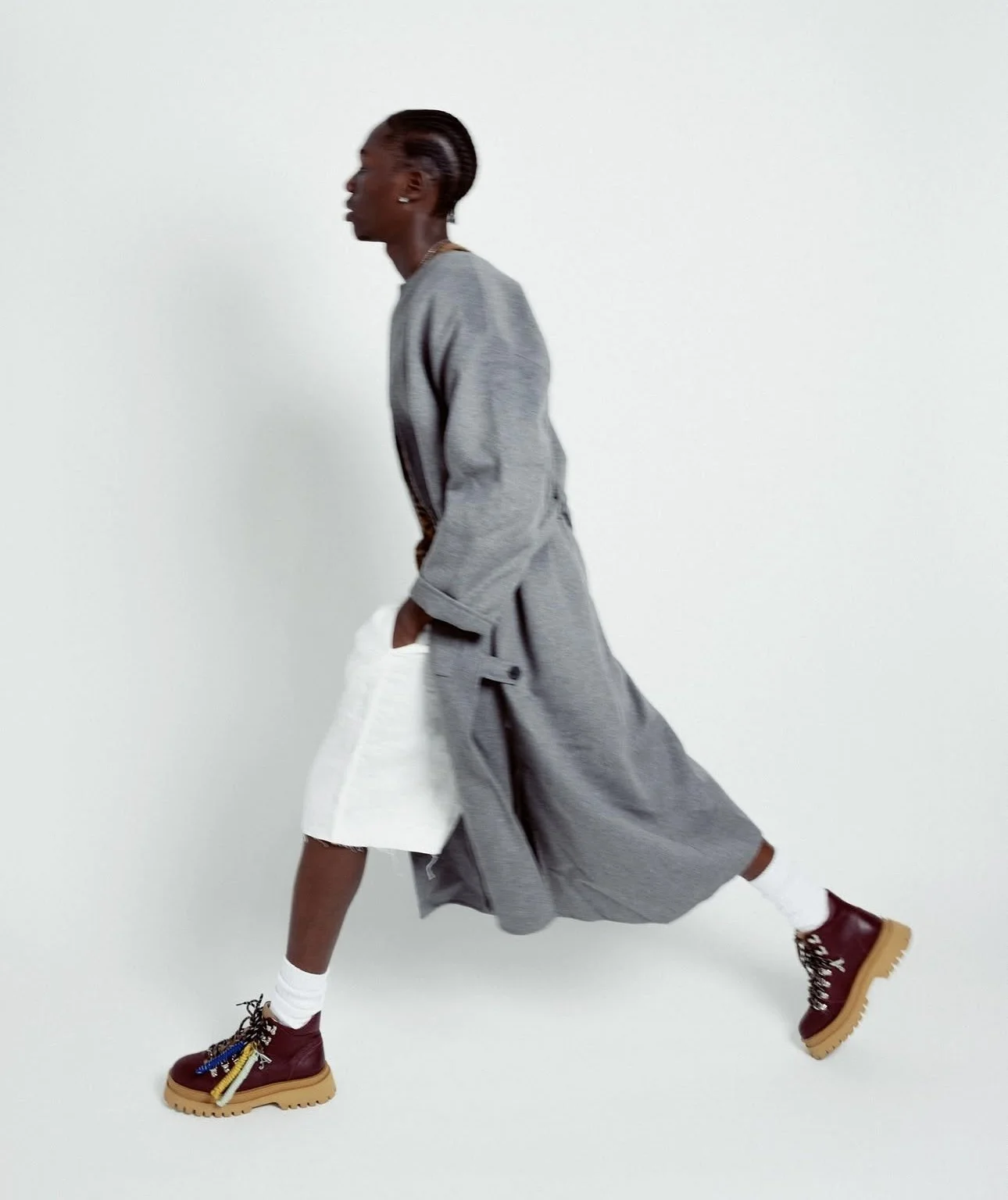
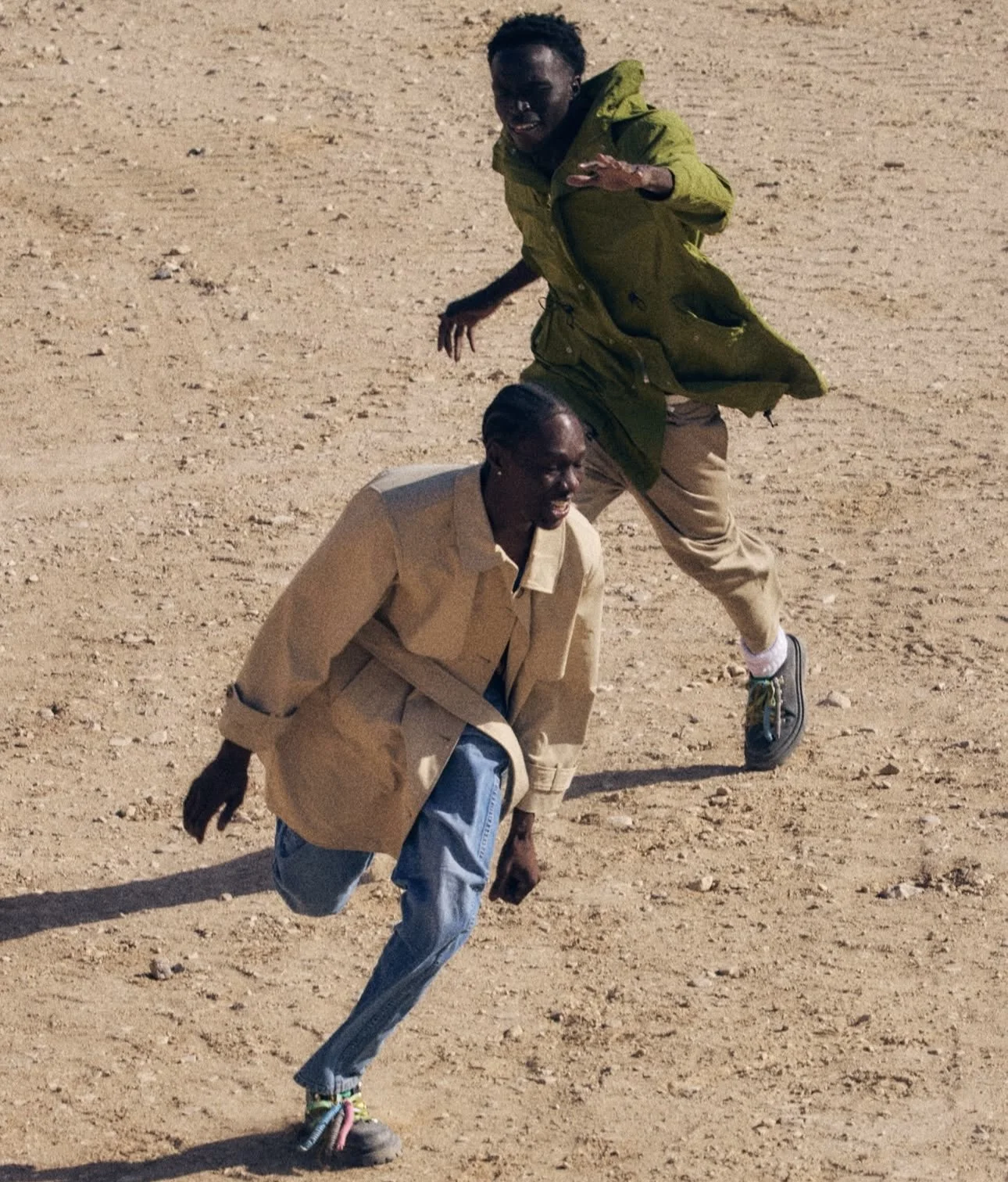
Soda Long Sleeve | Egani Jorts | Lupita Pont hair Boots by Akomi
As a black entrepreneur, we have different challenges that are unique to us – for example, the feeling that I need to have an overly exceptional track record before I can any type of trust or credibility. But in saying that, if you do have good track record, your time will come. Also, I feel that the big brands like Gucci and Prada over the years became really big because black people really really wore those brands – but the issue being that those same brands aren’t necessarily giving back to us and the communities who helped to make them hot…
Can you break down for us the experience of showcasing your brand at ComplexCon in 2025…What did reaching this moment represent in your brand’s journey?
It’s actually funny how the whole thing came to happen… A rep from Complex hit us up in the DM’s and said that they saw our gear and thought it was super dope, and wanted to showcase Akomi at the upcoming ComplexCon in 2025. At first I thought this is too good to be true, and I didn’t believe that this was real hahaha! Then I got a message from the official Complex Shop Instagram account. When that I happened, I was like ohh okay, this is for real, for real! We agreed to do it, and Norman, the rest is history… the Journey with Complex started in June, and when it came to ComplexCon itself, Norman, it was surreal… something crazy like 70,000 people walking around, all surrounded by the some of the most hype brands in the world… a lot of hype was there. The experience was amazing, and I knew that we were ready to be there.
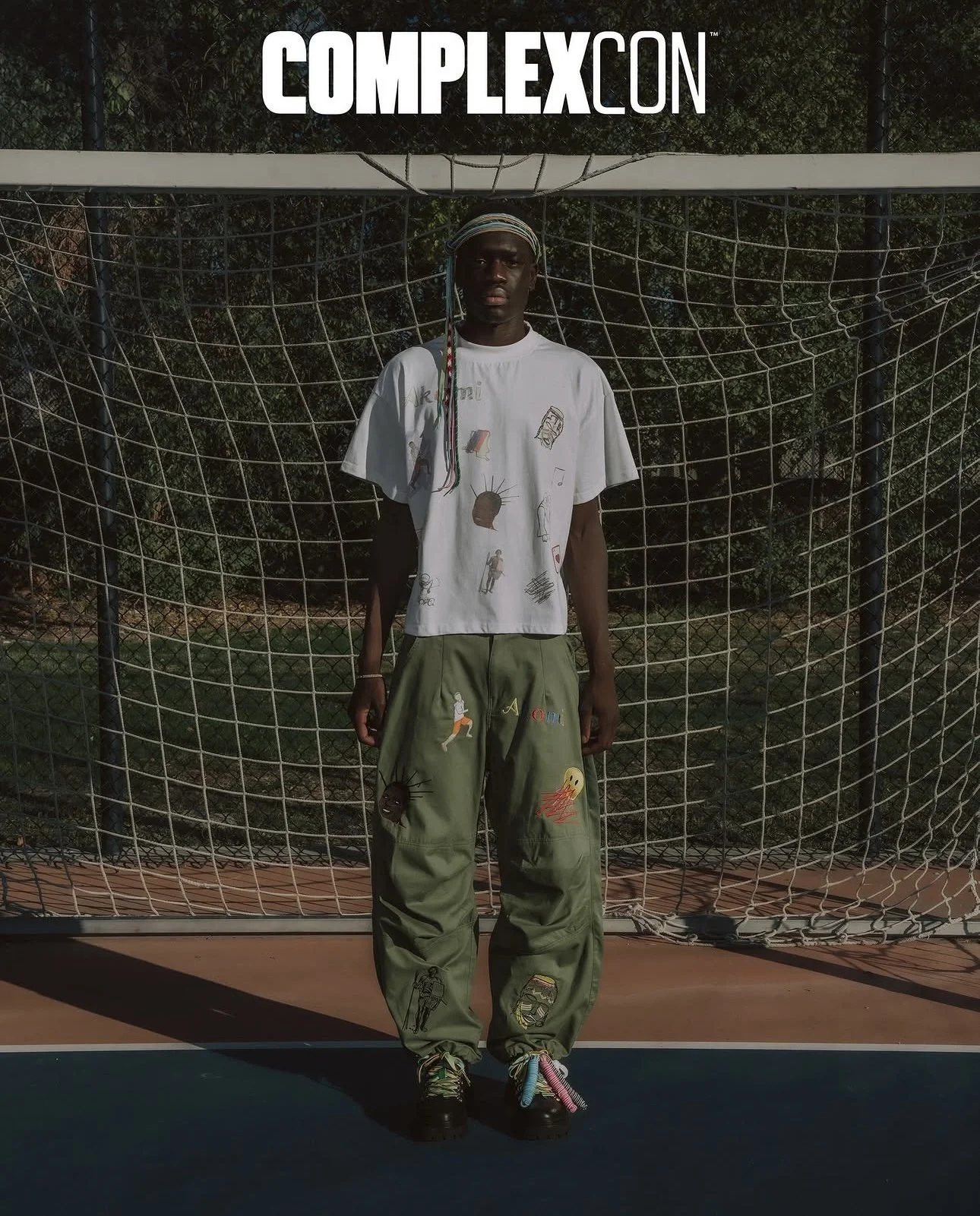
Akomi x ComplexCon 2025
It brought things full circle, as I met some of my childhood heroes there… one example being meeting the owner of the brand Patta. when I tell you Norman, I followed this guy as a kid. I couldn’t believe my eyes when I saw him; when I saw him while setting up at the Convention, I told him that he will come to my booth and he will see what I’m doing. When we had a chance to speak, I was telling him that this was supposed to happen, and he was blown away I by the fact that I knew so such about him hahaha. Cash Cobain was also walking by, and I told him yo, come to my booth and try my boots on. Bro, I was so persuasive, didn’t have time to say no, out the boots on, he went crazy, that’s how I got Cash Cobain to wear…
Should anyone reading this who gets the opportunity to showcase their stuff at ComplexCon - my advice is to make the experience whatever you want it to be. For me, I was a kid in a candy shop. I manifested this by always telling myself that one day I’d be in these type of rooms, so when I got here it was go-time! We made sure every inch of our booth at the convention told the story of Akomi as authentically as possible – more than a showcase of my brand, it was a window and a warm welcome into the world we have created with Akomi. I also know for a fact that Akomi showcasing at ComplexCon has most definitely propelled the brand to new level… people more and more regularly say things to me like they’ve seen our Boots – and its things like this that are affirmations that we are doing something right, and also real motivation for us to keep pushing forward. Off the back of this, we got a shoutout out by AttaireSaint, and this gave us ALOT of attention!
What key lessons growing up did your mother (who was a seamstress) and brother teach you about the power of fashion (i.e. its ability to translate culture through expression), and about the nature of the fashion industry?
What my mum taught me wasn’t about fabrics… She taught me about the discipline and the dignity required to succeed in this industry. Growing up, I watched her turn textiles into a living story one a stitch at a time. She would start by measuring up her client, draw out the design, and boom – she would transform these ideas into a real thing that someone would wear on their body. It felt like I was seeing magic Norman… Seeing a person eventually wear what was once simply an idea they discussed with my mum. What this showed me, is that you can literally create something truly special from absolutely nothing. My mum also had a deep relationship with garments - it being one of mutual respect. You treat it the way you want it to treat you. For example Norman, if a seam is off, you fix it. This is a principle which has been deeply instilled in me. For me, this approach is true luxury – it’s almost like we treat this craft like architecture.
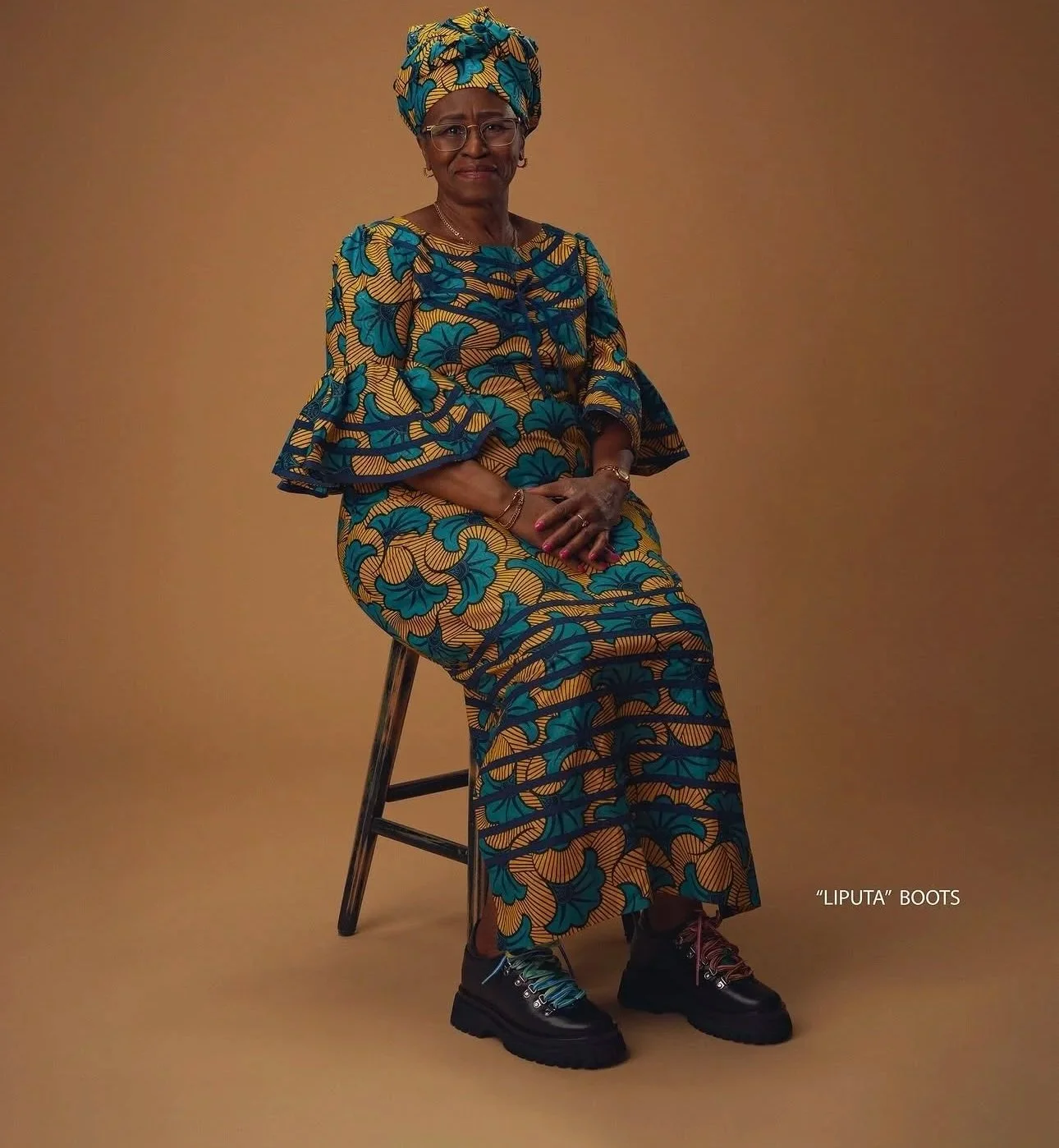
Lupita Boots by Akomi
My big bro taught me the cultural language of fashion and the power that it possesses -whether you are expressing yourself through fashion from a place of defiance, or joy, or experimentation – whatever it may be. He showed me that through fashion, you are the canvas and you can put whatever you want on there. He also helped me to conceptually understand how branding really works. Brands speak a very intricate language and communicate to us in sophisticated ways – for example, on a blazer, the designer can make an intentional and conscious choice to insert a certain number of buttons, and arrange them in particular pattern or sequence. Much deeper than it just being a cool design - for that designer - there is most probably a hidden meaning within this.
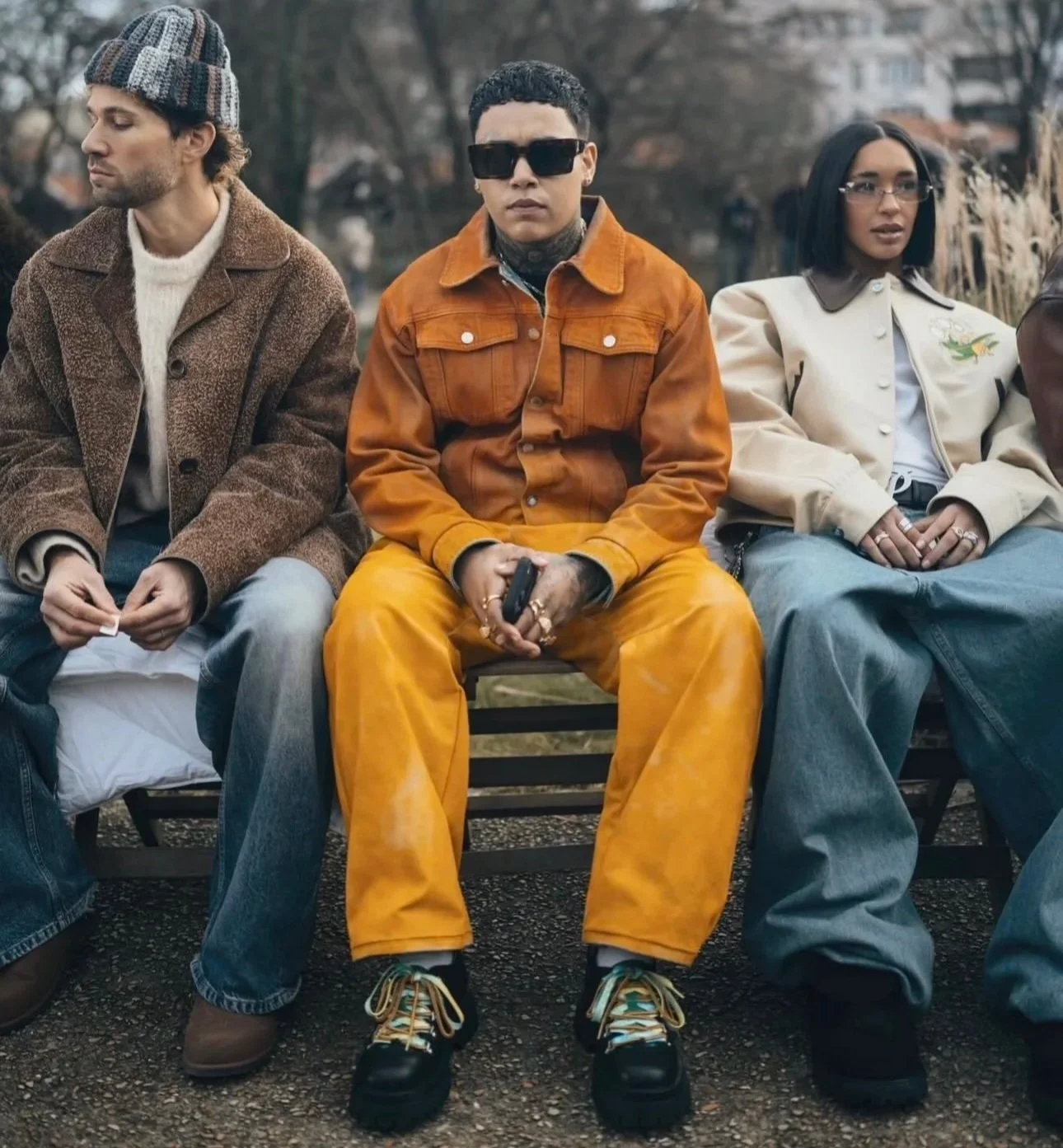
Artist Kwn
My bro and I are 5 years apart. When we arrived to America, my big bro was 15 – so he was in tune with what was going on with the culture as a teenager - and he would teach me what he was seeing and learning. All the gems he gathered, he passed onto me – and I took them all and ran with it! So much so, that to this date, in anything I do, you can always find a hint of his signature and influence which is woven into my work. I’d say he bridged the gap between the technical executions of our mum, with how fashion can be used as a means of expression.
What lessons from the fashion world have you gleamed over your career that you’ll want to pass onto your son one day?
Protect the truth at all costs, because the truth will never get old. When you lie again and again, I believe you will eventually reach a point where you can’t accurately remember how the original lie went – and that’s when people will clearly see that you aren’t real or authentic. My story is real. It will resonate every time no matter how many times I say it, because it is real. Fashion is such a beautiful medium to tell stories, but sometimes people will try to box you into a stereotype or algorithm, but staying true will forever be freeing. To my son, and the next gen, my message is to find your truth and ride with it for rest of your life. Again, arriving is starting point – I will live by this until I die – this is my truth. I also hope to pass onto my son a few other things - like the importance of focusing on the integrity of the product and loving and listening the people who support you.
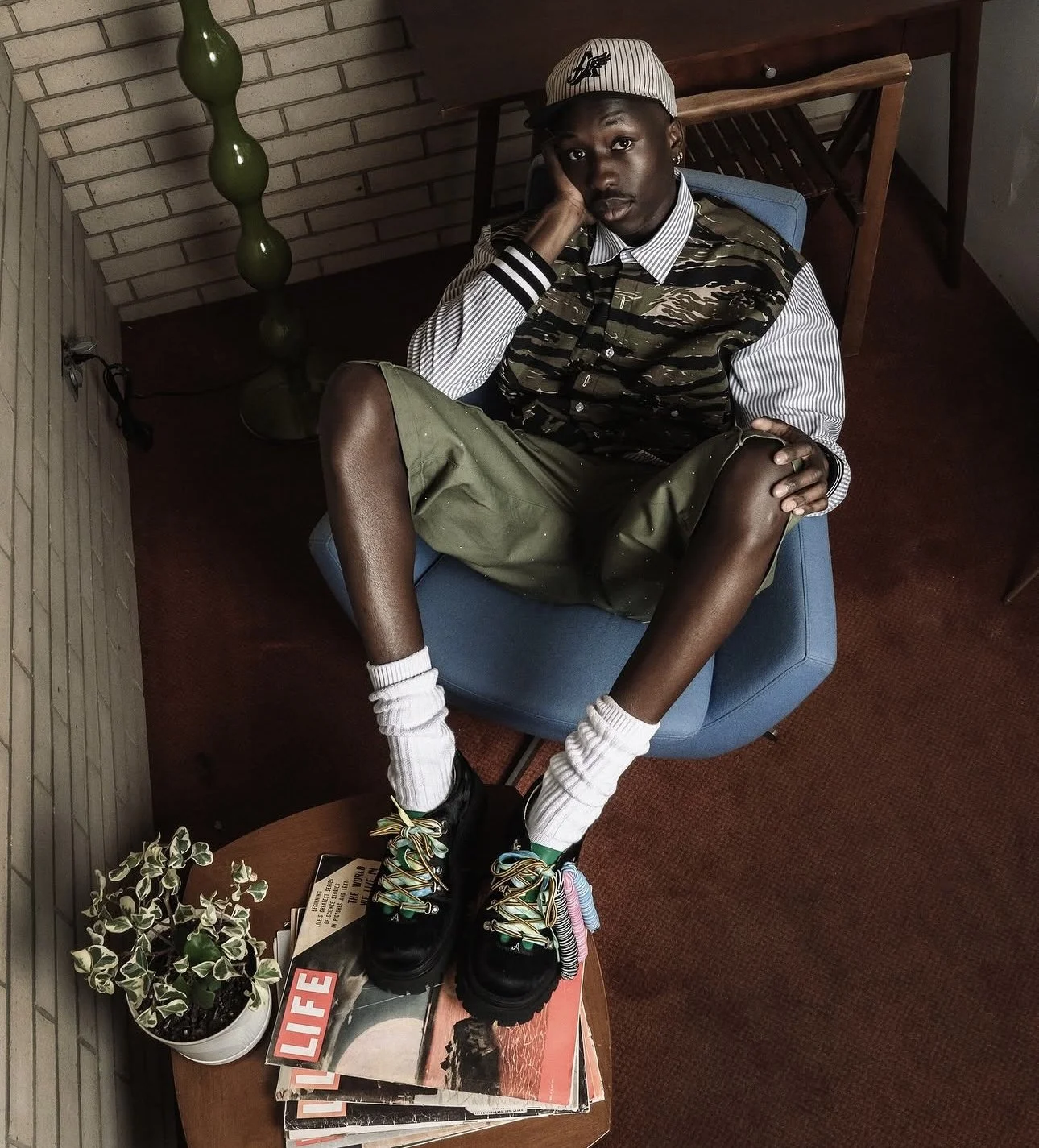
Akomi Fall 2025 Collection
Your brand is proudly rooted in an age-old immigrant story of a young African coming to America at a young age to build and grow. There may very well be a young child in Africa reading this article with awe at your story… What is your message to children on the continent who hope to come to the west/global north in pursuit “of better a life”?
This is hard to answer – to be honest, I don’t think I truly understand the challenges they face as much as I think I do. But what I will say to them is this: find your purpose and understand what drives you… if you have a passion and your gut is telling you to follow that thing, then that is what you should follow.
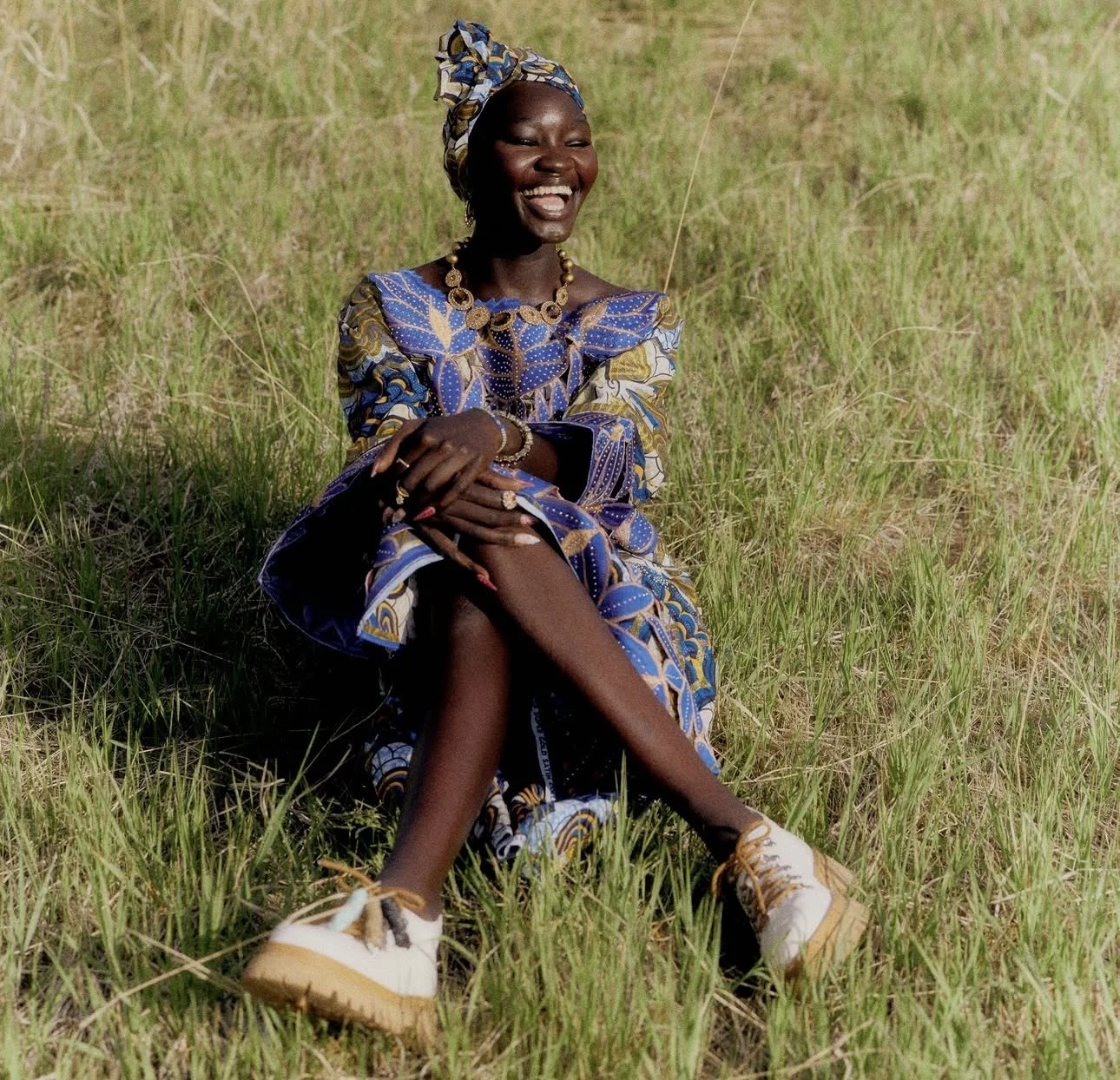
You and I have spoken a lot about the need for greater unity amongst us as members of the global black diaspora – especially in the extremely divisive times that we are in right now. As someone who has lived across America and Africa, I’m would like to know what positive overlaps you believe exist between African and Black-American culture that show how interconnected we truly are.
As a collective, we share similar struggles. What we haven’t completely connected yet with, is the absolute fact that we are all one; I do feel that there is a sense of separation. Yes, we (black people globally) speak different languages, have created our own subcultures, and live different lifestyles – but this doesn’t mean we have to be disconnected and divided. We need unity – especially in these times! Norman, I feel like the disconnect exists because we don’t understand each other… it’s sad, because wider forces in the world divided us, but now more than ever, we need to understand that we are one.
What has been your favourite Akomi “drop” to date and why?
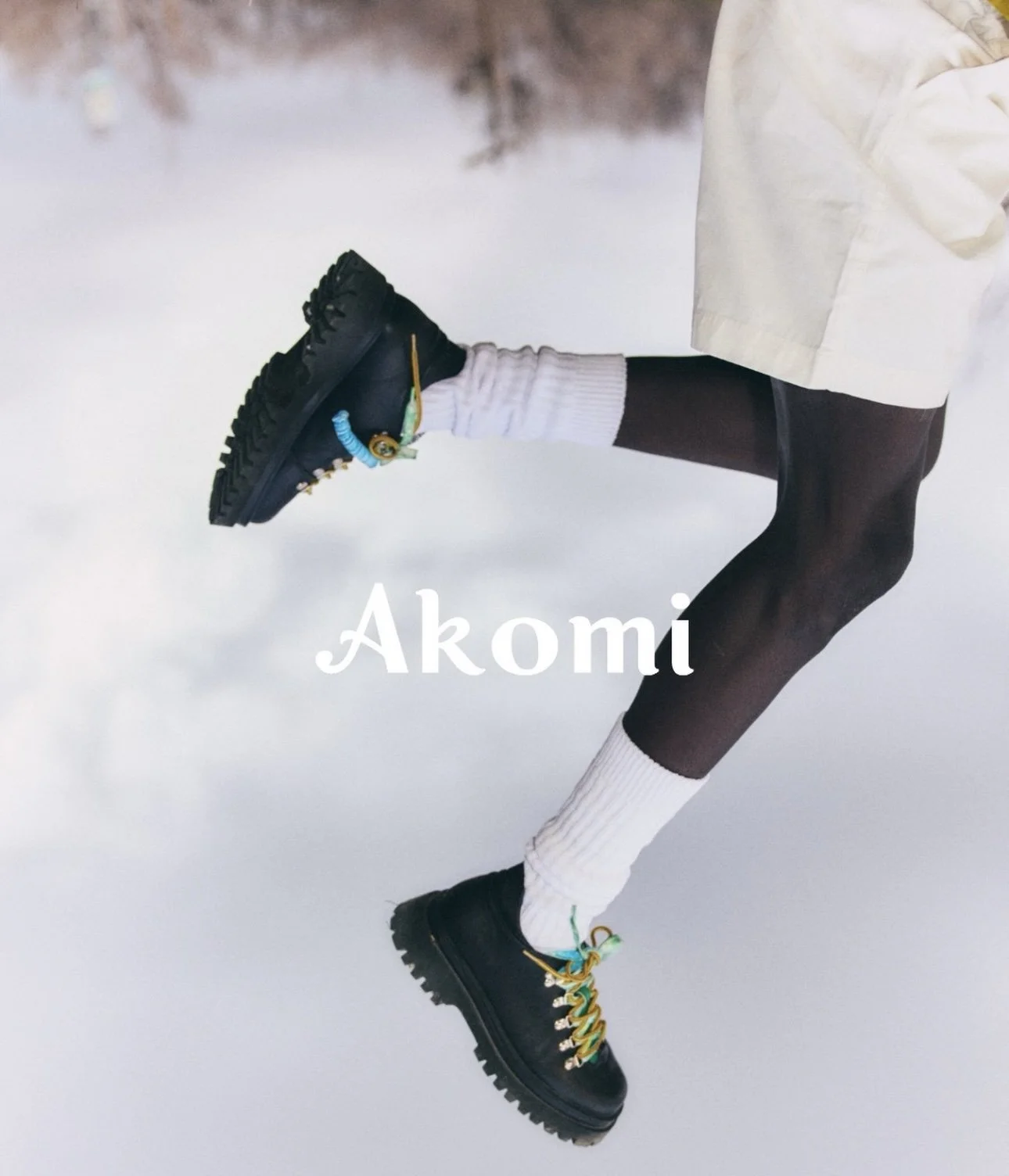
The black “Lupita” Boots… Because, when those Boots dropped, those are what propelled the brand and Akomi’s story to new heights. There’s actually a very deep meaning behind these Noots: they are named “Lupita” - this being the name of a cloth that we wear in Congo for celebrations. That’s what it means, and I guess when the world saw the Boots and heard the story, it really resonated – and this played a big part in taking the brand to where we see it today. For me, this Boot is a beautiful and proud representation of Congolese culture - from the laces, to the colours, to the shapes… This Boot for me a true work of art, and also a symbol to me to always remember all that we have achieved.
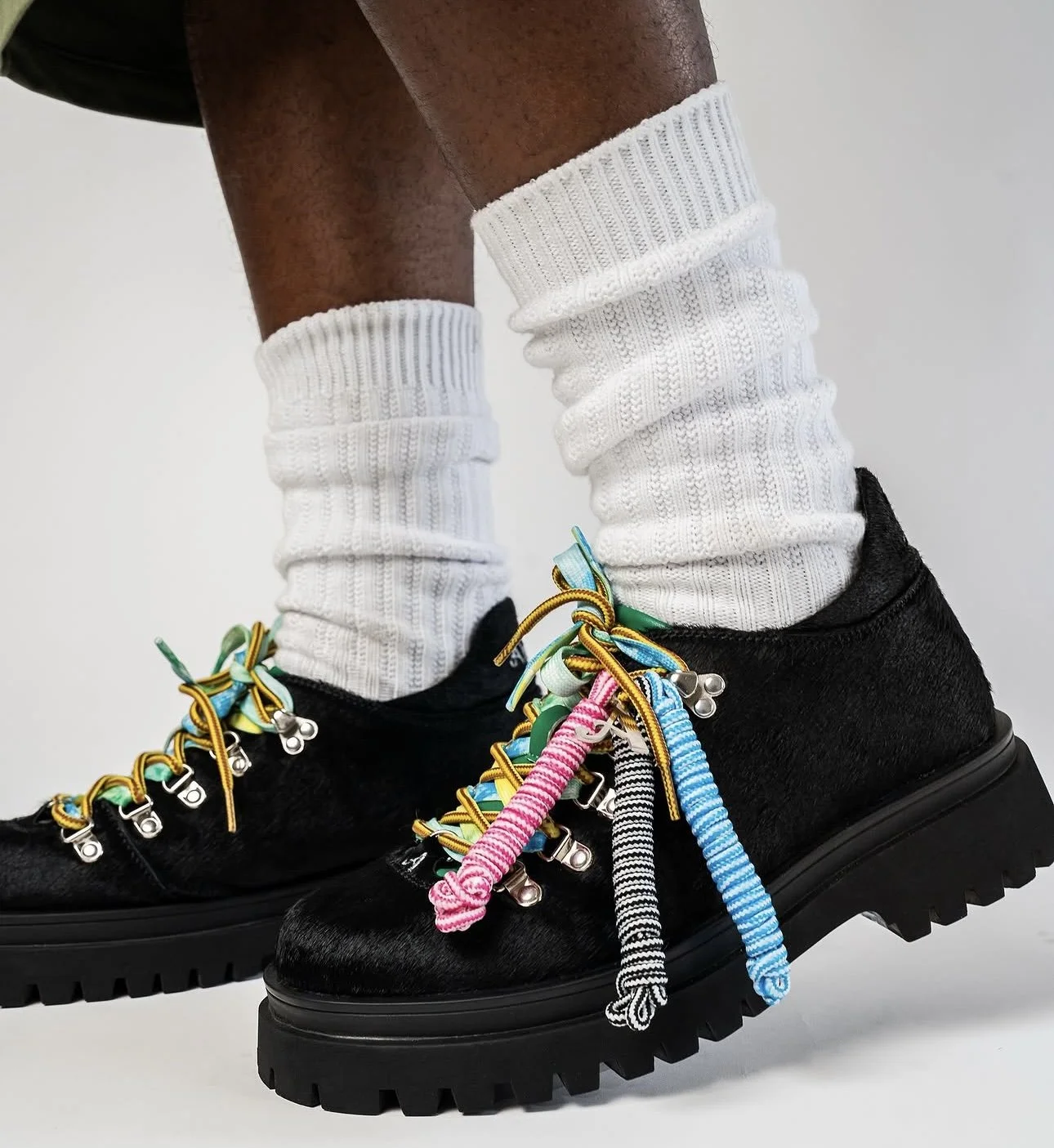
Pony Hair Lupita Boots by Akomi
Akomi’s Donut Boots recently released on the 8th May which was very exciting! What can we look forward to from Akomi throughout the rest of 2026?
I’m really excited for our upcoming event for the 2026 World Cup to celebrate Congo’s qualification and their games! Go Congo! Congo as a country has gone through so much hardship, so it’s nice to find such a moment for us to celebrate… It’s also kind of full circle for me, as I previously was awarded a scholarship to play soccer in America. We will also be showcasing Akomi in a showroom during Paris Fashion Week later this year, and also a few retail stores in Europe and Asia. We also have our new “Camel” Boots which drop at the start of June, so stay locked in for when those are available! A lot is coming, and this is all still just the beginning! As I’ve said, arriving is the starting point…
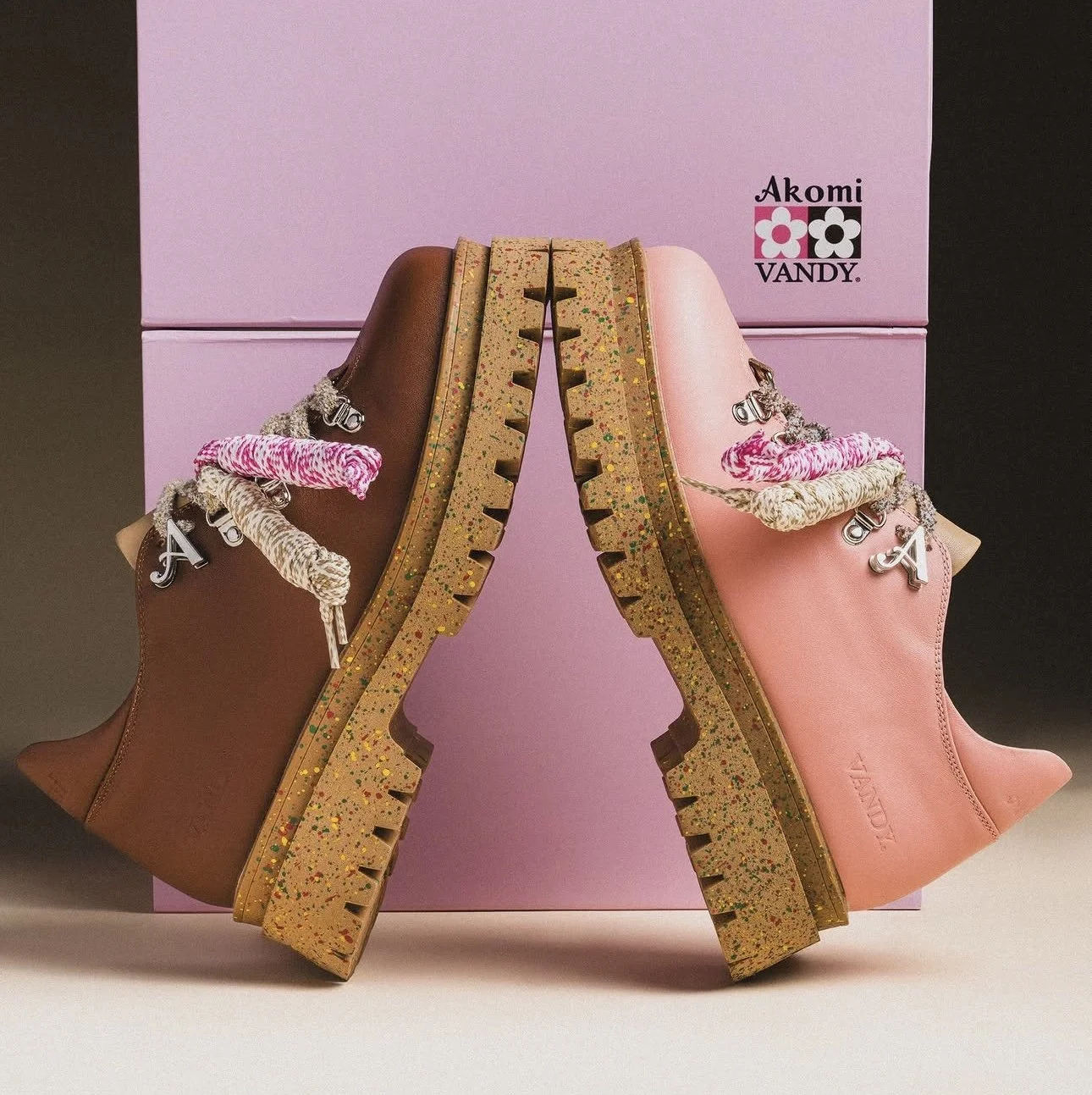
The Donut Boot by Akomi x Vandy the Pink