Arinze Stanley’s Quest Through Hyperrealism Imagery To Awaken Our Inner Child & Explore African Lived Experiences
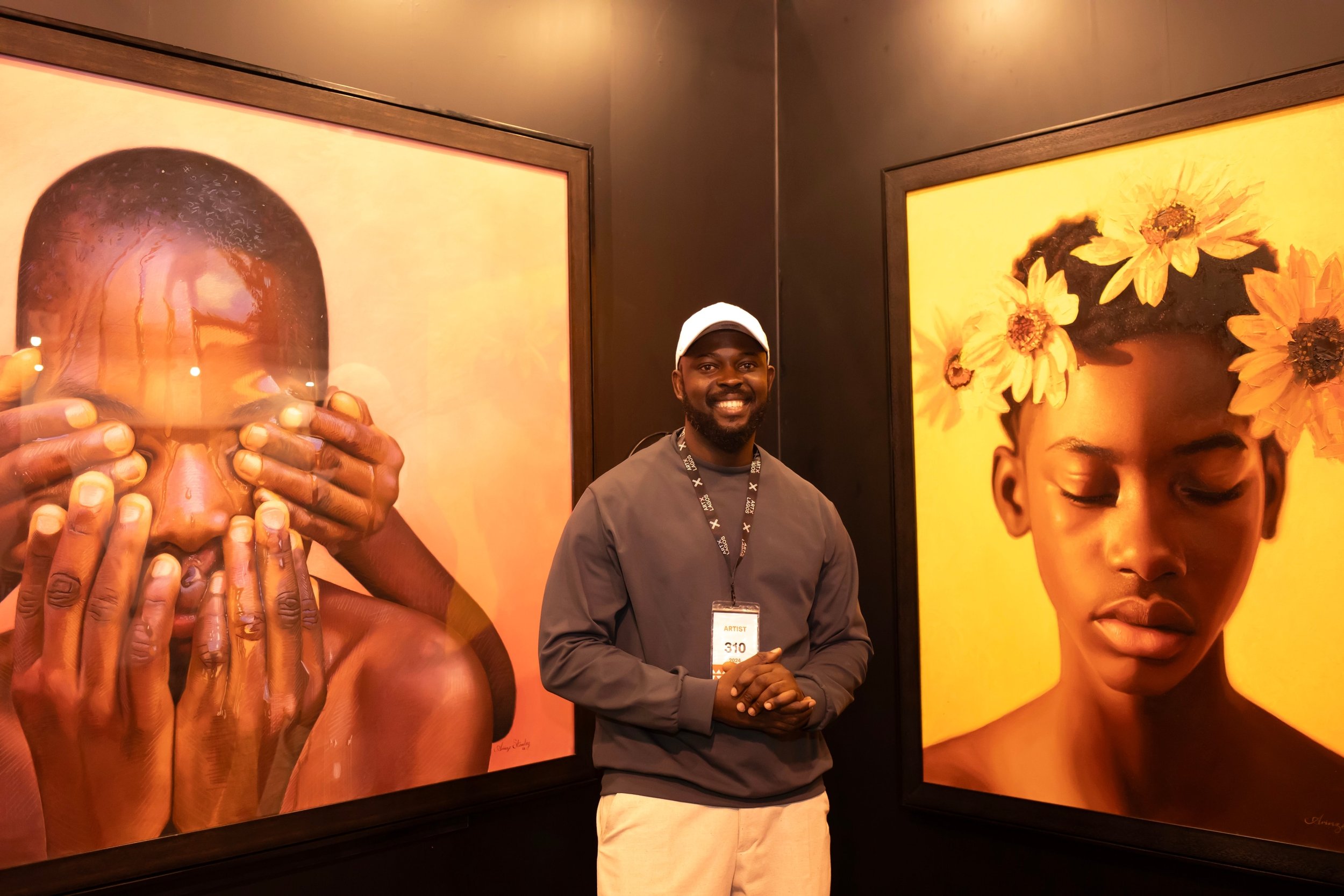
Image of Arinze Stanley
This article was drafted by Norman Busigu.
How would I describe Arinze Stanley at first instance: nothing less than a creatively cerebral empath that is deeply in tune with the issues of today affecting his fellow Nigerians (and Africans more widely). How exactly have I reached this stance? Well, the endearing yet existential questions he passionately ponders on about state of humanity are simply too urgent to be kept constrained to himself and left unexplored. The real magic within Arinze’s story however, is how he articulates his intangible curiosities into physical form via captivating and prolific hyperrealism pieces that lend themselves into a special form of social activism. And he has achieved this without having studied art as a discipline like many of his contemporaries would traditionally have.
Having studied engineering, it is the opposite ironically - which speaks to his innate desire to express himself which oozes from the core of his very being, with art admittedly being his oxygen. The genesis of his story is rather unlikely: through exposure to paper in abundance at his father’s factory growing up, he would find himself innocently playing with this material until it became second nature for him to express himself through this canvas. And with practise, persistence and patience over the years, he has earnestly honed in on his craft with incredible and undeniable results that have garnered global impact. To this effect, he has been profiled by the likes of Forbes, CNN World, BBC, Huffington Post, Hypebeast and more…
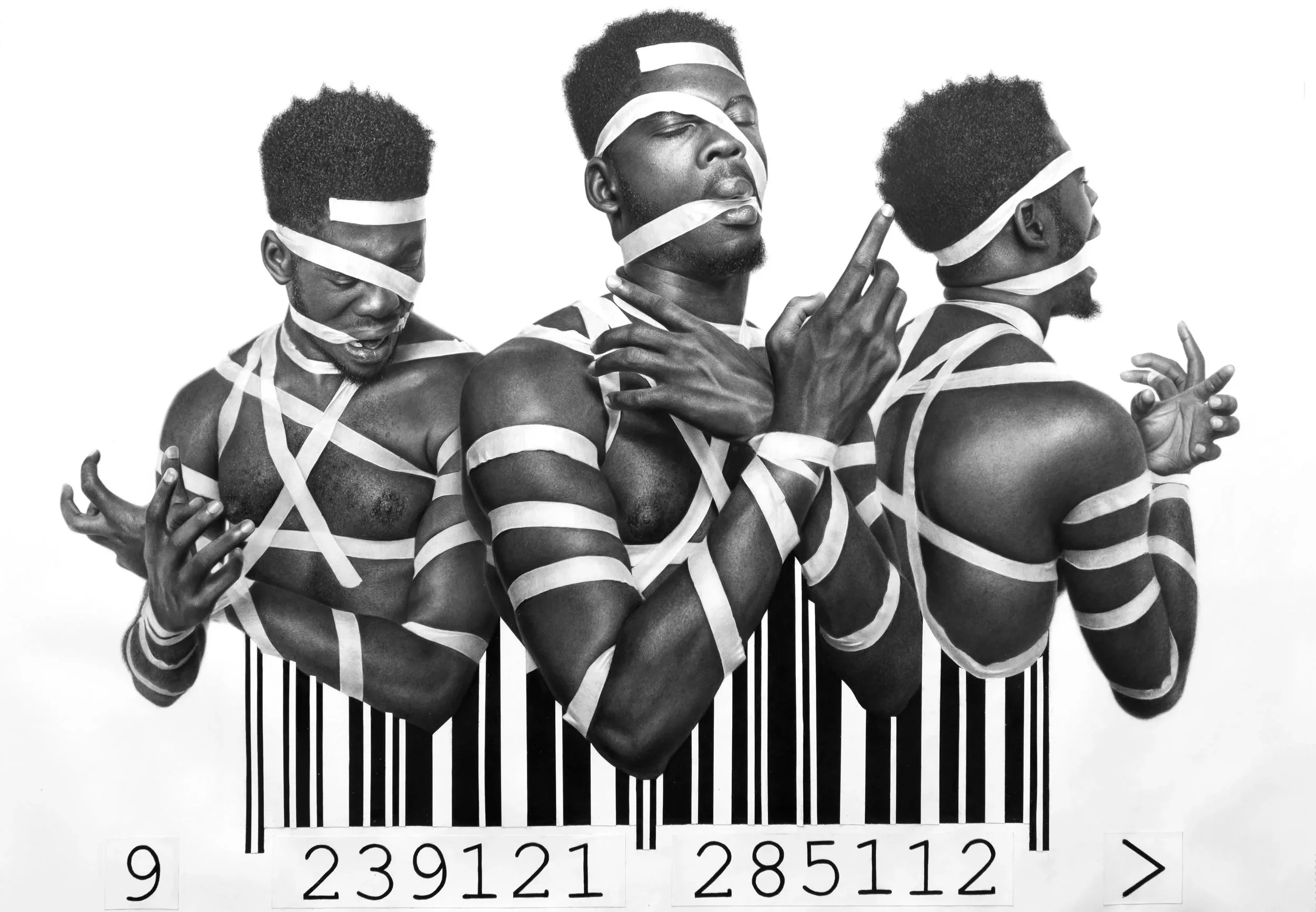
“The Machine Man” - by Arinze Stanley
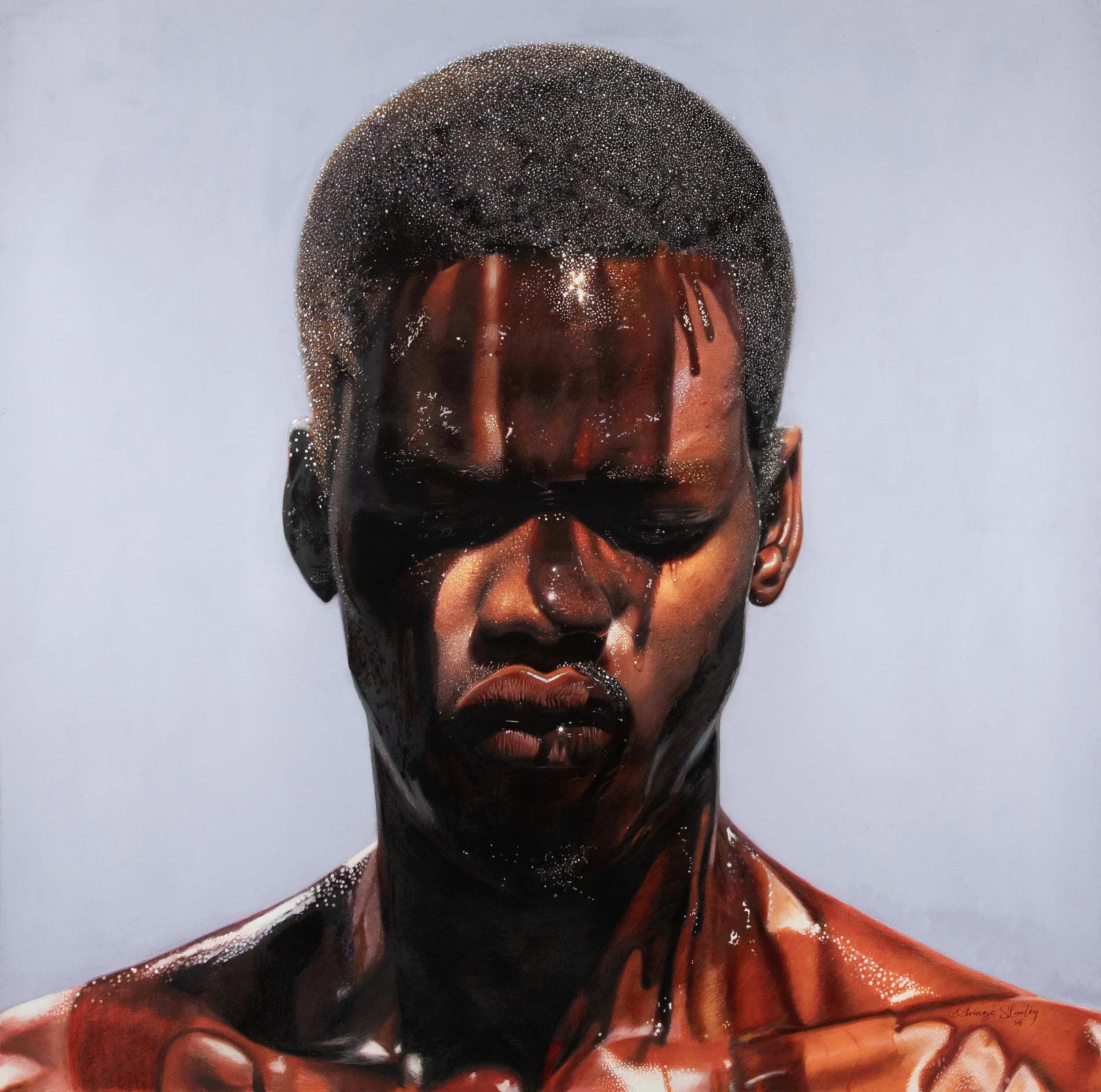
But these are not ordinary pieces that he creates. When Arinze puts pencil, pen or paintbrush to paper, the outcomes are so vivid in appearance that they are often mistaken to be actual photographic images to the unsuspecting eye. Each distinct hyperrealism piece is able to tell a thousand stories, and then some. Not only are they visually astonishing, but many weave in urgent socio-political messages that paint a harrowingly clear depiction of the realities of today experienced by Nigerians and other Africans - the good, the bad and everything in between that warrant necessary conversations or simple adoration at the beauty of our cultures.
His acclaimed works have had the privilege of being displayed at leading galleries and exhibitions around the world including Miami Art Basel and Los Angeles’ Corey Helford Gallery. It is in such forums where his works can be imaginatively interpreted and interrogated by global audiences whilst also giving them a window into his mind’s eye. But for Arinze, his dreams lie in the works of Africans being on proud display on our soil - as one day he hopes to build a contemporary world class museum in Africa!
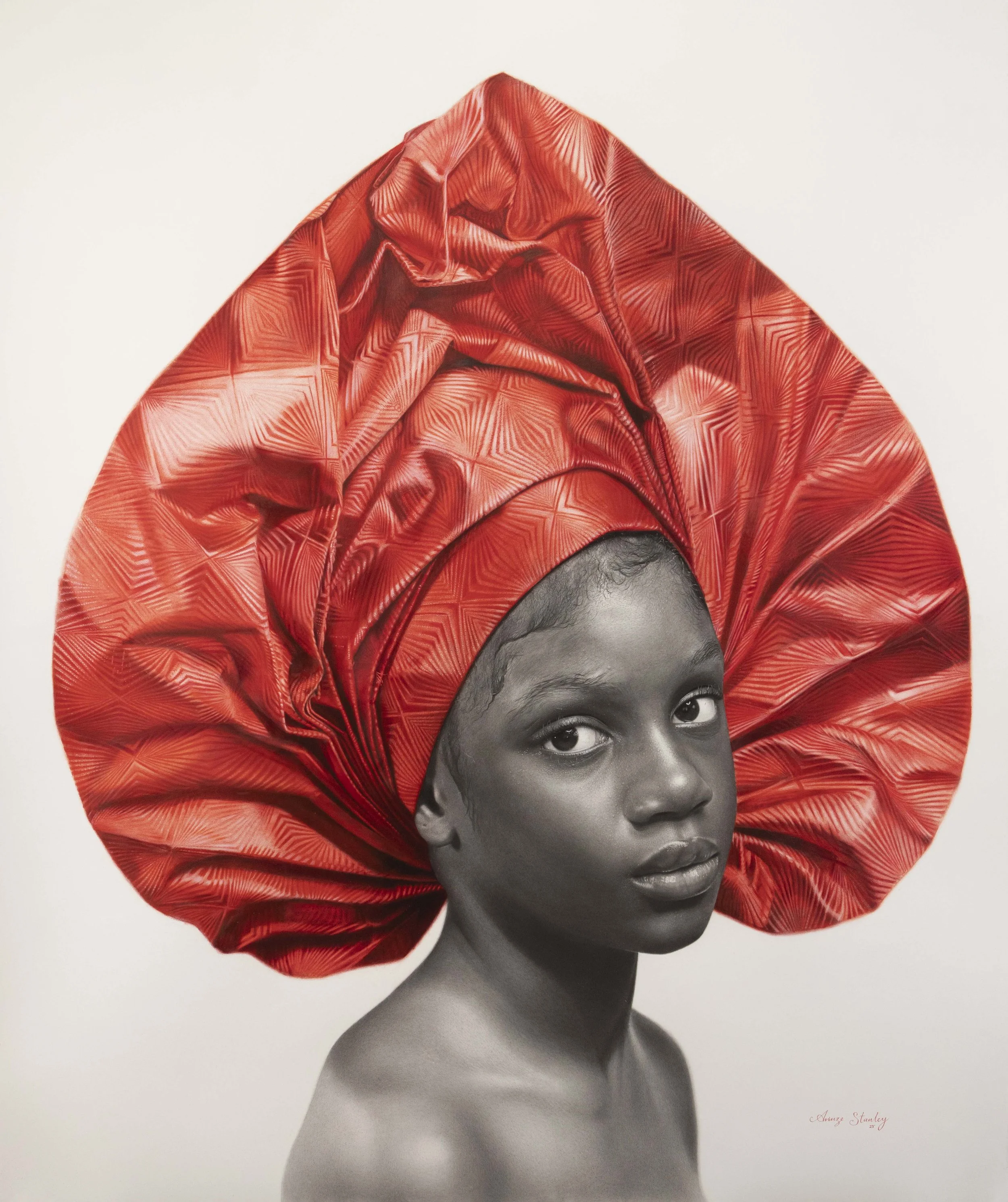
“Gele VIII” - by Arinze Stanley
Guided by his moral consciousness and gaining new inspiration since becoming a father, he intentionally uses his art to showcase a range of deeply personal, poignant and (at times) polarising topics including modern day slavery, feminism, and police brutality. For Arinze, this is less about acting in self-interest to simply display his abilities, and moreso about doing his part to create a better world for the next generation and using his talents to speak for those who aren’t able to for themselves.
For Arinze, his art has served as a potent vehicle to challenge the status quo and to move the needle, by forcing us to confront the societal ills of today and prompting necessary conversations head on - through partaking in discourse via the universal language of visual art. Remarkably, he has done so even at the risk of experiencing pushback and criticism for flying too close to the sun by being brutally real in his messaging. Such noble endeavours do not come without a cost however: as someone who throws himself wholeheartedly into this lifelong undertaking, it has proven to be emotionally, physically and spiritually taxing…
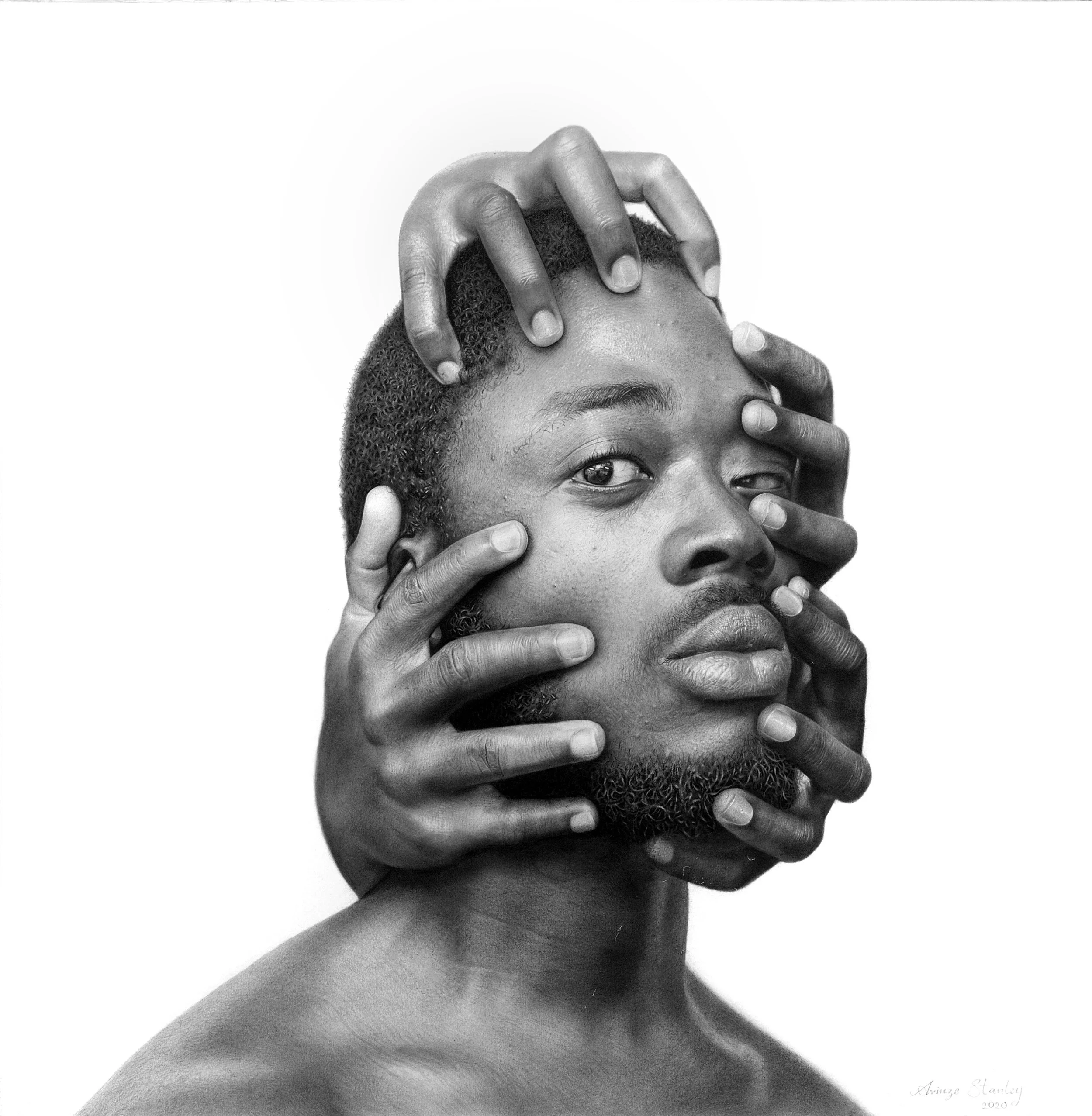
“Mindless #3” - by Arinze Stanley
I recently caught up with Arinze to learn more about his creative process, career highlights, the parallels between art and engineering, his message to the diaspora and next generation, facing pushback when speaking on topical matters through art, the international showcasing of his work, creating a safe environment where emerging creatives can develop their crafts, and more…
***
You use hyperrealism to carry emotive, immersive, socio-political messages, with a strong focus on the experiences of Nigerians and Africans. You’ve spoken before about developing a “sleeping disorder” as a price for your dedication. Has the work ever become too overwhelming, or do you keep firm boundaries so drawing stays fun?
The work is demanding. Painful and gratifying at the same time, and most times it asks everything of me. I’m an emotional person, so I get fully pulled into whatever I’m making. It can feel like you’re pouring your actual spirit onto the paper. For years I just couldn’t switch off. I’d be deep in a piece, look up, and it’s 4 AM. Then 6 AM. I actually drew that into one of my early self-portraits, Insomnia.
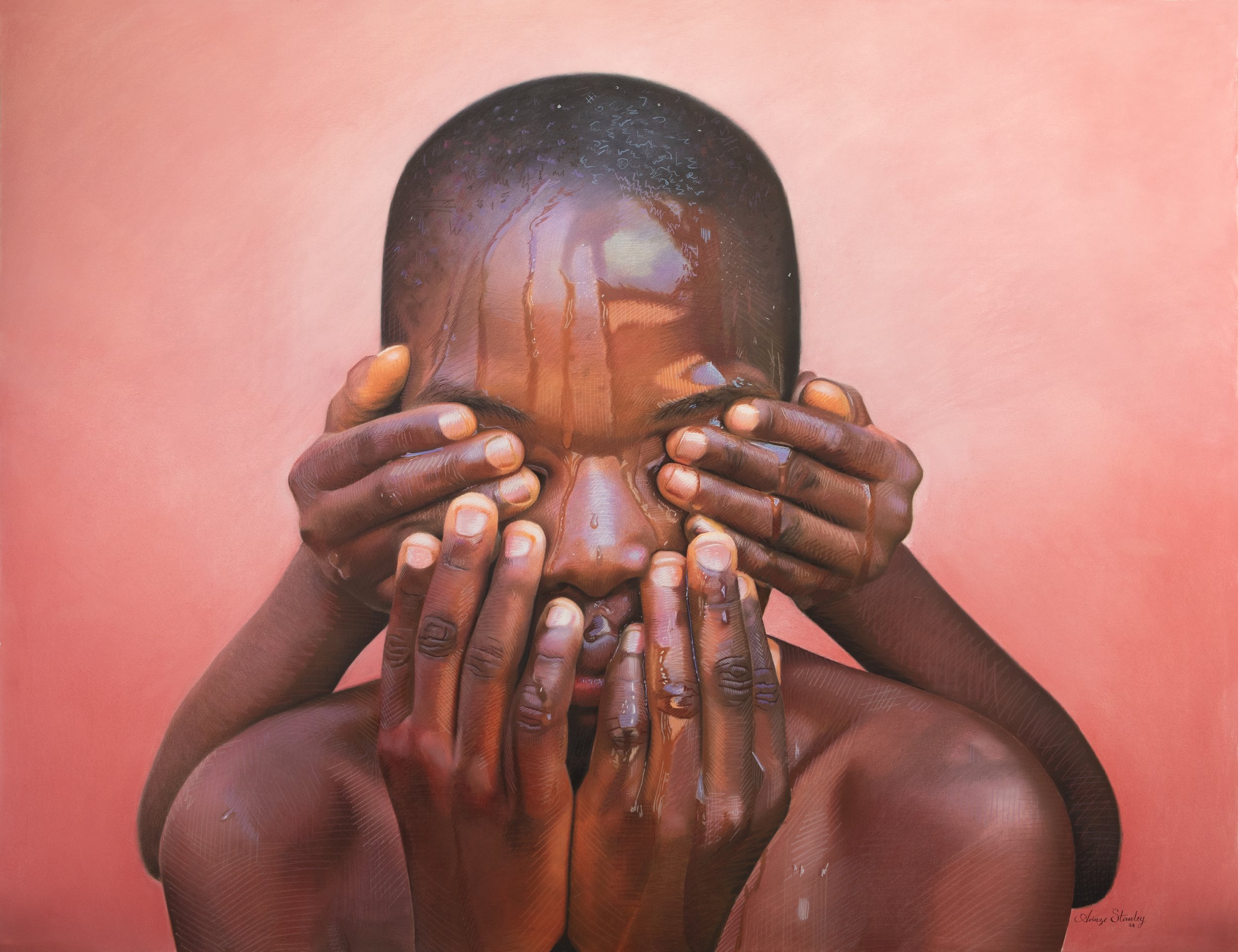
“Innocence” - by Arinze Stanley
I won’t pretend I’ve got it all figured out. The work still gets to me. What saves me is music. I play everything, EDM, Igbo cultural music, Afrobeats, all of it, and it carries my mind somewhere softer so I can step back when I need to.
Your mum noticed your talent when you were around five. Growing up, was your family always behind you pursuing art, or did they want something more traditional like law or medicine? If so, how did you navigate that?
A Nigerian home like mine comes with expectations, especially if you’re the first-born son. Medicine, law, engineering… Those are the ones the family wants for you. I’ve been drawing since I was six, but to my parents it didn’t look like a real career. So I just took both roads. I finished my engineering degree to give them peace of mind, and kept drawing on the side with whatever materials I could get my hands on. Once the work started getting noticed and paying for itself, their minds changed. Today they’re my biggest supporters. But I’ll be honest, it took a long stretch of quiet rebellion to get there.
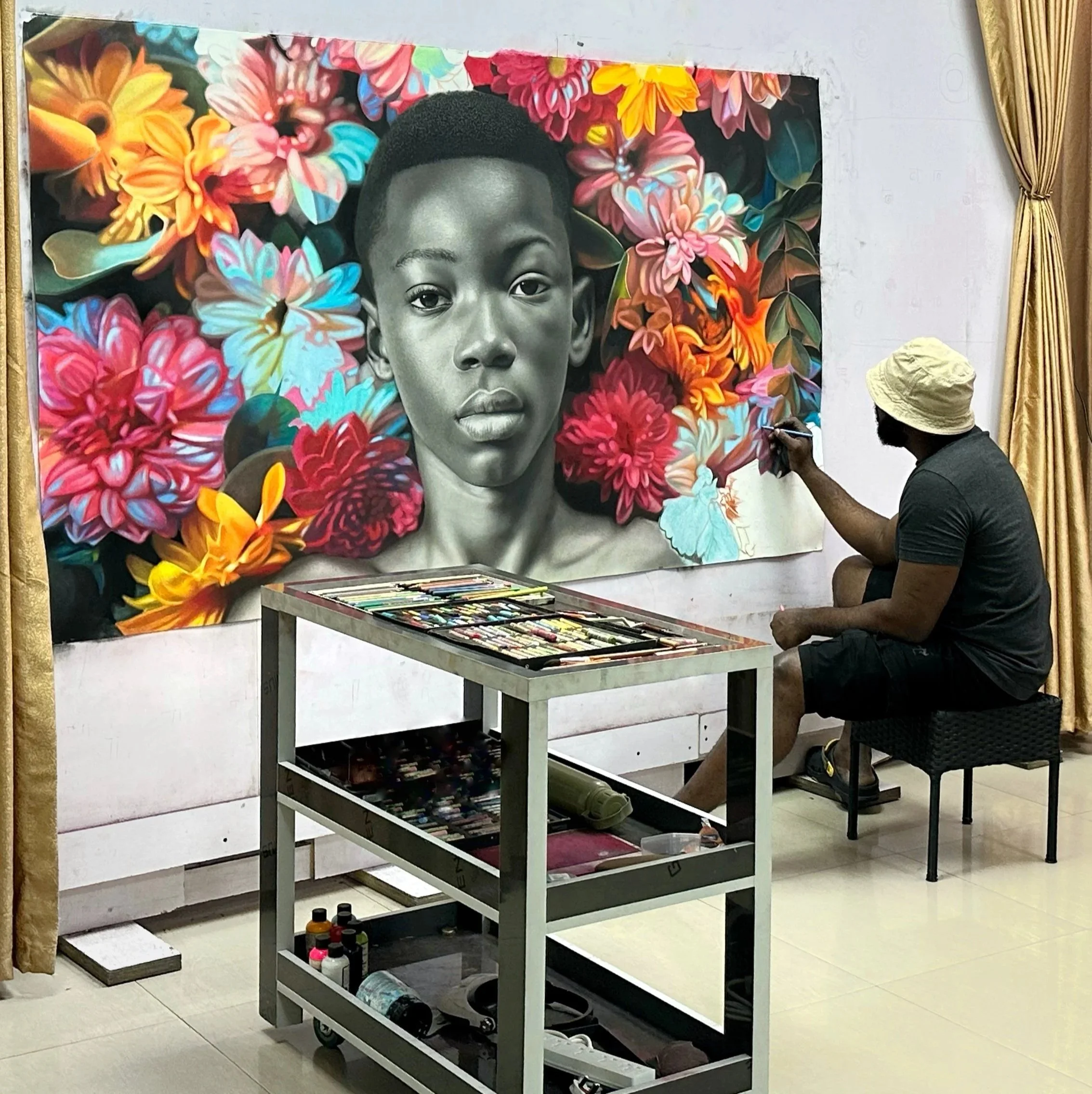
“Flower Boy” - by Arinze Stanley
You have an interesting double life as an accomplished artist with an academic background, having studied engineering. How do you balance the two, and has engineering helped you as an artist?
To me they speak the same language, just differently. Engineering is about structure. You take a big problem and break it into small parts you can actually solve. I sit in front of a blank canvas and do the exact same thing. Growing up I looked up to Dexter from Dexter’s Laboratory. I knew I wanted a lab. I wanted to build things. Luckily, studying engineering drawing gave me the fundamentals that helped turned my drawing hobby into a real practice.
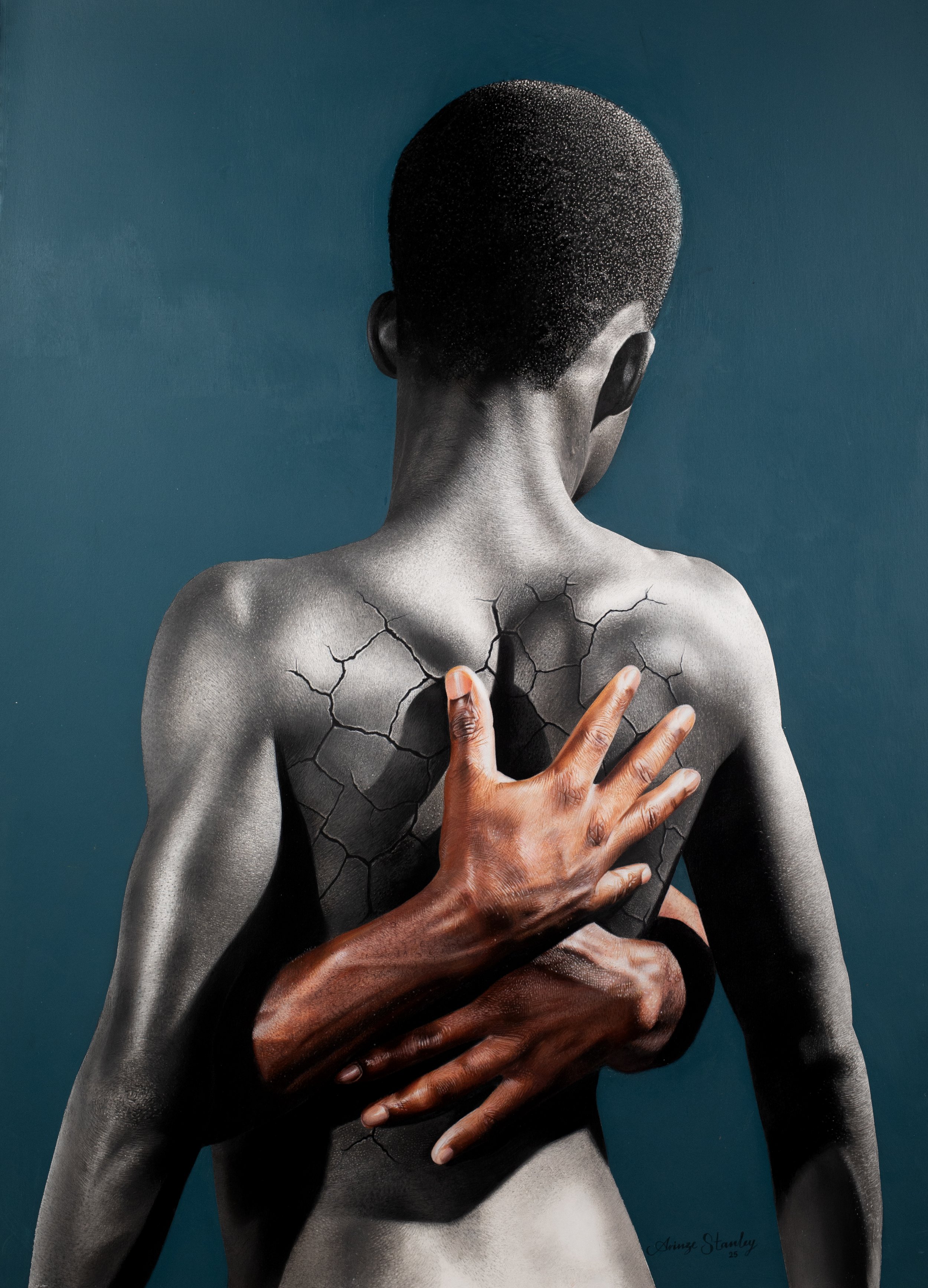
“Anchor” - by Arinze Stanley
Your work has shown around the world, from Lagos to London to L.A., at renown places such as like Miami Art Week and Moniker Art Fair! What has been your favourite exhibition so far, and where do you dream of showcasing your work one day?
I believe it’s Art X Lagos. I’ve shown there with my Lagos gallery (Alexis Galleries) four years running now, and it never gets old. What makes it for me isn’t the fair itself, it’s that I get to stand in a room with thousands of art lovers and actually talk to them. Real conversations about the work, right there at home. You feel the work landing in real time, with the people it’s about. As for the dream, it’s not just MoMA or the Tate. I want a worldclass contemporary museum built right here in Africa, our work shown with that same prestige, on our own soil.
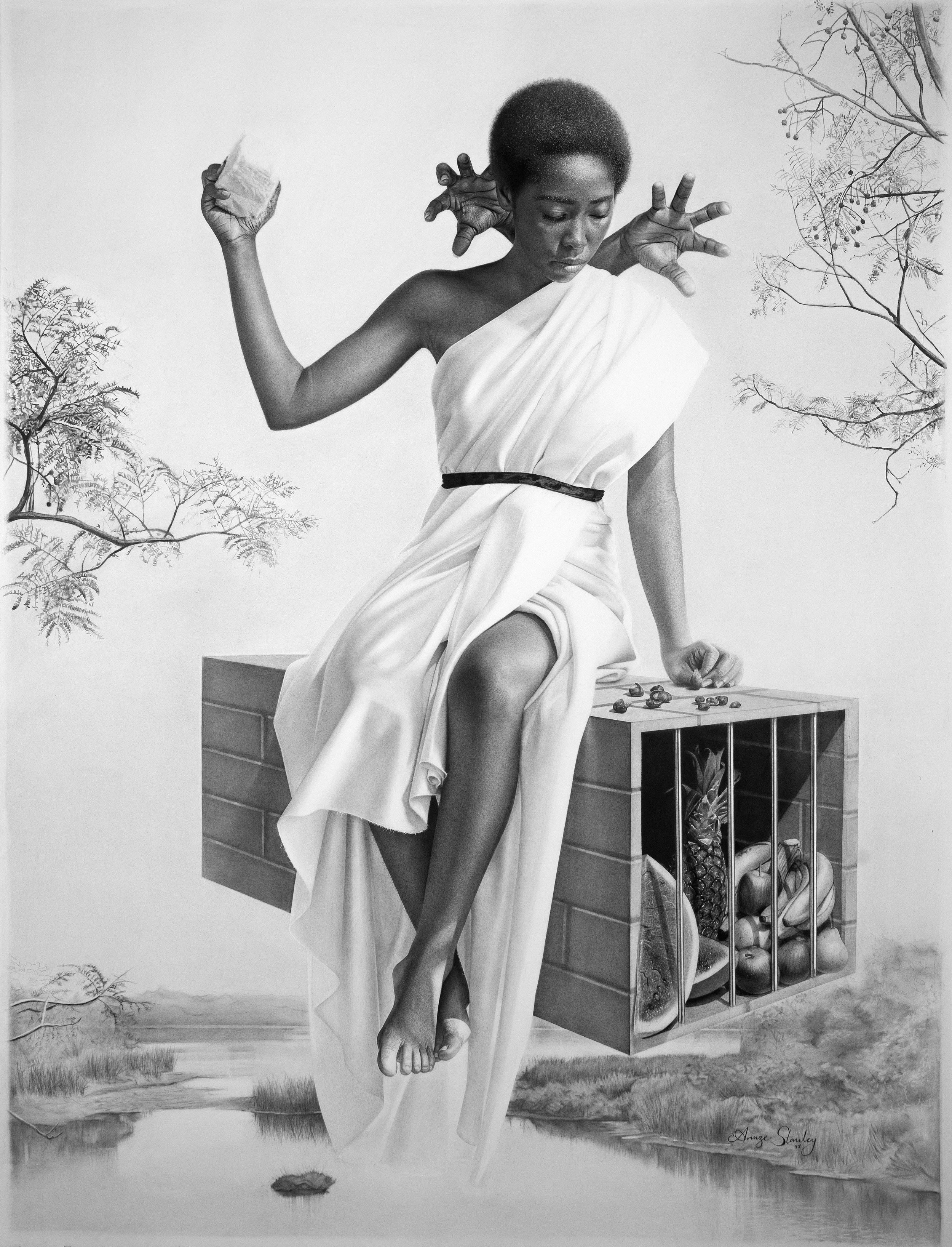
“Fruits Of Labour” - by Arinze Stanley
As a Black Brit of Ugandan heritage, your work has helped me understand issues in Nigeria and across Africa. Do you see your hyperrealism as a way to connect people on the continent with those of us in the diaspora? And what’s your message to the diaspora reading this?
For sure, I see the work as a bridge. For too long the story told about the continent has been poverty and corruption. I want my portraits to show the rest of it, the everyday life, the closeness, the way people here actually carry themselves. When you stand in front of one of my pieces, I want you to feel the person in it. Feel what we feel, and know us past the headlines. And to the diaspora, you’re never cut off from us. Your address changed, that’s all. The bloodline and the history are the same. We’re writing this story together.
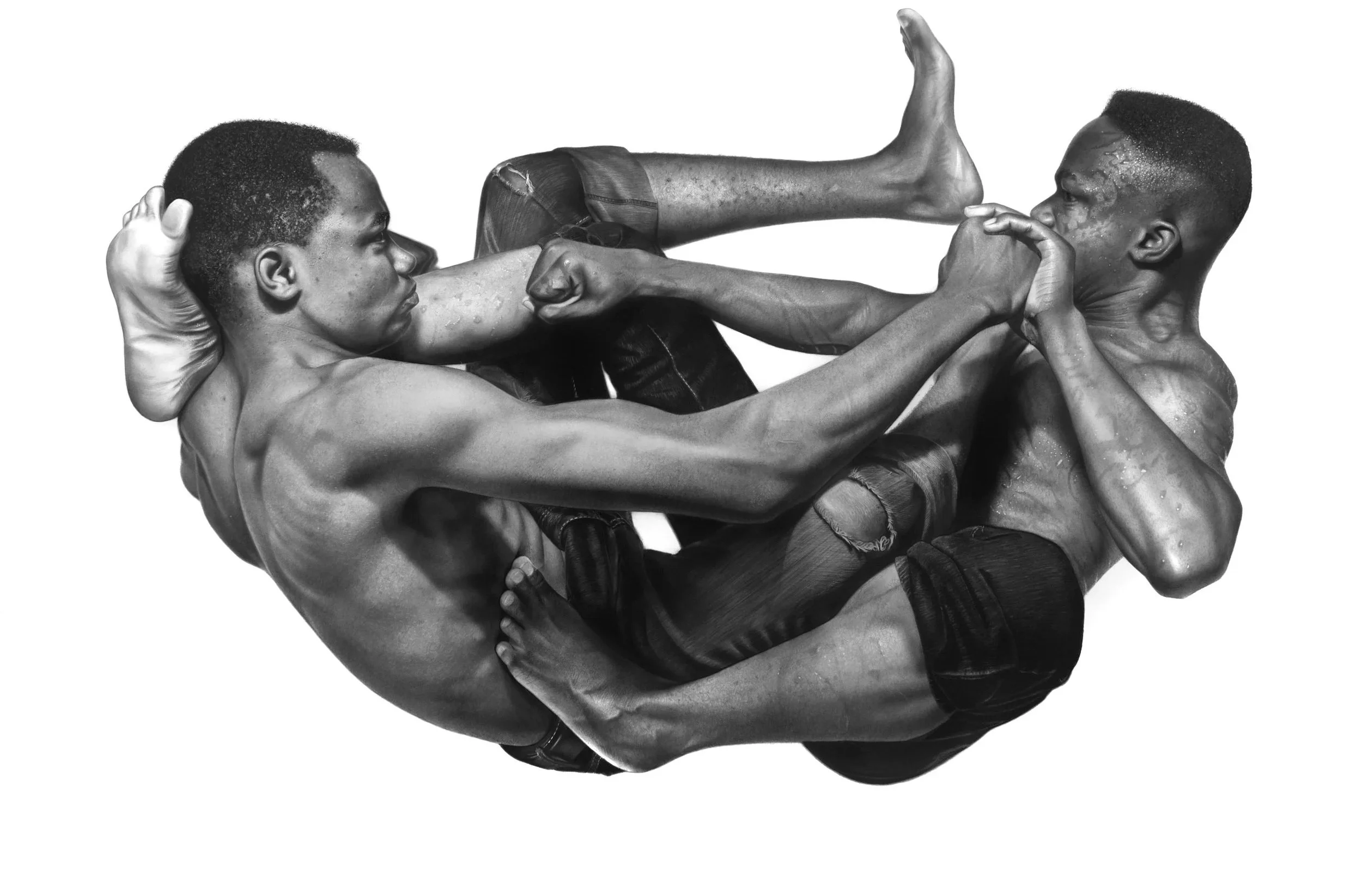
“Painful Conversations” - by Arinze Stanley
You’ve tackled sensitive socio-political topics including feminism, modern-day slavery, racism and inequality through your prolific works... Have you ever faced pushback for being so bold and honest? If so, what’s kept you going?
There’s definitely pushback. Talk about bad governance or racism and people get uncomfortable, and plenty of them would rather just look away. I remember a friend once called my work “tragedy porn.” That one stuck with me, because it’s the complete opposite of why I do this. I’m not putting pain on display for the sake of it. I’m trying to make people feel and sit with what’s actually happening to them. But that discomfort is part of it. If everyone stays comfortable staring at pretty pictures, nothing ever changes. When I hit resistance, it usually tells me I’m pressing on the right nerve. My job is to document our reality, and I’m not about to water it down so it goes down easier.
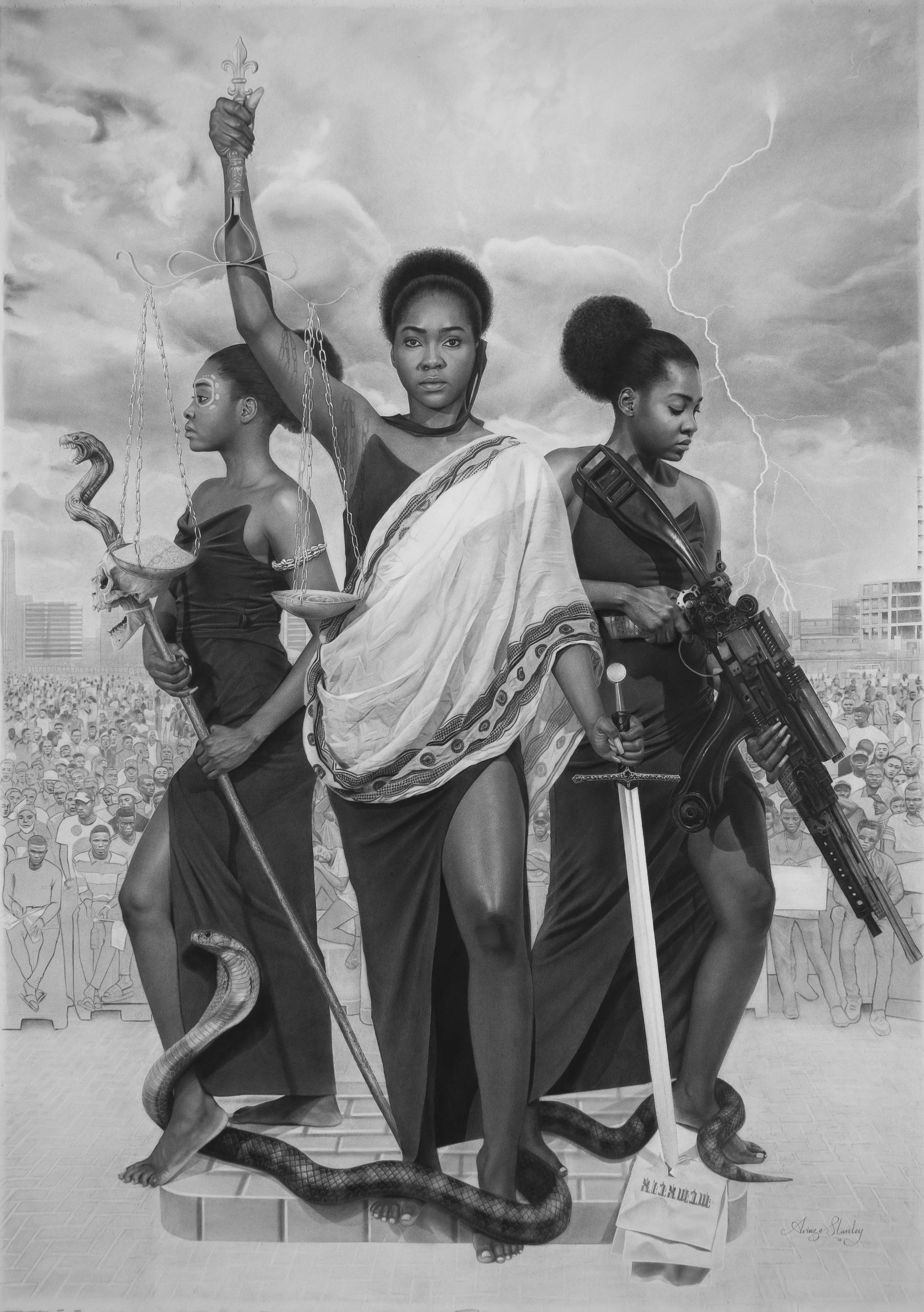
“Communion” - By Arinze Stanley
A defining moment was the unwarranted beating you took in 2012 from military men, and again in 2020 when you nearly lost your eye to a police assault, which became “Daze of Impunity.” Both in Nigeria. Has becoming a father deepened your drive to use art to make the world better for the next generation, so your son doesn’t go through what you did?
The beating in 2012 by the military and nearly losing my eye in 2020 to the police were brutal to me, and in a strange way they woke me up. My series Bullets and Denim and Daze of Impunity came straight out of these events. Then fatherhood changed everything. It stopped being about my own anger. Now I look at my son and there’s a clock running. I’m drawing for the world he’s going to walk into, hoping these conversations shift something before he’s old enough to walk these streets alone. I also want him to see and experience the beauty of the world and admire our world through my work. I believe I'm still learning to make this happen.
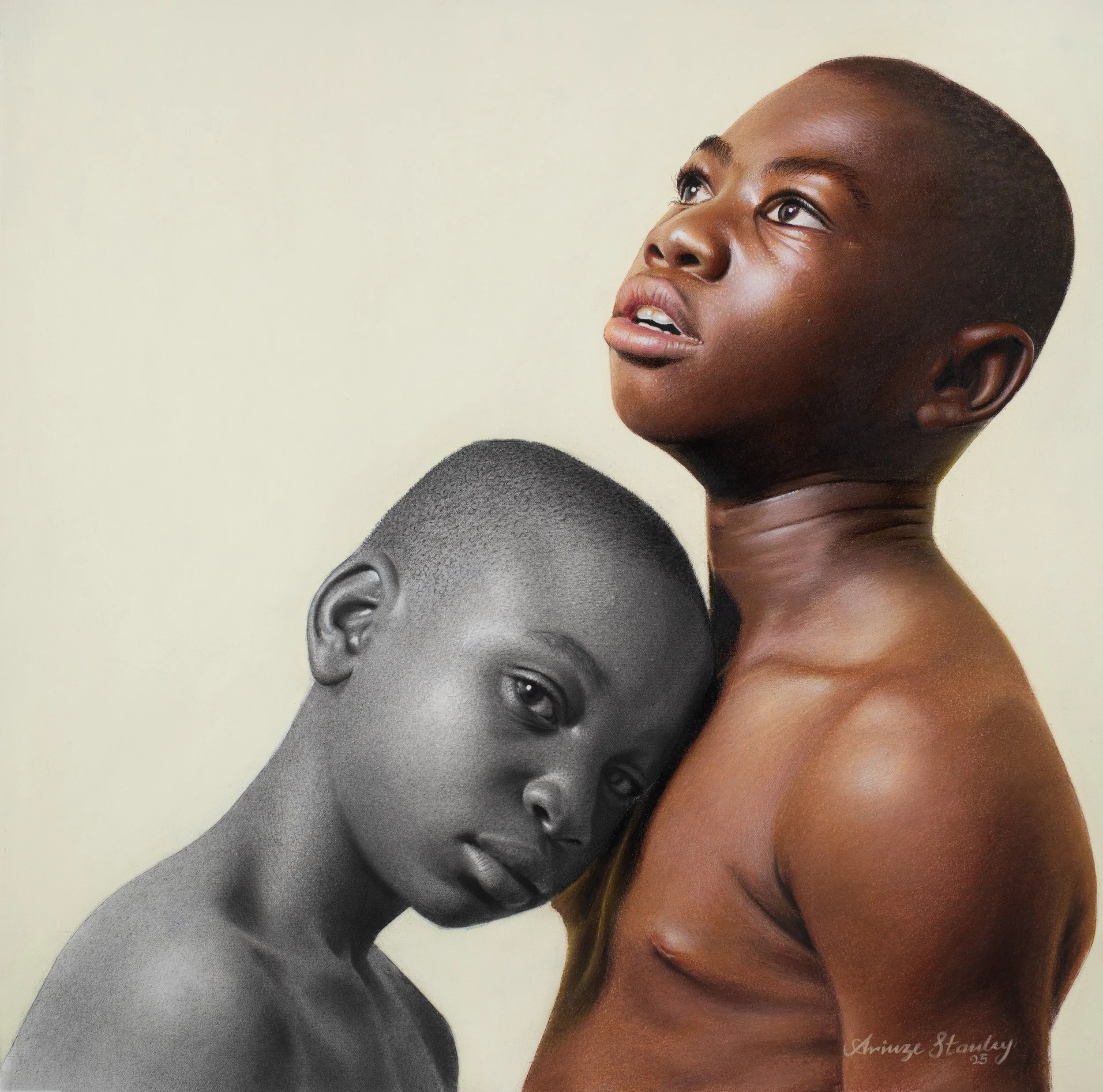
“Brothers Keeper” - by Arinze Stanley
You talk a lot about patience in your process, but Lagos is fast and electric… How do you find the stillness to slow down and get into flow in a city where patience is hard to come by?
Lagos runs on a mad frequency. Fast, loud, demanding. I take all that energy and pour it into my work instead. I soak up the hustle of the city, then I go back to my studio to play and to work. That room is my sanctuary, quiet my head, and put everything into the tip of the pencil, or the brush, or the chalk.
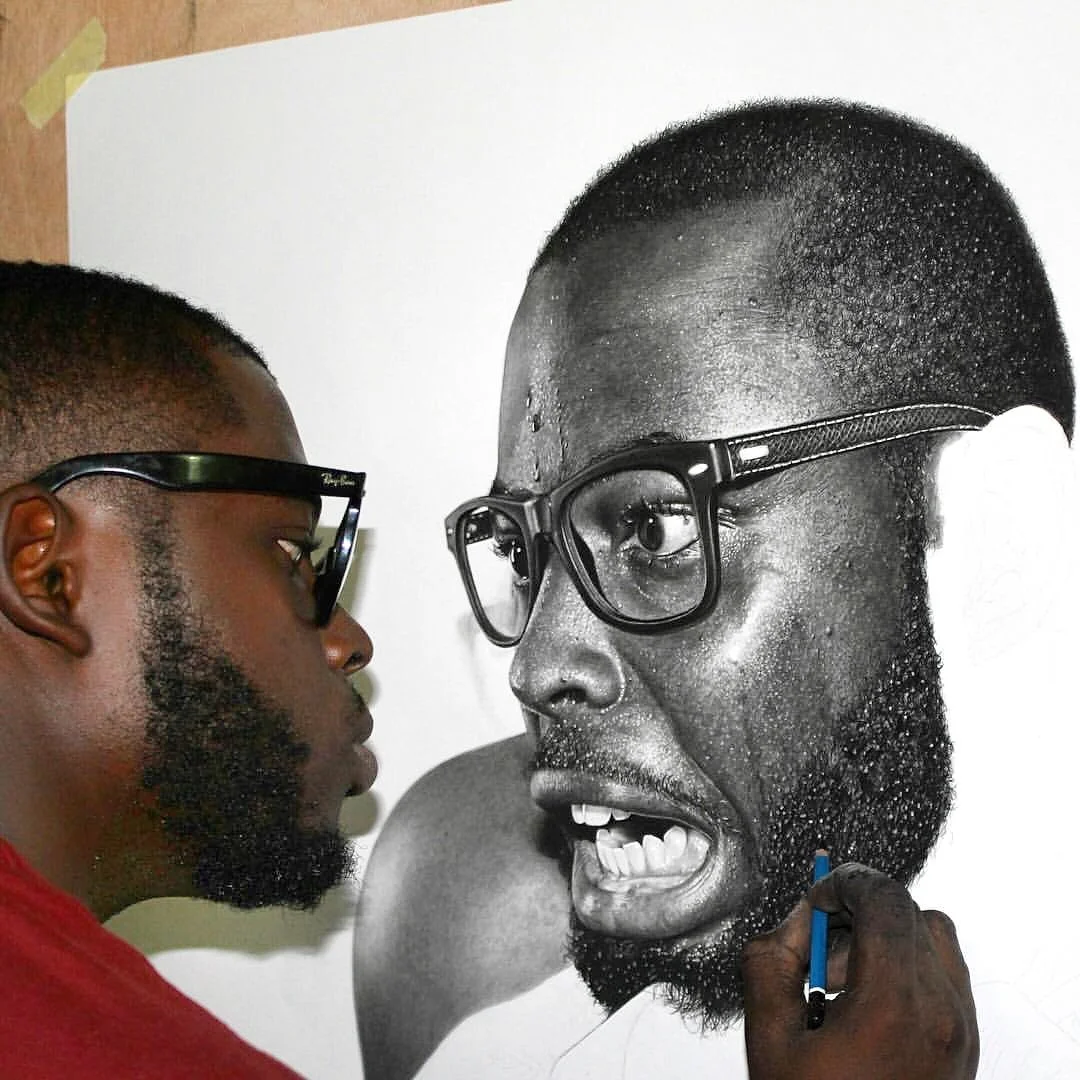
“Famished” - by Arinze Stanley
Tell me more about The Pond Studio in Lagos: why does it exist, and what have you built there so far?
The name says it plainly, a small calm body of water where you can grow before you take on the open ocean… The Pond Studio is my personal workspace in Lagos. The Pond Collective is our public community program. Created for the artist and by the artist, the Collective focuses on education and mentorship. We host workshops taught by working professionals and art conversations about building a career in art. My intention is to provide a safe environment where emerging creatives can develop their skills and manage the mental demands of the industry before navigating the broader art world.
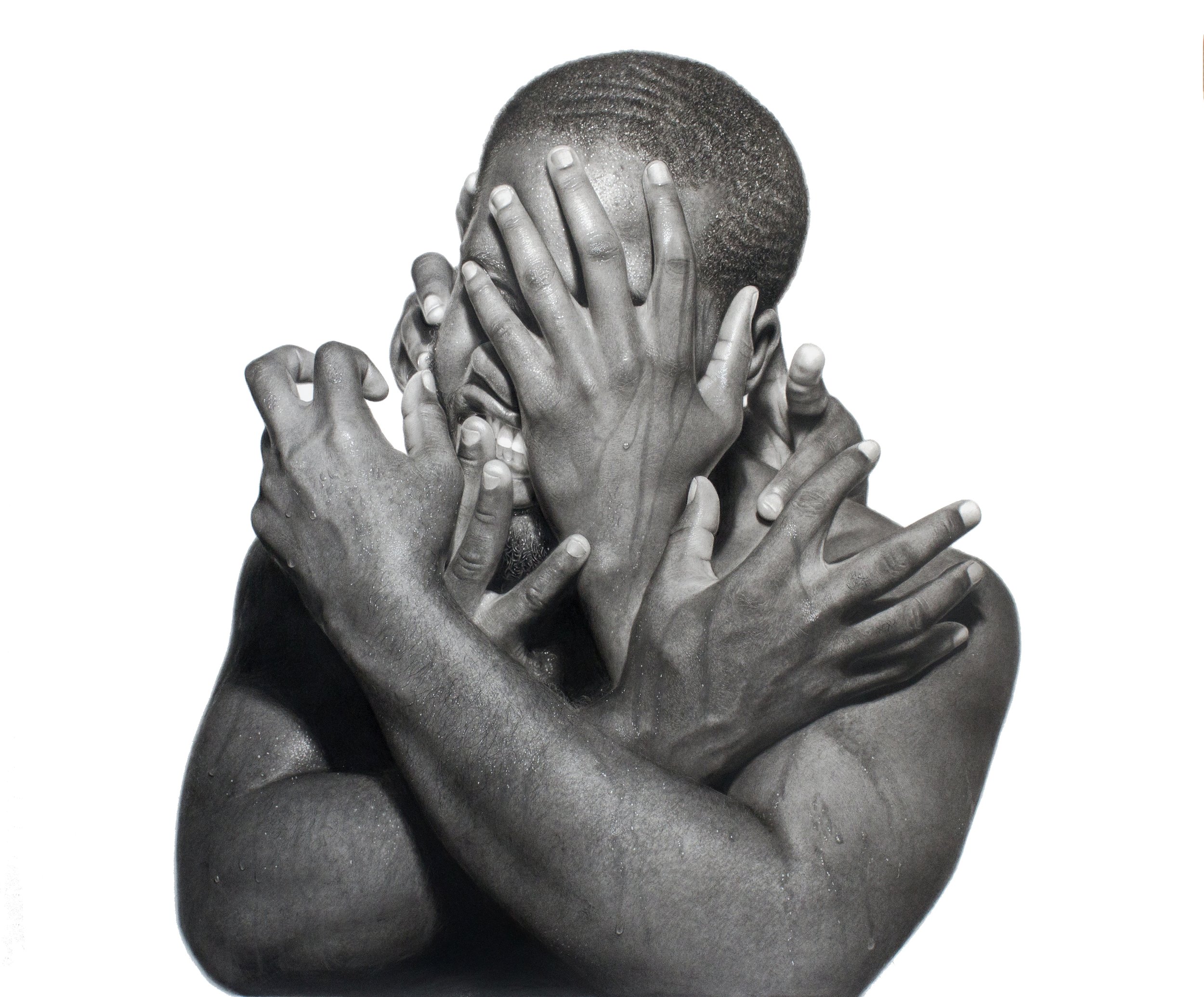
“Black Noise 2017” - by Arinze Stanley