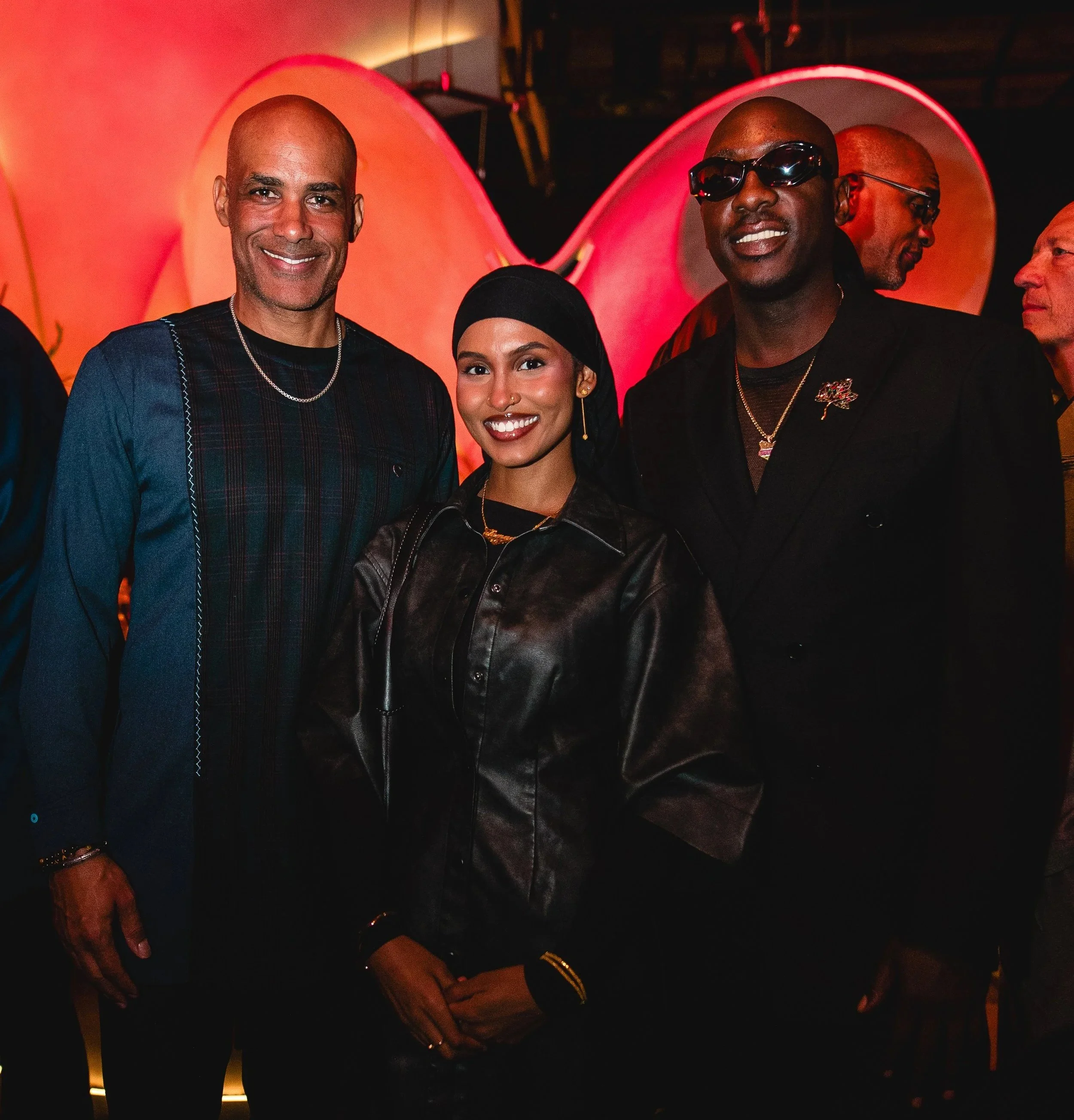
COG – Creating a Community for AFCON and Beyond.
This write-up and interview was conducted/drafted by Norman Busigu
From the first fixture which saw a beautiful bicycle kick fire the ball into the back of the net, to the final blow of the whistle in the nail-biting climax that had us all on the edge of our seats… the world just witnessed one of the greatest sporting tournaments on earth, with an unprecedented finale. The 35th edition of the Africa Cup of Nations (AFCON), has etched its place in the history books of sporting legend – complete with twists, turns and ultimate triumph for Senegal.
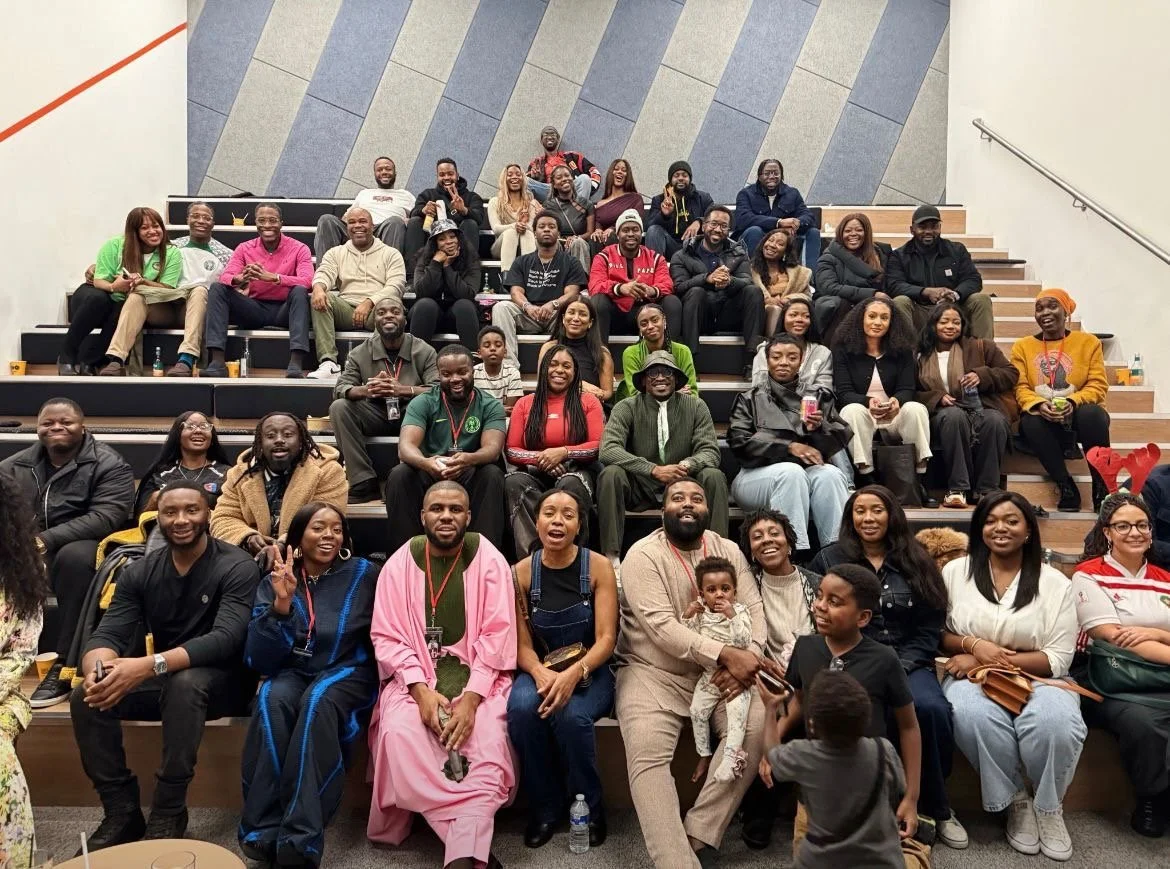
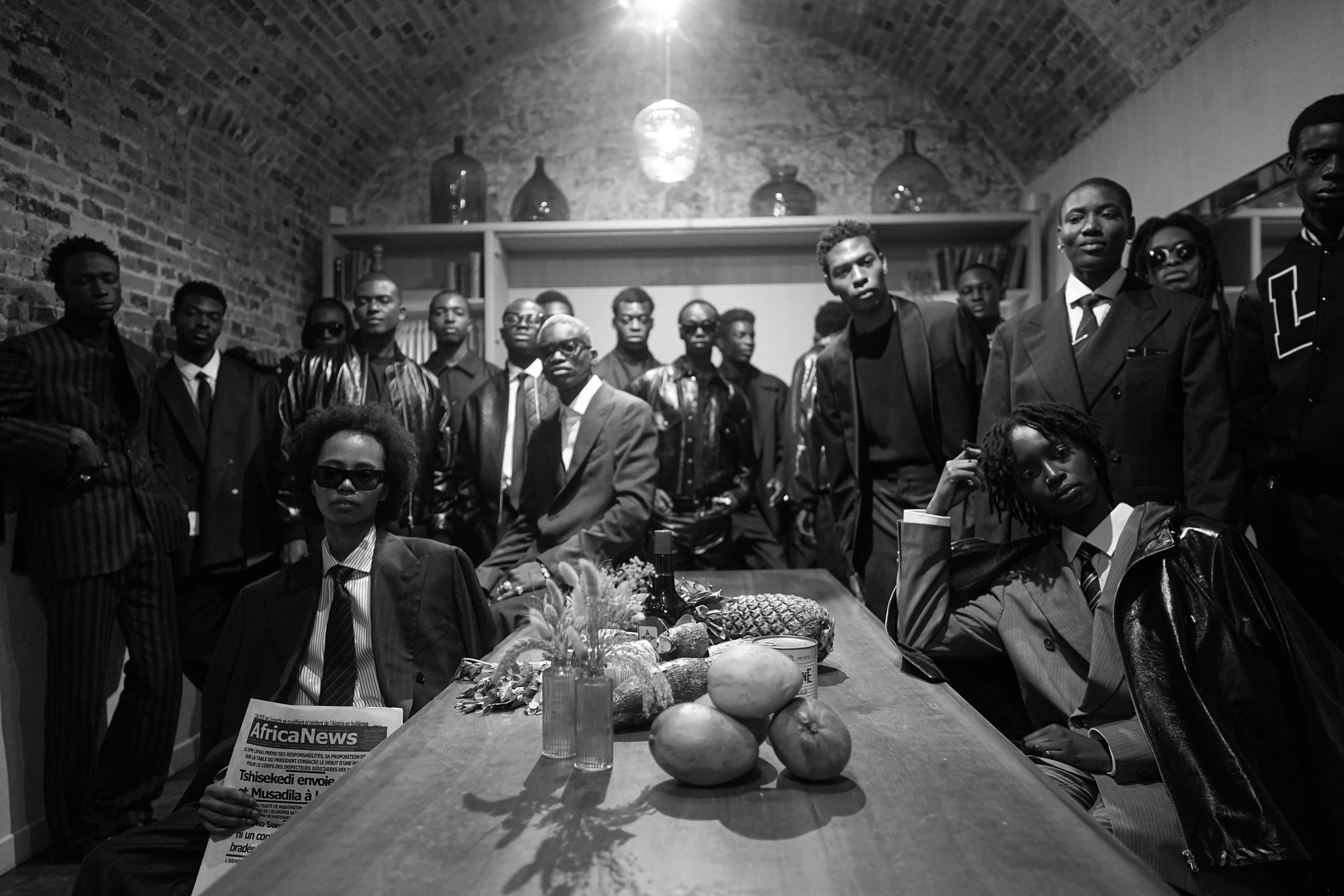
COG Event (image supplied)
Boasting an incredible viewership of nearly 2 billion in 2023, AFCON upped its game (pun intended) in 2025 by garnering the official partnership of media titan Netflix, and reportedly saw a 90% increase in commercial revenue - according to the Confederation of African Football (CAF). The CAF also went so far as to say that this was “the most successful commercial story in the history of African football!” And for the first time, western mainstream broadcasters such as Channel 4 (UK) provided live streaming for every game, enabling fans to immerse themselves in all matchups!
But it wasn’t always this way: it has been nearly a century of work to enable AFCON to reach this platinum standard of sporting and entertainment which is also helping to debunk archaic and pejorative narratives about Africa. Let’s take a step back in time to the beginning. First held in 1957 and only featuring Egypt, Sudan and Ethiopia, this sporting spectacle quickly grew to represent much more than just a kickabout of a ball… in time, it became a symbolic statement against colonialism. As the winds of change and waves of independence swept across the continent, pan African ideology began to solidify, representing the dawn of a new era, and AFCON became a conduit that carried this message.
The optimism of independence gave the nations across the continent new reason to celebrate their distinct cultures. Arguably, it served as a powerful means of reclaiming pride and identity. Hence why the national football uniforms, supporter fanfare (dances, songs, chants) etc represent so much to the players and fans alike. Congolese super fan Michel Nkuka Mboladinga - in tribute to Patrice Lumumba – caught the world’s attention by standing in an inanimate pose for the duration of each match, mirroring and honouring the former Prime Minister of the Democratic Republic of Congo. Now serving as a guardian of history, Michel’s actions had the dual impact of immortalising the legacy of legend, while educating the youth of today.
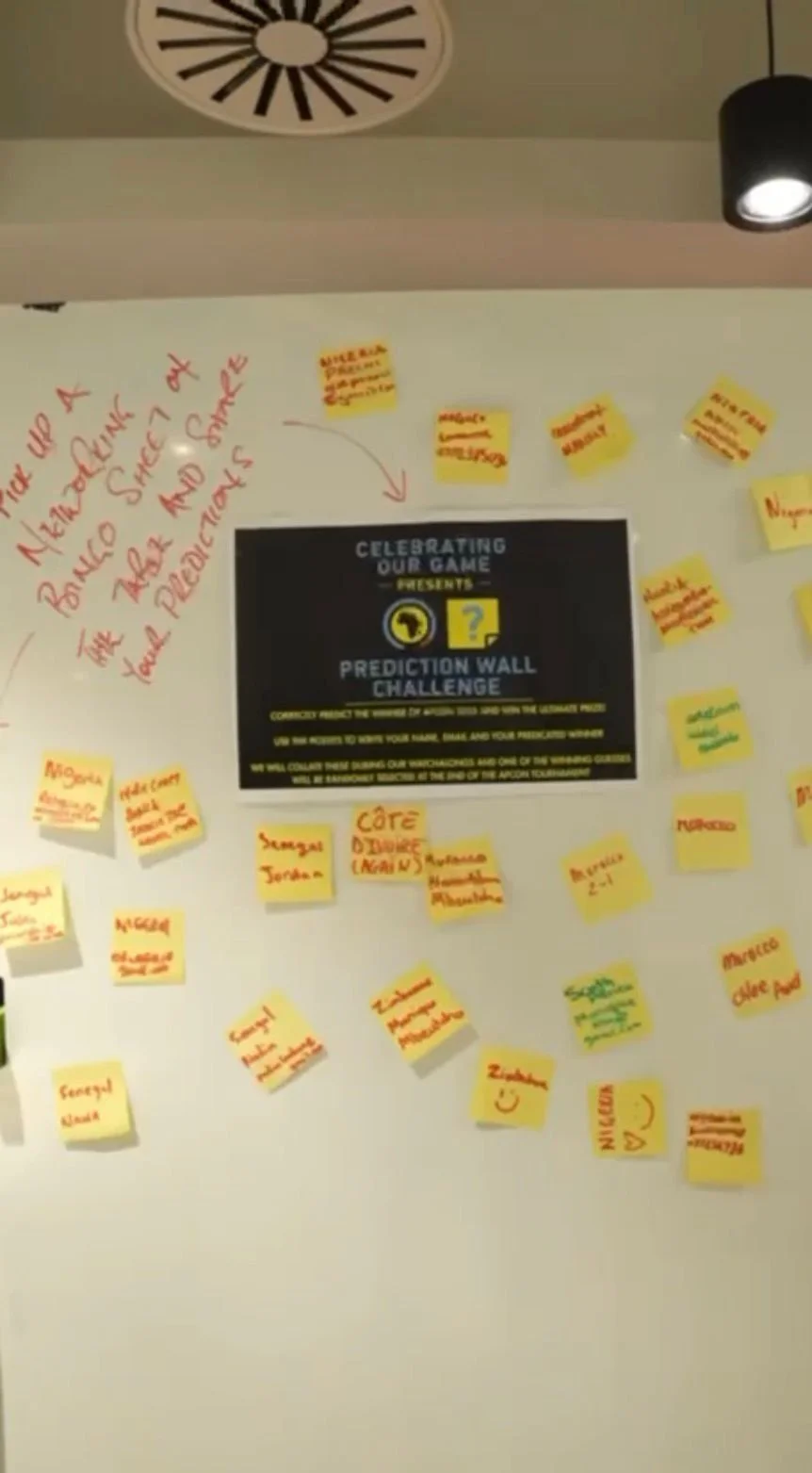
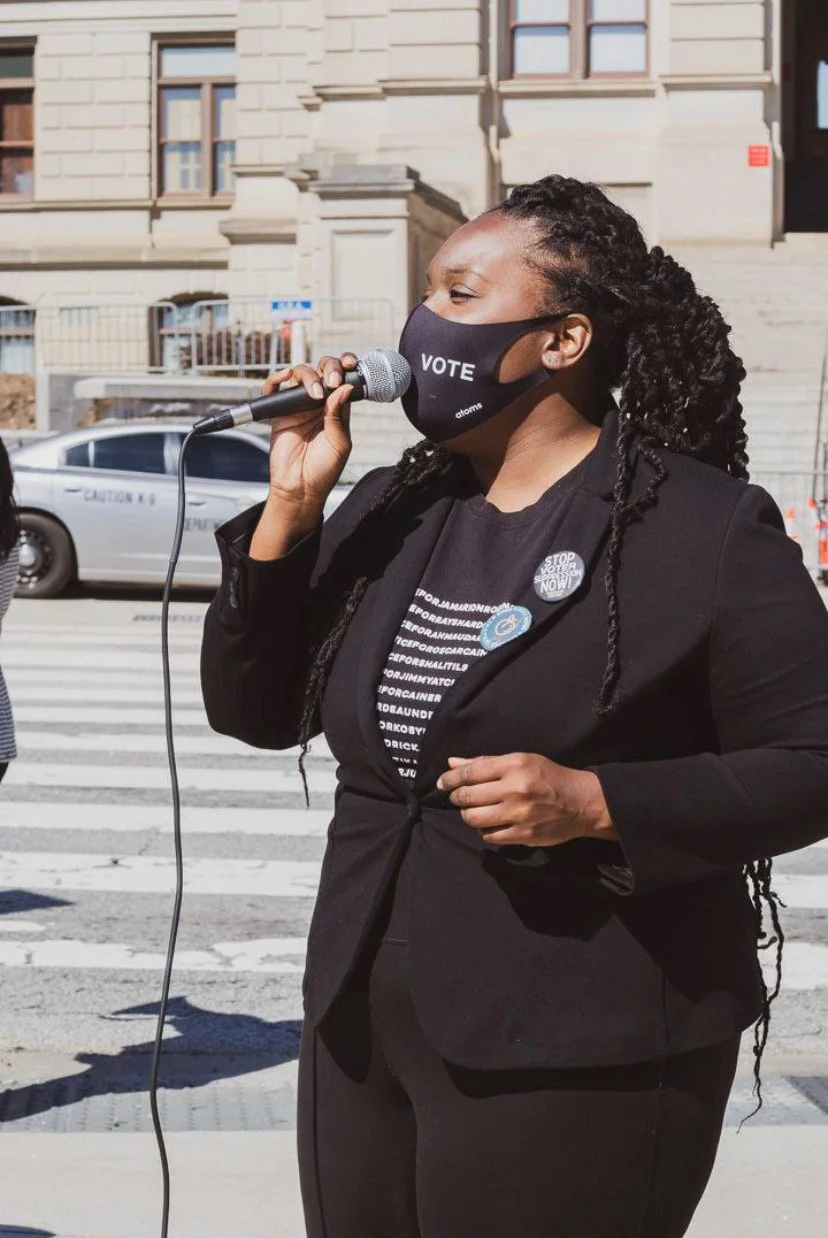
COG Event (image supplied)
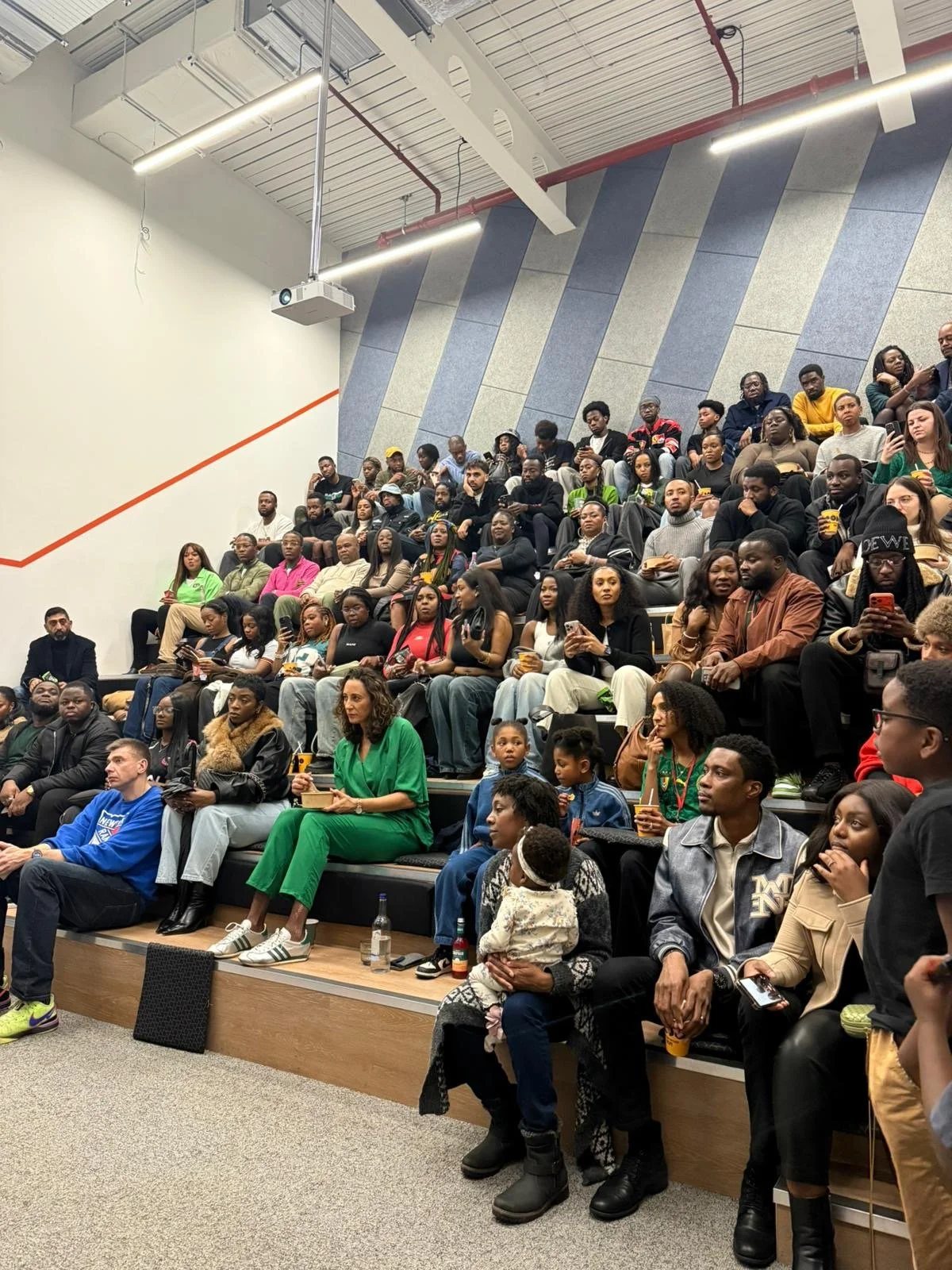
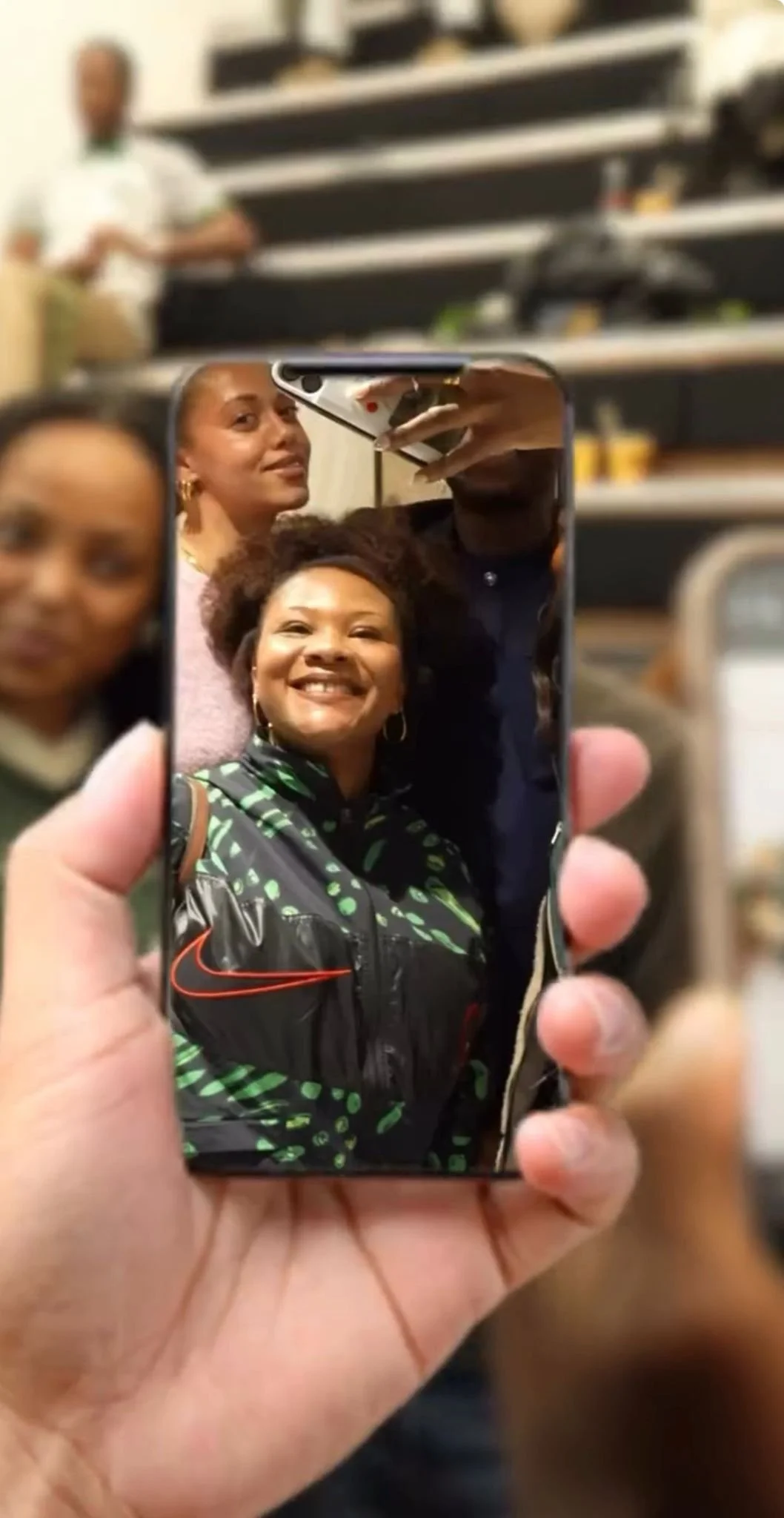
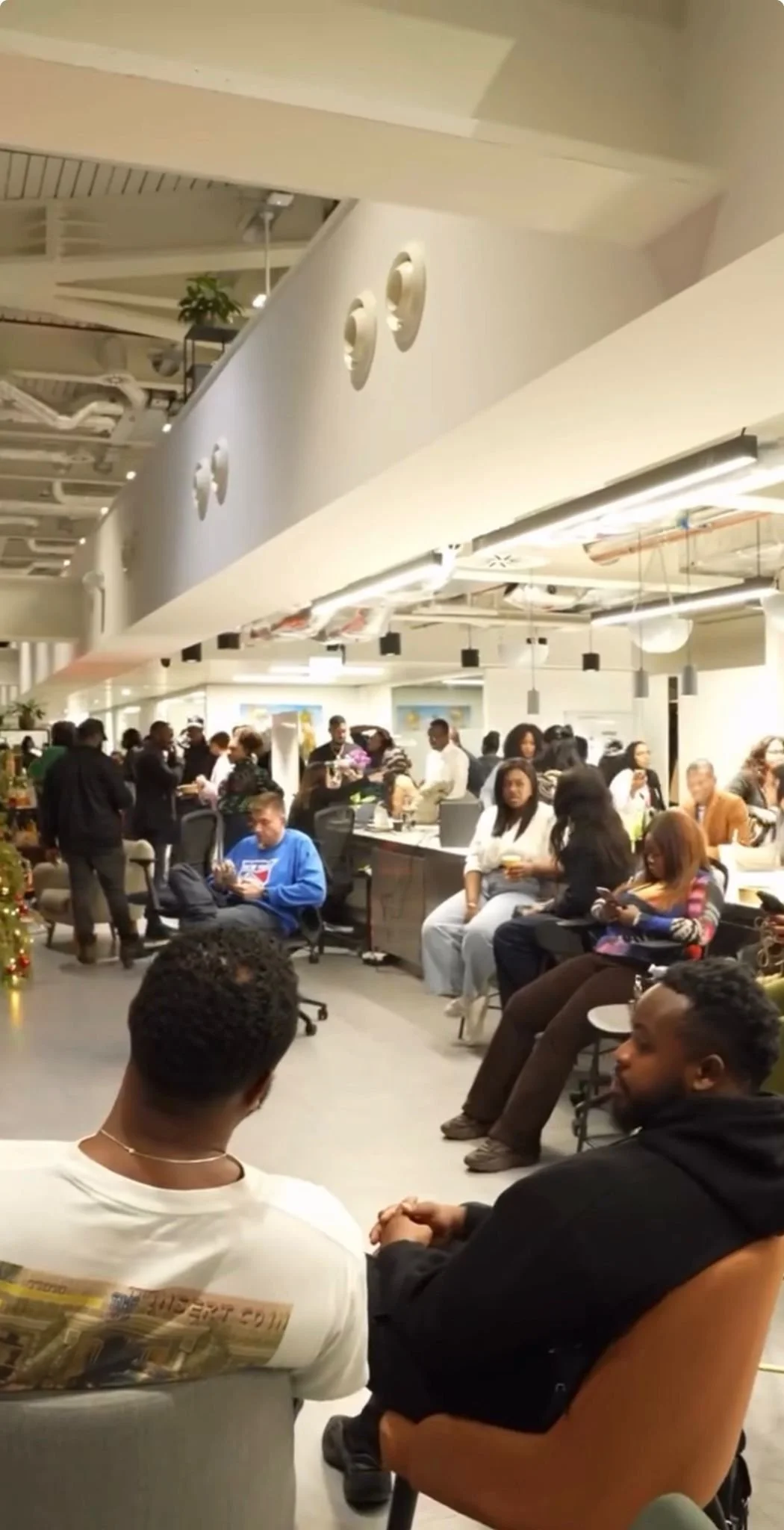
As AFCON continues to grow in prominence and popularity, one outcome is the rise of viewing parties and congregations for communities to watch the games live. This demand has created a new dimension to experience the tournament, and is something the team of Celebrating Our Game (COG) are executing flawlessly across London, UK. The COG team have created something special - it is deeper than filling a gap in the market: in an increasingly isolated and atomised society, they are bringing the African diaspora and general football enthusiasts (regardless of creed, colour or race) together to enjoy the game in a culturally curated environment that feels authentic. Having attended their first event in December 2025, I can attest wholeheartedly to the familial love, precise organisation and free flowing vibes throughout the night.
To date, COG has held a string of successful and sold-out events during the tournament, with the BBC even reporting live at the scene during their event for finals, and that same event being hosted by Priscilla Anyabu and Javan Odegah. From Bishopsgate to Shoreditch, prime locations in the heart of London were the meeting point for attendees to flock to in their hundreds. Albeit in its early stages, it is clear that COG are doing more than just showing sports on a big screen - they have truly harnessed the power of community while simultaneously tapping into the wider African/Caribbean eco-system.
COG Event (image supplied)
I had the opportunity to check in with Stephanie Nneoma - one of the core members of the COG team, to gauge her views on why AFCON is so important to her/the culture, the realities of executing events of this scale, her involvement/reflections and more…
***
1. Why did you choose to create Celebrating Our Game (COG)?
Last year during AFCON, NNESAGA worked alongside a few previous partners on AFCON finals watch party. The response was immediate and clear — there was a real gap in the market. People wanted more than just a place to watch football; they wanted a space that truly amplified and celebrated African football in its entirety, the culture, the community, the pride, and the stories behind the game. That experience made us realise this couldn’t be a one-off. This year, we wanted to double down and build a series. Celebrating Our Game came from a very simple mindset: if no one’s going to do it properly, we do it ourselves. Sometimes we have to be the ones to showcase and celebrate ourselves, on our own terms.
2. What personal significance does AFCON hold in your life?
AFCON has always been deeply personal to me. Growing up, I played football, so watching the tournament wasn’t just entertainment, it was inspiration. Seeing homegrown African talent step onto that stage and represent their countries meant so much more. It showed what was possible.
Beyond the game itself, AFCON represents identity, pride, and belonging. It’s one of the few moments where African excellence is fully centred and unapologetically celebrated. That connection — emotionally and culturally has stayed with me, and it’s a big reason why COG exists.
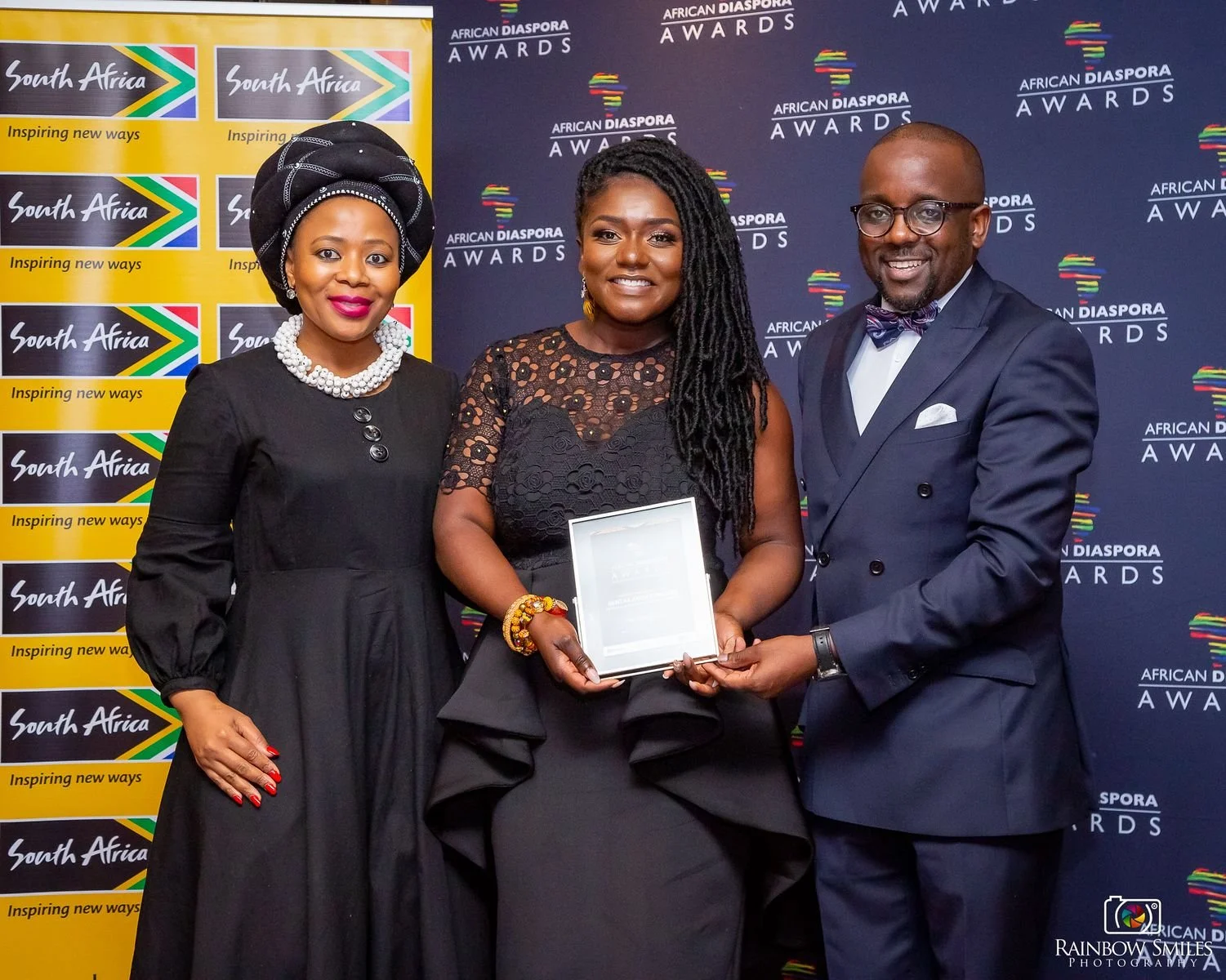
COG Event (image supplied)
3. Why do you think AFCON is so widely celebrated among the African diaspora and growing globally?
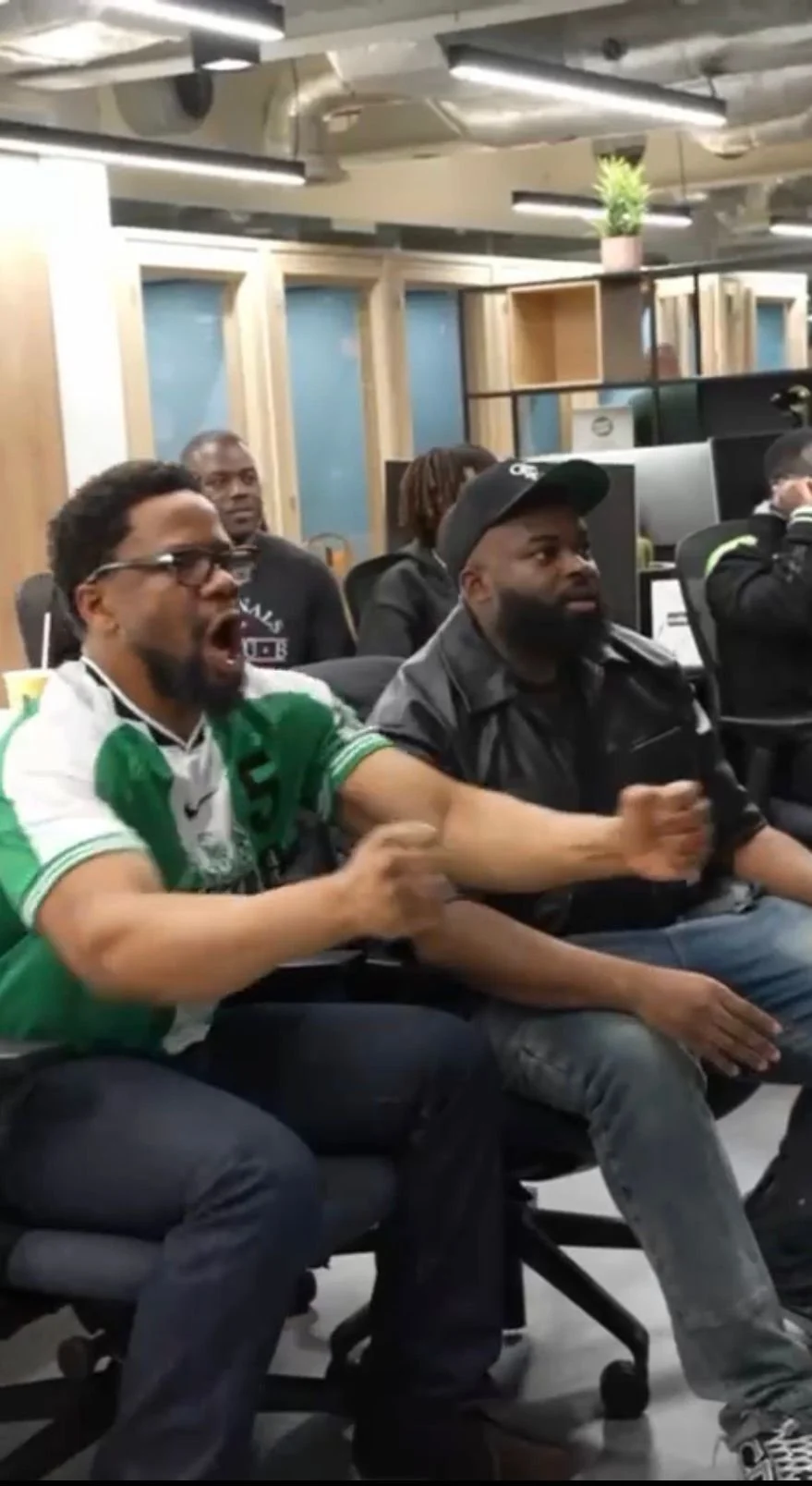
AFCON resonates because it’s raw. It’s football in its purest form; full of flair, emotion, unpredictability, and personality. The style is expressive, fearless, and entertaining. People don’t want boring football, and AFCON delivers the opposite.
COG Event (image supplied)
For the African diaspora, it’s also a cultural anchor. It connects people back to home, to memories, to family. Globally, fans are increasingly drawn to authenticity and story, and AFCON offers both in abundance. It’s impossible to ignore.
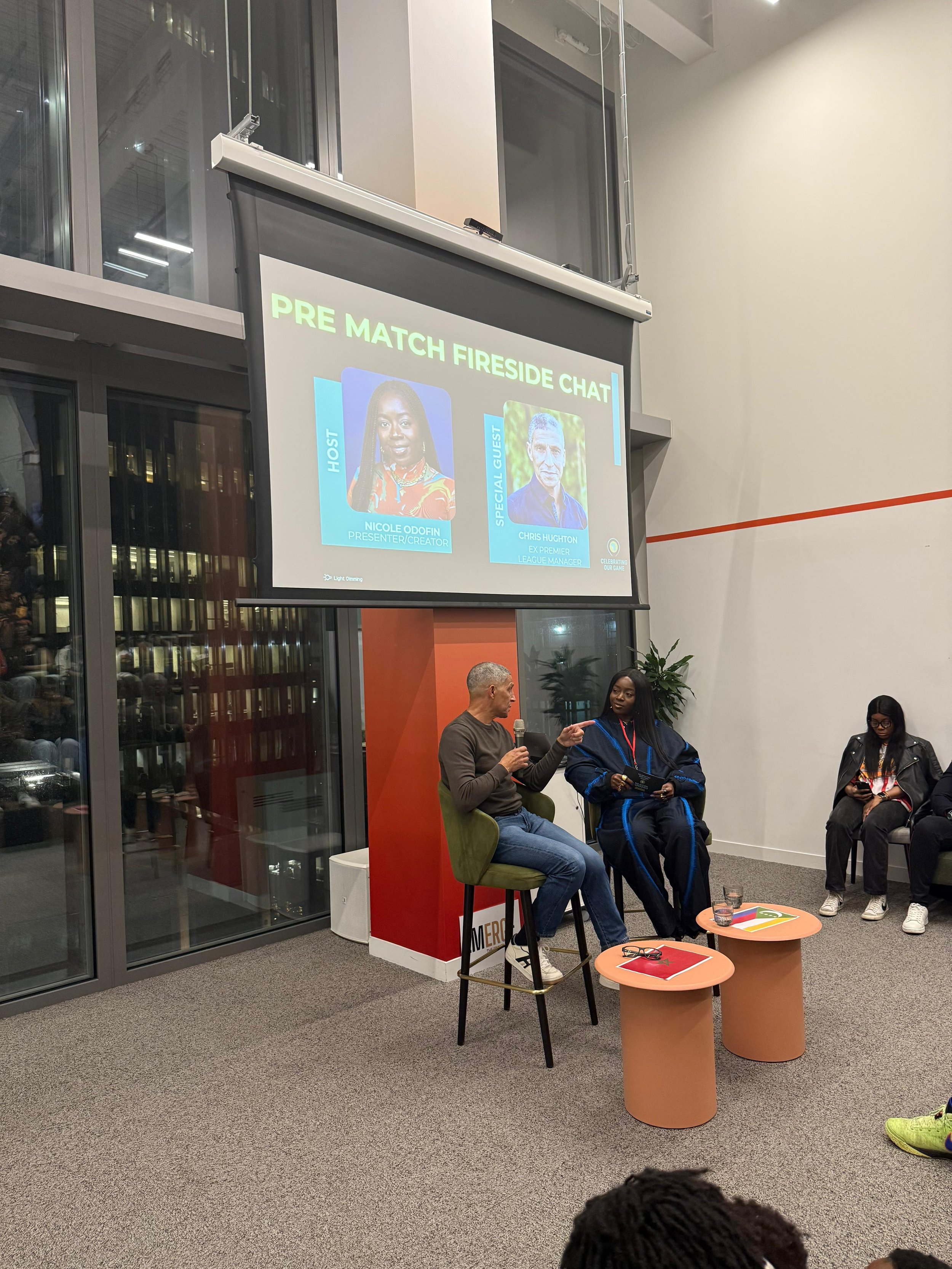
4. What were some of the biggest takeaways from the fireside chat with Chris Hughton?
One of the biggest takeaways was the importance of structure and long-term thinking within African football. Chris spoke candidly about development pathways, leadership, and the need to build sustainable systems that support players beyond raw talent.
Fireside Chat with Nicole Odofin and Chris Hughton (image supplied)
5. Based on post-event feedback from attendees across the three COG events in December 2025, what did they like most?
The strongest feedback was simply that there is real demand for this. People loved that something was finally happening that felt intentional and truly for the community.
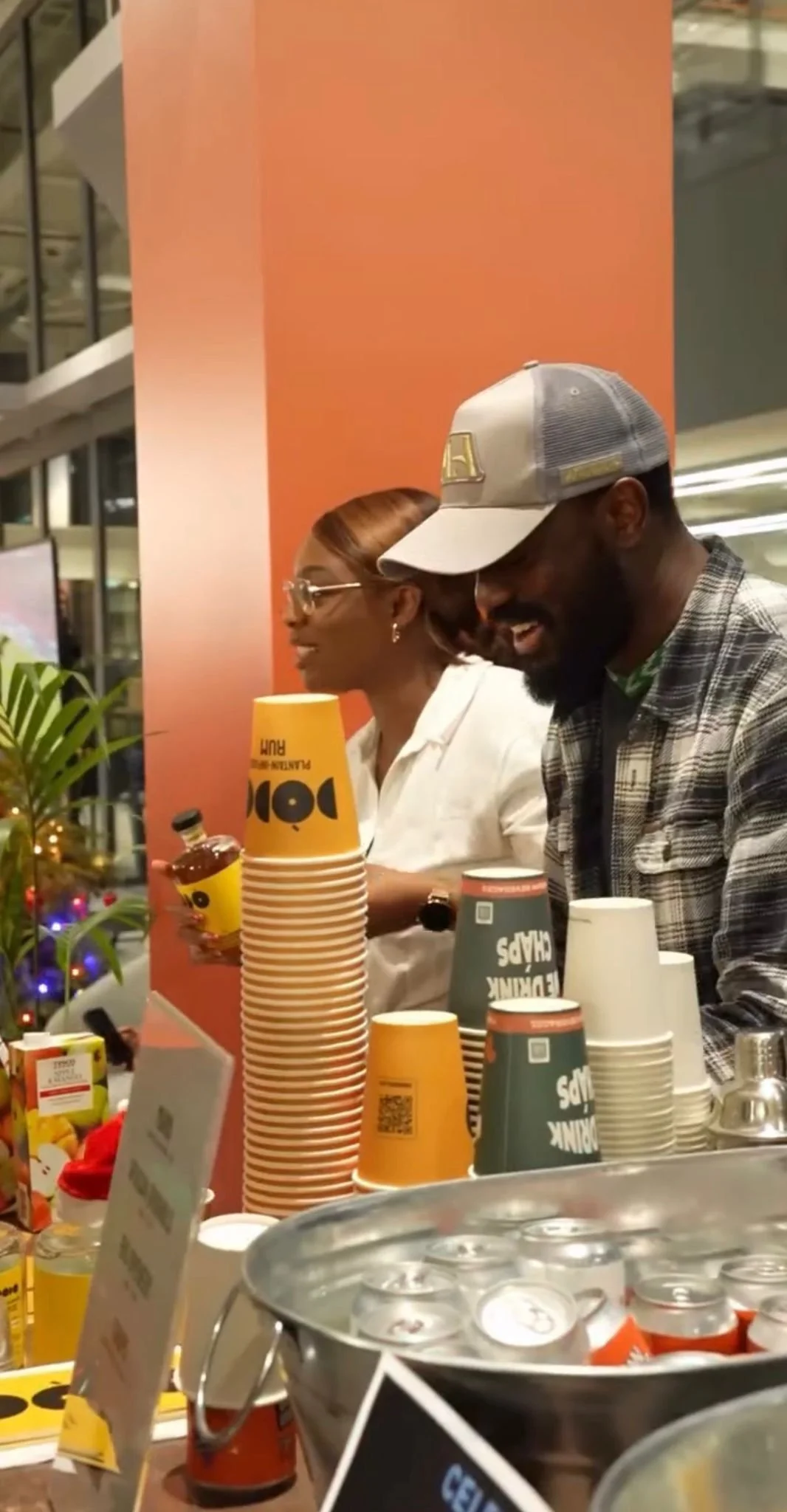
Attendees also deeply appreciated the spotlight on African and Black-owned businesses. It wasn’t just about watching matches, it was about celebrating the wider ecosystem around African football. People felt proud to be in the room and excited that this platform exists.
COG Event (image supplied)
6. What is your advice to anyone hoping to put on culturally authentic events at scale?
Just do it. If nobody’s doing it, don’t wait around — do it yourself. Culture doesn’t wait for permission, and everyone else usually plays catch-up.
Be intentional, start with your community, and lean on your network. You don’t have to do everything alone. When the intention is genuine and rooted in lived experience, people feel it — and that’s what creates real impact.
7. What were the biggest challenges you experienced in executing these events, and how did you overcome them?
The biggest challenge was balancing ambition with resources. We wanted to deliver depth, speakers, vendors, music, and production while staying true to our values and working within realistic constraints.
Clear prioritisation helped. We focused on what mattered most: the experience and the people. Having trusted partners, a strong team, and the ability to adapt in real time allowed us to overcome challenges and build something we’re proud of — and something we’re excited to grow further.