Is African Art Undervalued In The Global Marketplace? Learn How ToyoWrites Is Levelling The Playing Field
This article was drafted by Norman Busigu
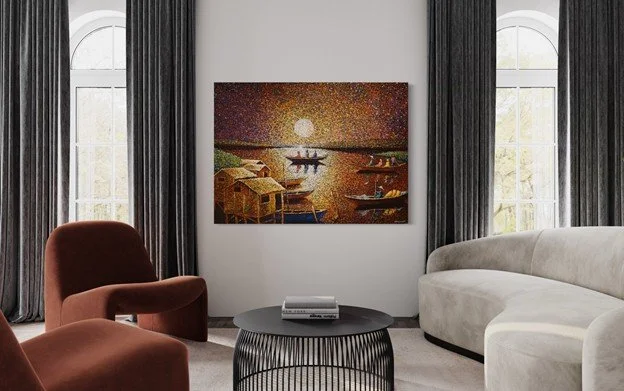
Image supplied by Toyosi Olowe
The Business of Monetising Art
Visual art throughout history has long served - in its purest form - as an unfiltered medium of human expression, enabling one to vividly or fictionally express their inner most thoughts and interpretations of reality onto a 2D or 3D canvas. (Traditional) African visual art – from Hieroglyphics to the Benin Bronzes – is revered for its distinctive and deeply spiritualistic forms that have not only influenced modern European art, but also held the function of preserving the cultural heritage of kingdoms across the continent. At times, it is even considered as a means of communicating with the divine.
Despite its historical and contemporary significance however, African visual art faces the challenge of translating its credibility directly into the high monetary valuation and critical acclaim that it (arguably) deserves in the global art market. For context on the disparities at play, this market in 2024 generated sales worth approximately $57.5bn, with African born artists only generating an estimated $77.2m in 2024 at auction sales (a figure which is down 31.9% year-on-year). This circumstance has made it extremely difficult for African works to be exhibited on world stages, receive reviews from credible institutions, and produce the revenue necessary to enable their talented creators (both on the continent and diaspora) to sustain a living.
From Easels, To Exhibitions, To Excelling In Entrepreneurship
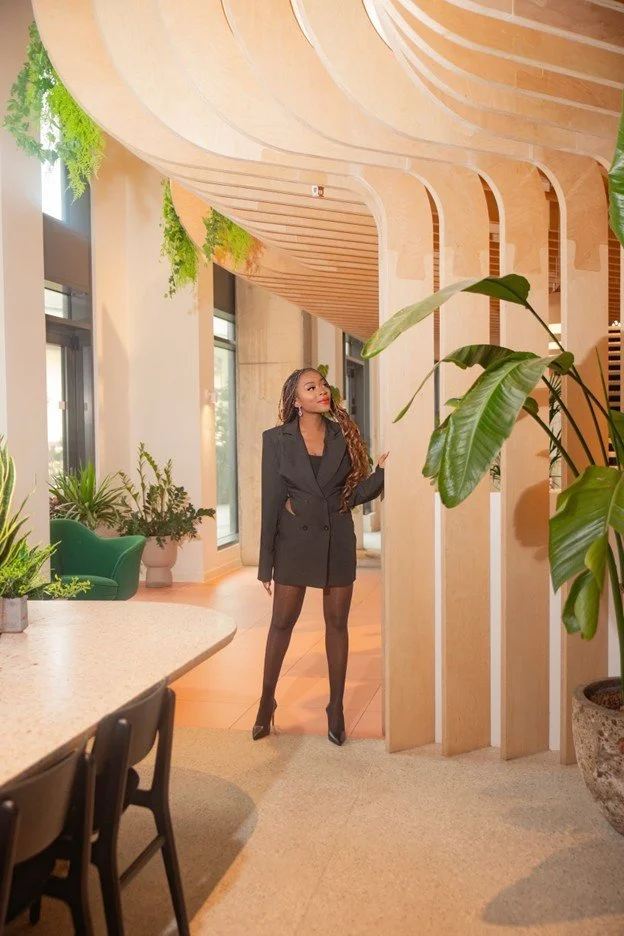
Image supplied by Toyosi Olowe
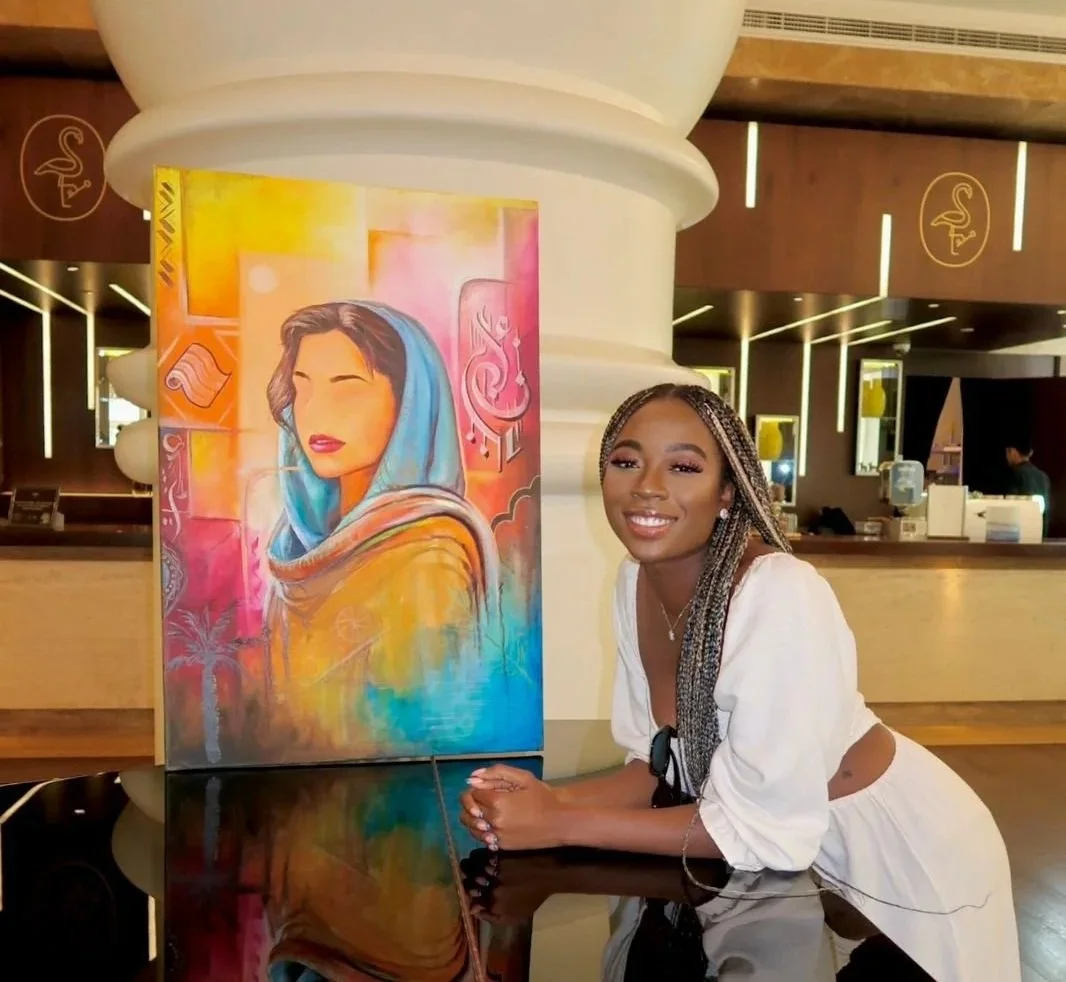
For Nigeria-born, award-winning visual artist and art consultant Toyosi Olowe, these are issues that she is all too familiar with. Her frank assessment of the landscape was succinctly articulated to me: “the global art market has historically been shaped by institutions and gatekeepers that didn’t always prioritise diverse voices.” As a result of this harsh reality which she has experienced, she revealed to me the sombre truth that as an African woman entrepreneur, “there are moments where you have to work twice as hard to be taken seriously in certain spaces”.
Yet despite these obstacles (through standing firm in her “talent” and “experience”), she has fiercely swum against the tides, and gone on to impressively have pieces commissioned for up to £15,000 (as a single piece) and above, reflective of the premium standard of art that she handles. This is alongside exhibiting in the likes of Christie’s London (which is recognised as a world-leading art and luxury auction house). Notably, in 2020, she launched ToyoWrites (TW). Simply put, this is an expansive e-commerce art brand/company that provides art décor and custom designs for private customers. Within this, she highlighted that TW places a “focus on storytelling - explaining the meaning behind works, the artists’ backgrounds, and how art can elevate environments”.
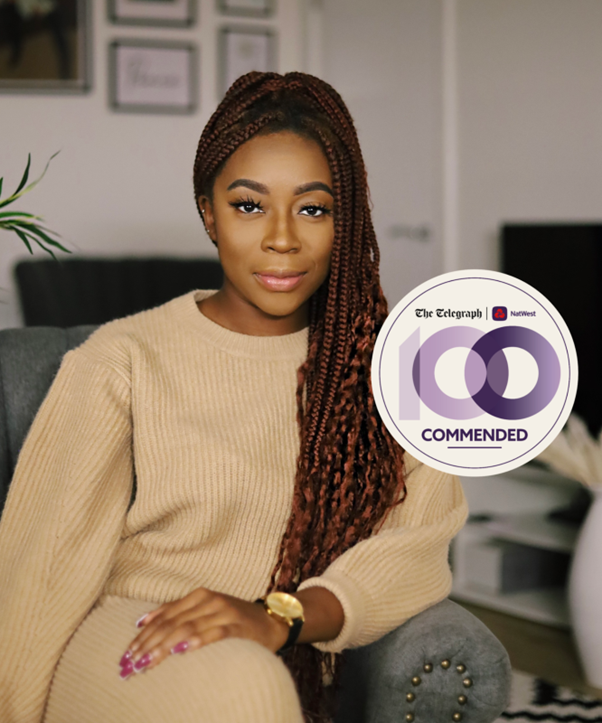
Image supplied by Toyosi Olowe
The premise, potential and growing prominence of TW garnered Toyosi a coveted spot in the Top 100 Female Entrepreneurs to Watch by The Telegraph and NatWest. But for Toyosi, the real turning point she explains, was receiving a co-sign by A-list Hollywood Actor Meagan Good. This moment served as an inflection point in her journey, from which she realised that she no longer had any “limiting beliefs”. Since becoming the first full time entrepreneur in her family, she has been steadfast in her mission through TW to “merge African art with global luxury design”. Over time, she came to realise that her pursuits weren’t “just ambitious… It was needed.” Importantly, her offerings aren’t exclusively intended to only serve Africans/the diaspora. Rather, “my art transcends race and meets the aesthetic needs of my clients”.
More than just levelling the playing field, she is helping African art/artists enter into the upper echelons of an opaque industry that has few entry points, and that is predominantly reserved for those from certain traditional backgrounds. To this end, Toyosi through TW works to “demystify” the industry, acknowledging that “the art world can sometimes feel intimidating, especially for people who didn’t grow up around galleries or collecting culture” … In actively working to make the industry more inclusive for all, she offered insight into some of her processes used to achieve this i.e. “when speaking to first-time buyers, I always tell them: the most important rule of collecting art is emotional connection”.
Gracious and humble while detailing her decorated array of accomplishments as we spoke, she consciously keeps herself grounded through “faith and purpose”, referring to God as her “CEO”. Recognising that she operates under His guidance, there is an almost philanthropic philosophy running through the veins of her business, as it serves a true cause rooted in people, well-being and expression. Indeed, as she explained to me very passionately, “TW isn’t just about my own artwork; it’s about creating global platforms for African artists and cultural stories in luxury spaces; completely destroying the idea of being a broke artist, or creativity being undervalued, or African art being overlooked”. Further to this, she believes TW is truly becoming a vehicle that is “connecting the diaspora to the continent through creativity”, with TW embodying both a needed “a cultural conversation and luxury ecosystem”.
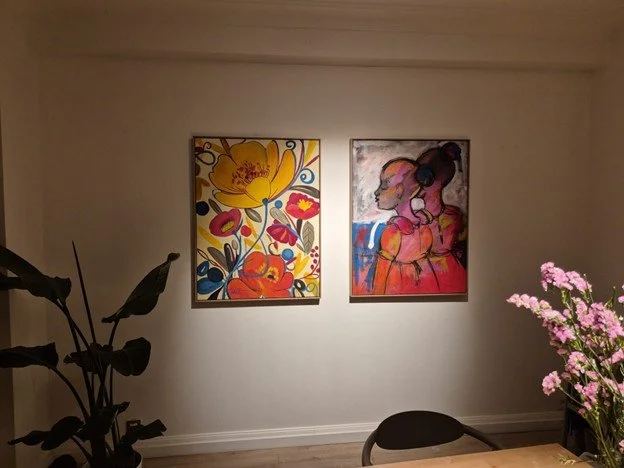
Image supplied by Toyosi Olowe
Strengthening The Connection To Home
In order for me to truly understand the sentimental relationship she holds with Nigerian culture, this (unexpectedly) required us to take a trip through the history of her bloodline. Born in Ibadan and belonging by lineage to the Yoruba (one of the largest ethnic groups in Nigeria and West Africa), she holds an ancestral affinity to visual art as a discipline. Having previously described her art (which takes the form of paintings, canvas, mixed media posters and more) primarily as “abstract” – this is not by chance. Why? Yoruba religion and imagery is known for its reliance on bearing coded messages … taking it one step further, she is a descendant of Olowe of Ise (regarded as one of the most important 20th century Yoruba artists), whose works she has actually viewed at the Dallas Art Museum and the Nigerian Modernism Exhibition at the Tate.
With the calling for art clearly being in her DNA, her decision to become an artist was one it would seem by divine design – which goes some way to explain the joy she exudes when speaking about the topic. But the signs were always there, as teachers at her secondary school in London continuously flagged that she was naturally gifted at art. As she came into her own as an artist, her Nigerian culture organically found itself weaving into the nucleus of her works. As she poignantly pointed out to me, “art became another way to explore (her Nigerian) identity. Nigerian culture is vibrant, expressive, and emotionally rich, and those qualities naturally influenced my colour palettes, textures, and themes and silhouettes”. For her, “maintaining that link (to Nigerian culture while in the UK) was important because heritage gives depth to creativity”, and without this cultural “grounding”, one’s art she believes can become “emotionally hollow”.
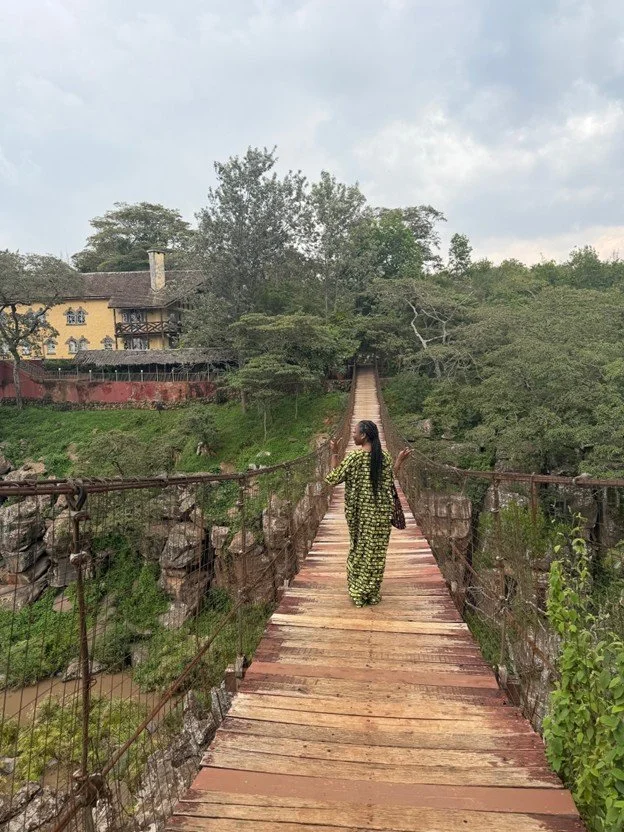
Image supplied by Toyosi Olowe
With a background in Law and Business from Warwick Business School and a corporate career which was kickstarted at KPMG, Toyosi made the decision to exit after three years in full pursuit of building TW. Born in the depths of the COVID 19 Lockdown in London - while we were all confined to our four walls - TW was initially created as a means of expression and to curate environments that centred well-being in what was an extremely uncertain and stress-inducing time for us all.
But this was not met without resistance. Like so many traditional African parents who express great reservation about their children pursuing a career in the arts in favour of a more lucrative trade like law, Toyosi’s parents were no exception to this. As Toyosi honestly reflects, “this was probably one of the most emotionally complex parts of the journey”. But as she explains it, “many African parents grew up in environments where stability was survival”. With the gift of hindsight, she has come full circle “to understand that their caution came from love”.
Using the scepticism and doubt she experienced against her dreams as fuel, she explains that she “was determined to use all my strengths to prove naysayers wrong. Which happened very quickly with Hollywood endorsements and VIP clients”. In spectacular fashion, previous exhibition venues have included the likes of Google, John Lewis, Boots, HSBC, Barclays, and more. She then added “but what helped was patience and proof... Instead of trying to convince anyone through words, I focused on building quietly and consistently. As TW began gaining traction - exhibitions, international clients, and media features - the narrative started to shift.”
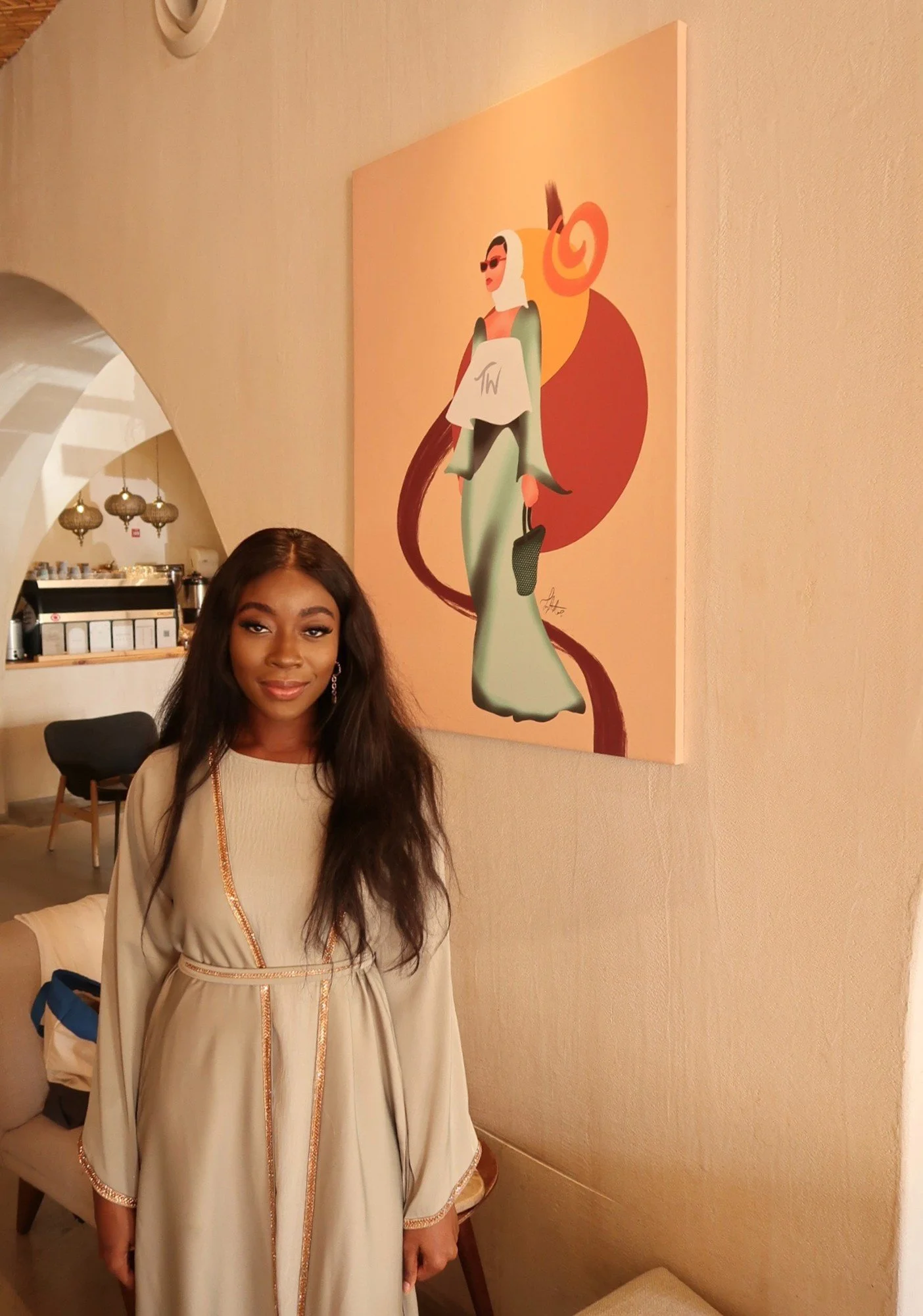
Image supplied by Toyosi Olowe
The Middle East’s Appetite For African Art
While London offers a world class systems-driven environment that is conducive to forming “professional networks”, “institutional credibility” and ultimately “a long-term brand”, as Toyosi sees it, it is not without its shortcomings. Speaking on this, she urgently highlighted that “representation is still a challenge”, but that “the rise in female artistry being sold at auction and power of black and female art collectors is moving the dial.” For Toyosi, true change “will require more inclusive curatorial practices, funding opportunities for emerging artists, and greater visibility for African creatives globally in rooms of power.”
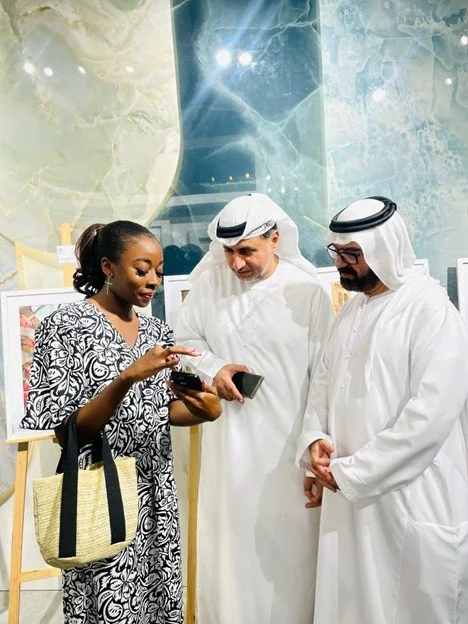
Image supplied by Toyosi Olowe
Taking note from her experiences of Black-American culture during previous trips to L.A. and Dallas, she was particularly struck by “the power of black support to black arts” - observing the genuine love and comradery within Black-American communities. She not only found this “extremely inspiring”, but believes is something “the UK (Black-British communities) could learn more from”. Having recently visited Atlanta for the first time, I wholeheartedly agree with her perspective. In light of this, “moving from London to Dubai was a strategic and creative decision: expand my business reach (and) network with even more elite minds”.
I was very intrigued to understand why there is so much interest in African art/culture in the Middle East. Toyosi offered incredible insight, explaining that “The Middle East - particularly Dubai - is a fascinating cultural crossroads. It’s a city where people from every continent come together, and that creates a natural appetite for global storytelling through art… There is also a growing appreciation for authenticity. Collectors and developers are looking for pieces that carry history, identity, luxury and cultural depth. African art does that beautifully.” From a business standpoint, she went on to detail that “Dubai moves at remarkable speed... It’s one of the few places in the world where bold ideas can materialise quickly if you position them well”.
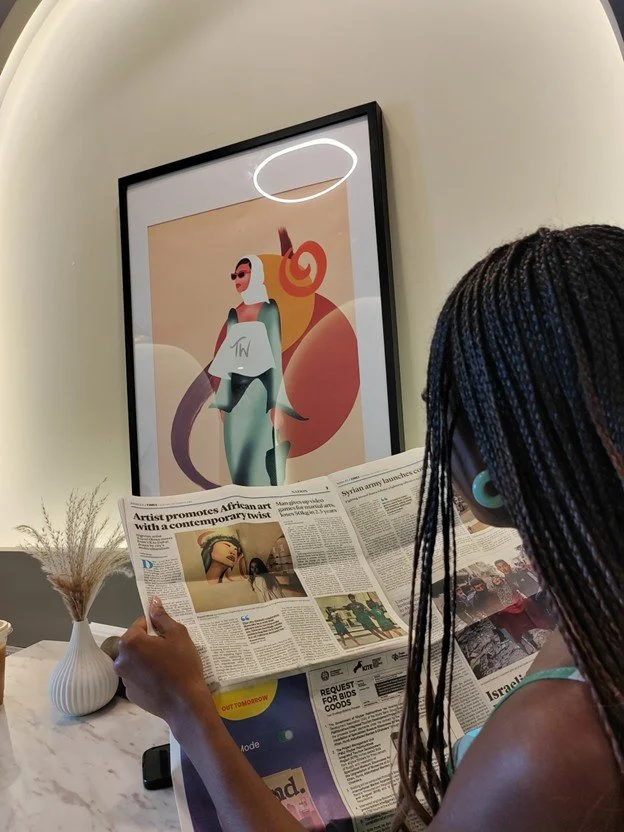
Image supplied by Toyosi Olowe
During her time in Dubai, she has observed that “the city celebrates ambition and multiculturalism, which allows artists to bring their heritage into global conversations”. One thing I found fascinating to learn during our conversation, was the ease of Toyosi’s social integration into Dubai – an experience which she has described as “quite empowering”. Her experiences there have shown her that “Dubai rewards innovation and bold ideas”; there is definitely truth in her testament, being someone who has led international décor projects in Saudi Arabia and featured in the Khaleej Times, for instance. What she’s taken most inspiration from while out there, is how “collaboration happens across industries… art, architecture, hospitality, and technology all intersect here.”
Looking forward, 2026 is all about “expansion” for Toyosi - having just finished birthday celebrations in Kenya which “opened my eyes to the depth of the world’s horizons” (and is currently now in Lagos). Off the back of this, she alluded to “new collaborations, installations, and projects across international markets” that she has in the pipeline. As we closed out the conversation, her parting advice was simple: “dream boldly, but build patiently. Business is not a sprint but an ever-evolving marathon; Art itself is an extension of God’s likeness as a creator, so enjoy creating. Stay consistent, remain authentic, and honour your unique voice”.
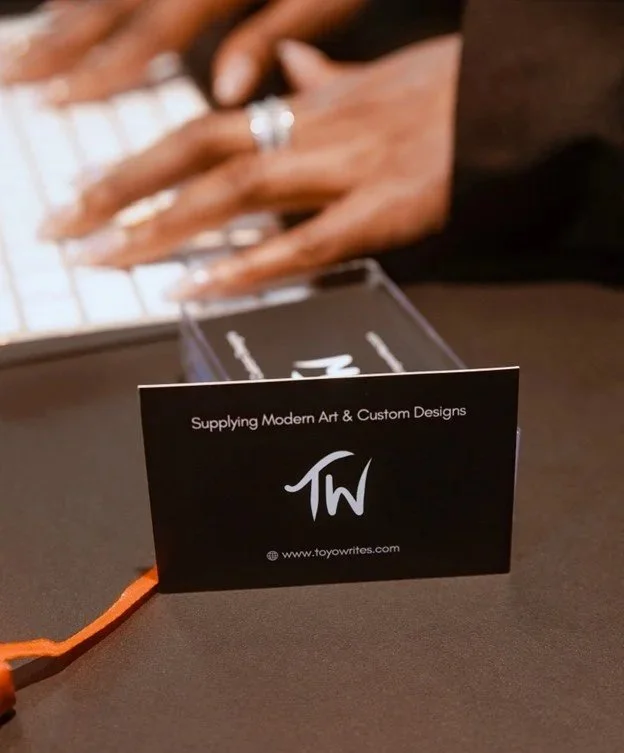
Image supplied by Toyosi Olowe