Passing The Torch: Angie Greaves & Zeze Millz Dissect The Realities Of Sustaining A Successful Career In British Media
This article was drafted by Norman Busigu. Special thanks goes to Angie Greaves, Zeze Millz, BelEve, The MOBOs/House of MOBOs and Palmer’s UK.
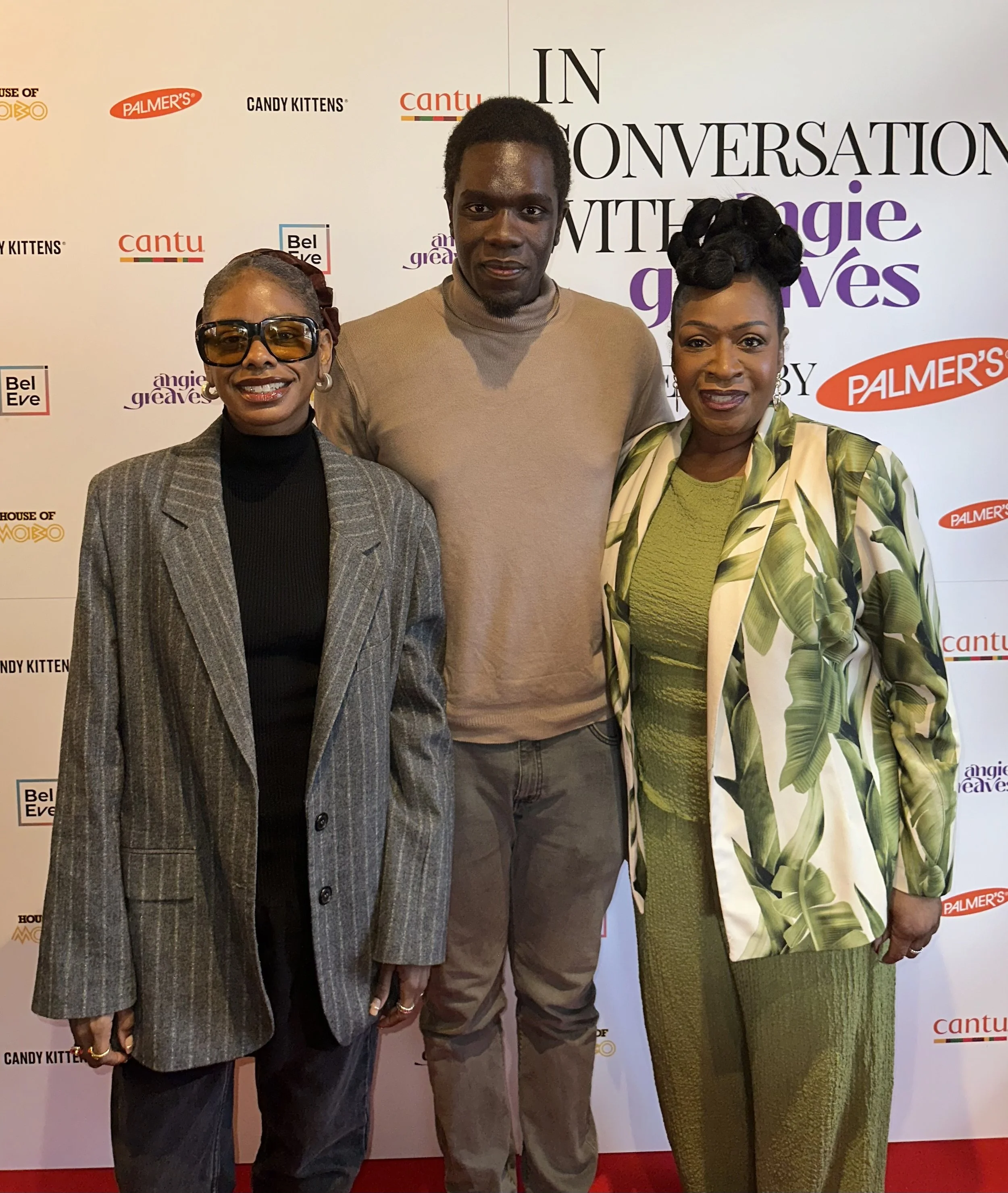
Pictured: Angie Greaves, Zeze Millz and Norman Busigu
Heartfelt Honesty With A Side of Hors D'oeuvres
The first time I met Angie Greaves was during an exclusive pre-BAFTA evening soiree with Variety at 1 Hotel Mayfair in February. The sophisticated shindig offered a secluded setting for media veterans and emerging talents like myself (who were closely handpicked) to come together in a lush private suite that provided picturesque and panoramic views of London’s renown West End. Amidst live entertainment, stimulating conversations, captivating key-note speeches and fancy finger foods, fate would have it that I cross paths with Angie at the tail-end of the event.
Well aware that time was in short supply before we had to leave, we skipped the small talk and immediately delved deep into discourse that revealed the core of our characters, our perspectives on the state of contemporary British media and – most importantly – our lived experiences as Black-British broadcasters navigating the layered complexities of (what can feel like) an opaque industry. The good, the bad, and the ugly. This sincere exchange has since set the foundation for a blossoming mentor-mentee relationship between us both. But I wasn’t speaking to just anyone so candidly about these sensitive topics… Having been in the industry for 35 years, Angie stands as arguably one of the most distinct and trusted (Black) British voices in our media landscape today - making her POV all the more potent and pertinent.
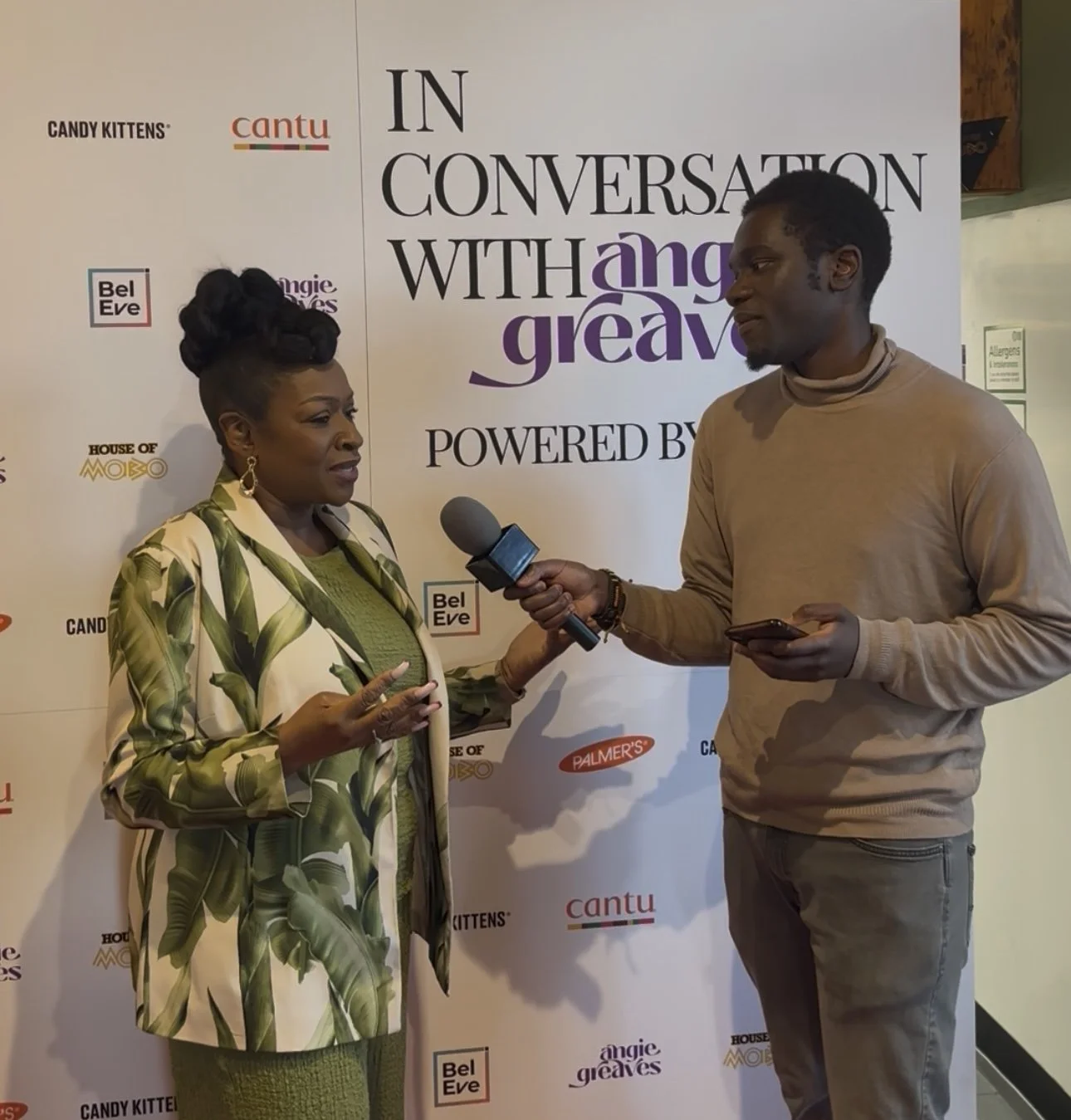
Pictured: Angie Greaves and Norman Busigu
A true trailblazer, Angie in 1992 became the only black female drive-time DJ on London radio, redefining what representation looked and sounded like. In the process of crafting sensational soundscapes across our airwaves, she garnered undeniable popularity across the country (and beyond). Fast forward to 2026, Angie boasts a significant array of achievements, including: a 12 million monthly listenership with Smooth Radio (having previously been at the likes of Magic and Choice FM), being the vibrant voice for TV campaigns and numerous documentaries with BBC and Channel 4, and interviewed high profile names including Mariah Carey and Gok Wan.
Discussing The Disparities That Exist
Now firmly positioned as a seasoned elder stateswoman that has withstood the test of time, Angie passionately possesses an altruistic spirit and amiable aura that is rooted in pursuit of achieving the greater good for the (Black-British) culture and community. As she explained to me, her call to action came during her time at Magic, where she “realised that the next generation need to be spoken to” and that “If I don’t, who will?” To this end, she has been consistently outspoken in her commitment to improving access and opportunity for Black-British talent by selflessly throwing the rope back for those coming up behind her.
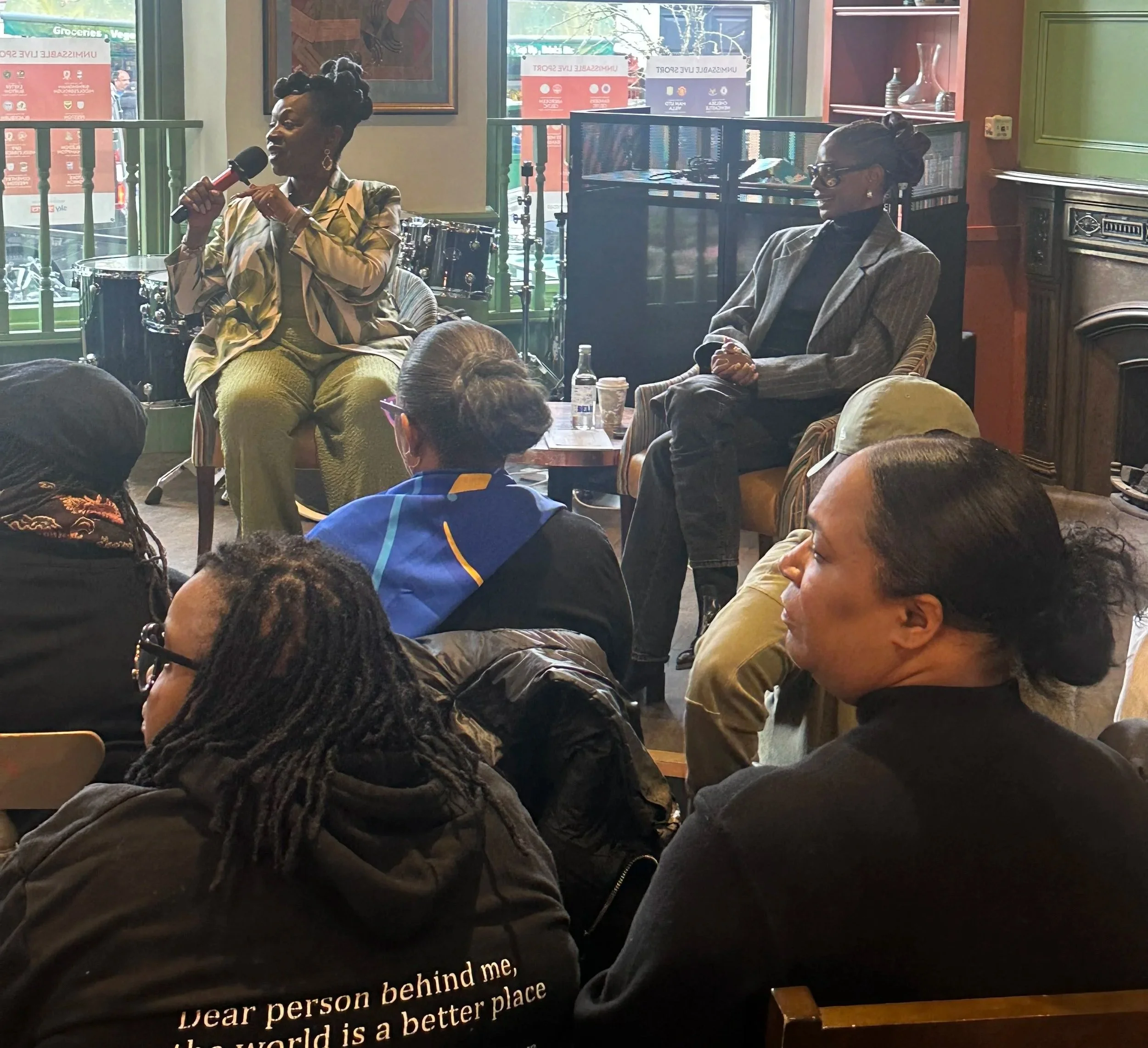
Pictured: Angie Greaves and Zeze Millz
It is against this backdrop, that I found myself being personally invited by her to the House of MOBO venue on Saturday 28 March, for (what I found to be) an incredible 2-hour panel event in which she was interviewed by British television personality Zeze Millz. A former Celebrity Big Brother UK contestant who has fronted shows on the likes of Amazon, ITV and Channel 4, Zeze is evolving into a prominent figure that is evidently on her ascension through the upper echelons of British media. Boldly using her voice on national platforms like “The Breakthrough With Zeze Millz” (aired on ITV), she has discussed topical issues such as colourism. Zeze explained to me during our interview that such important issues “need to constantly be brought to the front, as these are things that have affected me, and can affect younger generations and my peers… calling out the establishments – its important”.
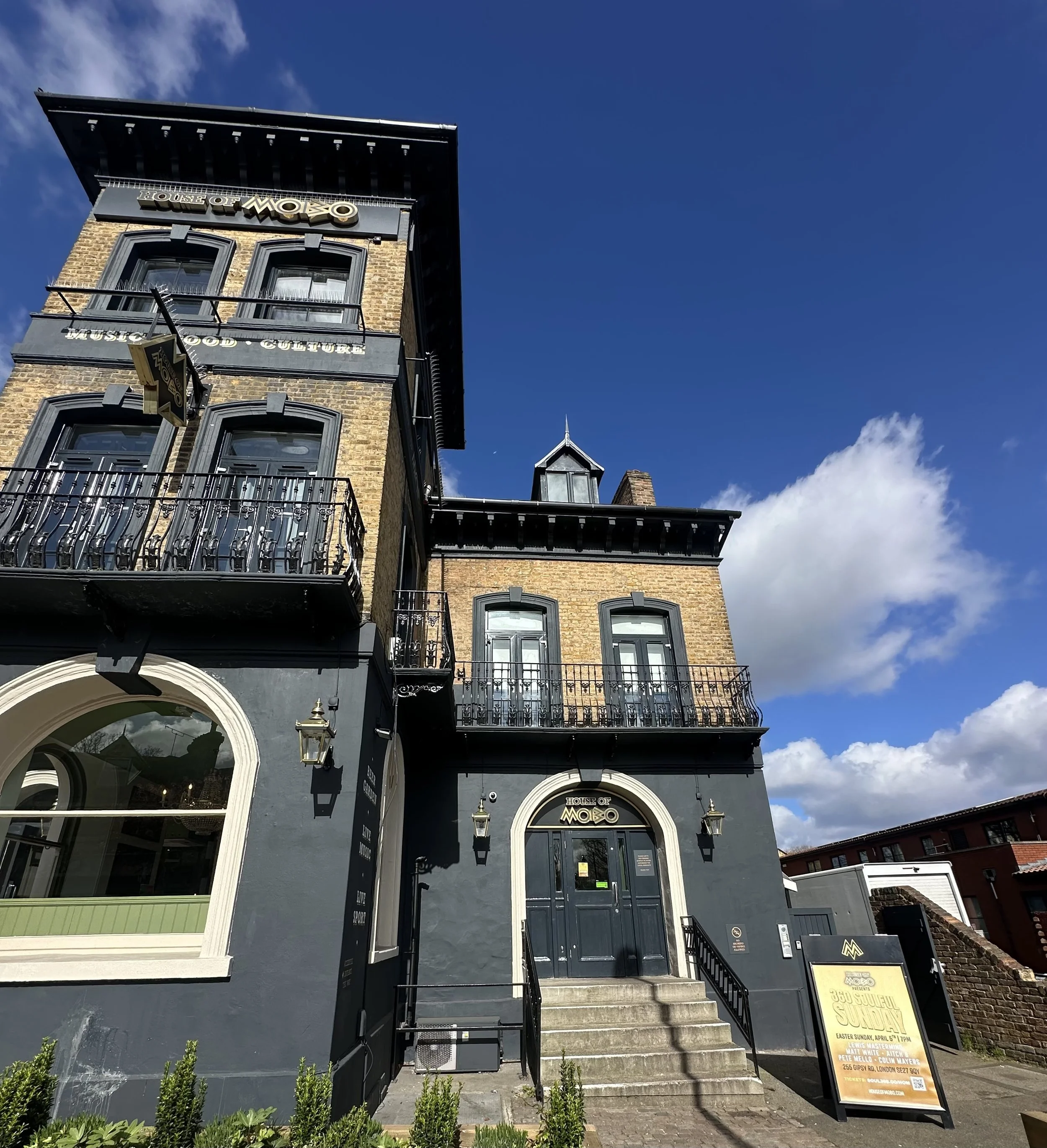
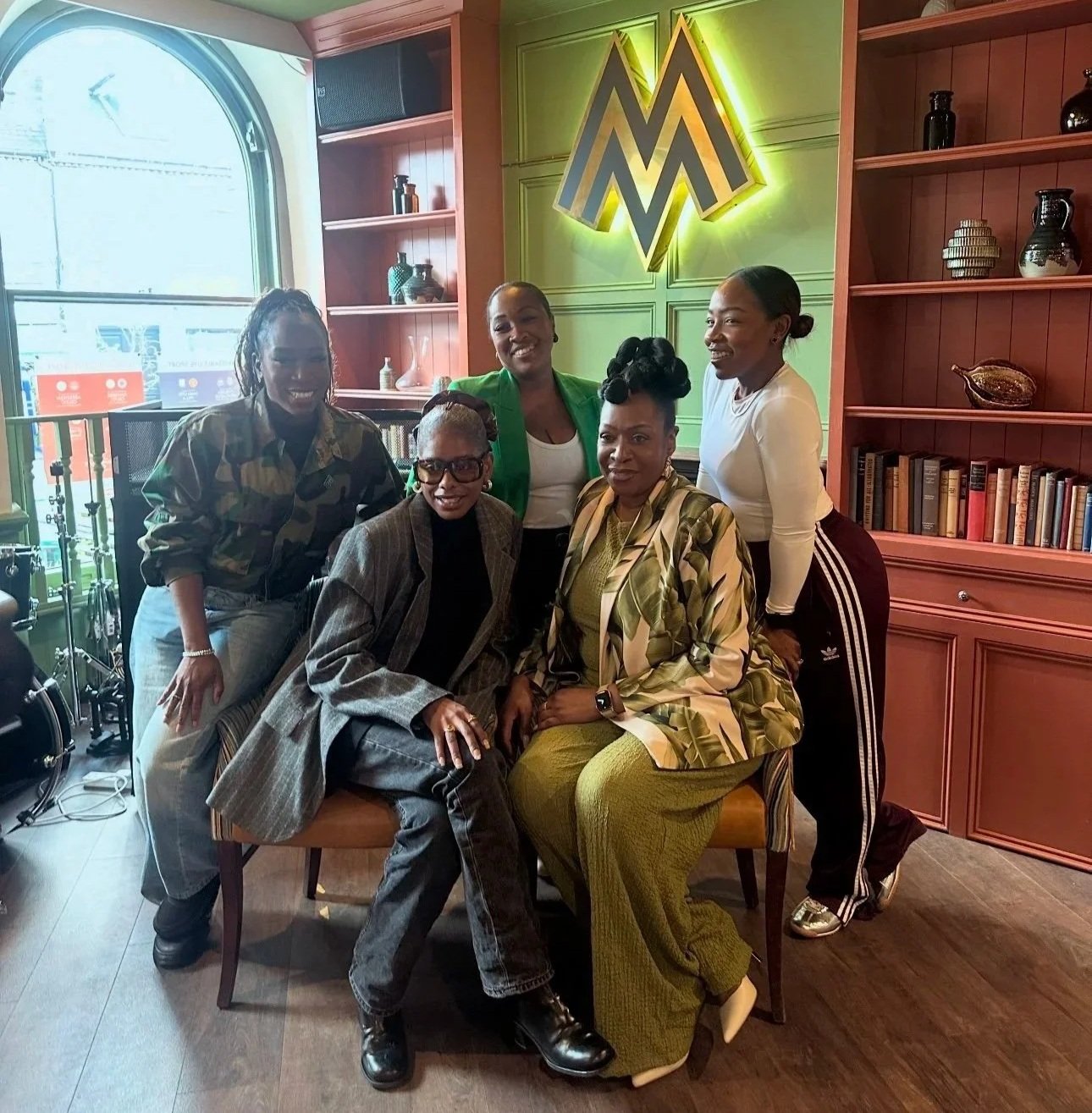
House of MOBOs Venue (London, UK)
Open only to women, this intimate event was in partnership with BelEve, House of MOBOs, and Palmer’s UK (and held in celebration of International Women’s Day). The gathering provided a safe space for Angie and Zeze in this homely environment (built as a monument to celebrate Black British success throughout history) to have an important and rare intergenerational dialogue centred around how Angie has sustained a long career in radio and media. Through their specific lens as Black-British women, they closely examined a wide range of topics - including race and gender barriers Angie has navigated, along with the discipline and resilience needed to build a lasting career.
House of MOBOs Venue (London, UK)
But before delving into the crux of the conversation, and to truly understand why this forum by Zeze and Angie is so significant, it is important briefly provide some context on the state of affairs and the issues at play… Using the UK music industry as a case study of the disparities that exist within the creative industry, the ground-breaking Black Music Means Business report (which is the first report of its kind in Europe, and likened black music to “gold”) revealed the following: Black Music is estimated to make a commercial contribution of 80% and £24.5 billion out of a total £30 billion UK market (across 1994-2023). The report points out “There is a lack of support for Black Music creators and executives with a disconnect amongst grassroots Black Music scenes across the UK.” Ultimately, it is forwarded that change is needed to “build a fairer, more inclusive and diverse music industry”. I asked Angie on her perspective on this, she frankly acknowledged that “we live in a systemic world; racism is systemic.” Because of this, she believes “there is a responsibility to drive it forward and put the messages out, whilst enjoying the jobs we do”.
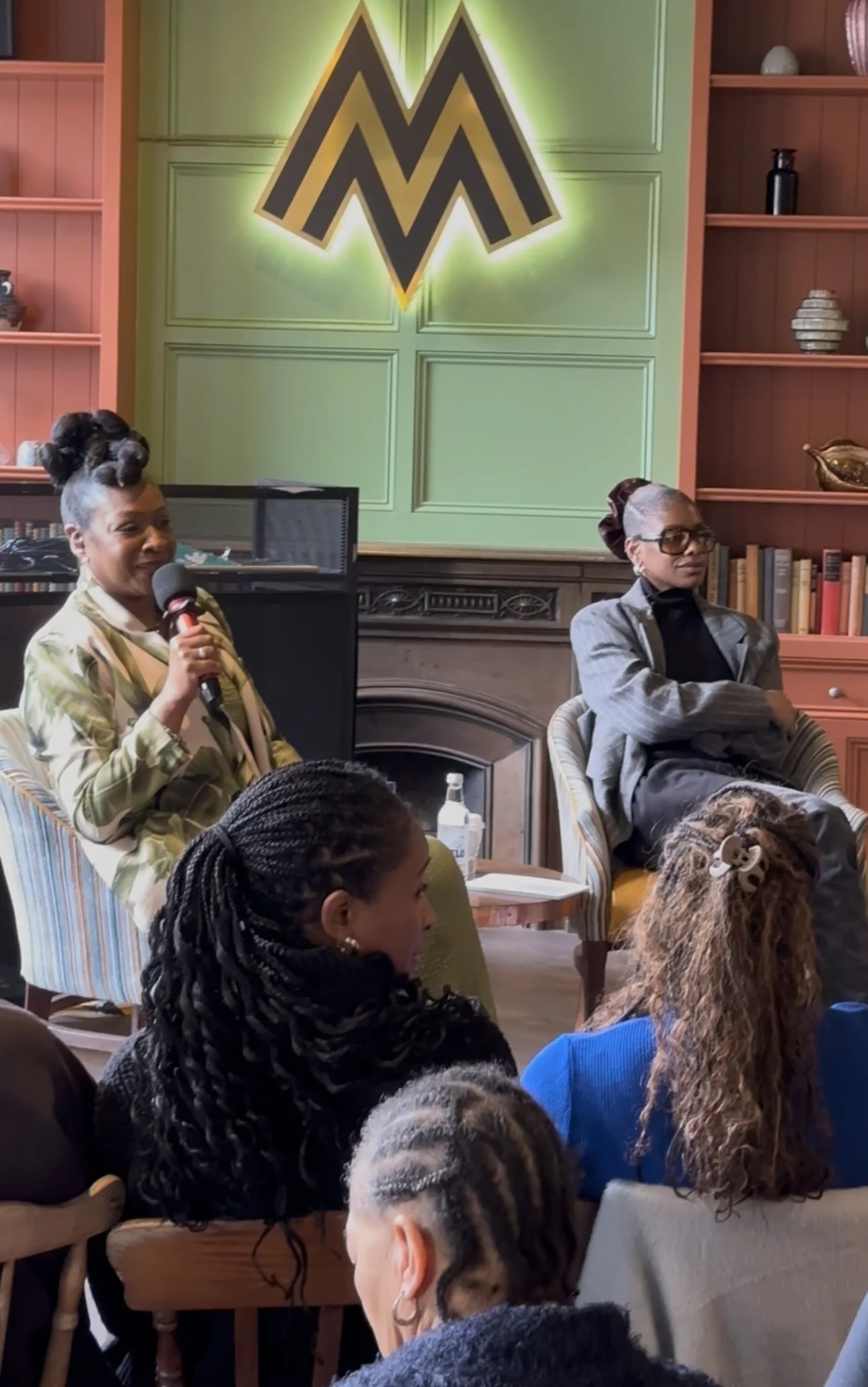
Pictured: Angie Greaves and Zeze Millz
Top Takeaways From Our Time Together
To best highlight the salient points from the candid and comprehensive conversation (which was inclusive of an interactive Q&A with the audience), I have thematically identified three core topics that were discussed at length by Angie and Zeze.
1. Gatekeepers Within The Industry: Fact Or Fiction?
For the purposes of this article, the term “Gatekeepers” is a colloquial expression referring to those in positions of power that deliberately (and with ill-intent, at times) withhold information or severely limit access to opportunity for others. For some time, the existence/presence of Gatekeepers has been an ongoing topic of discussion in the (Black) British media space, and the extent to which they are stifling the expansion of the overall ecosystem by restricting the number of Black Brits who are able to enter within media/entertainment spaces. Some however argue that Gatekeepers don’t actually exist in tangible terms i.e. there being designated agents who actively operate to restrict progression of certain demographics.
This phenomenon is something I explored with Zeze during my individual interview with her - and I found her reflections on this matter to be very insightful. We discussed her stint in Los Angeles and my time in Atlanta, drawing comparisons of how supportive we found Black-American communities to be (in the context of the creative industry/black arts). Specifically, with regard to how they openly share information and opportunities amongst themselves. While unpacking this stream of thought, Zeze had the following to say: “Here (in the UK), we’ve been trained to have that one-in-one-out kind of vibe; Atlanta is Black Hollywood. It’s not so much crabs-in-a-barrel… Whereas here (in the UK), if you want to transition into mainstream, it’s one black presenter at a time.”
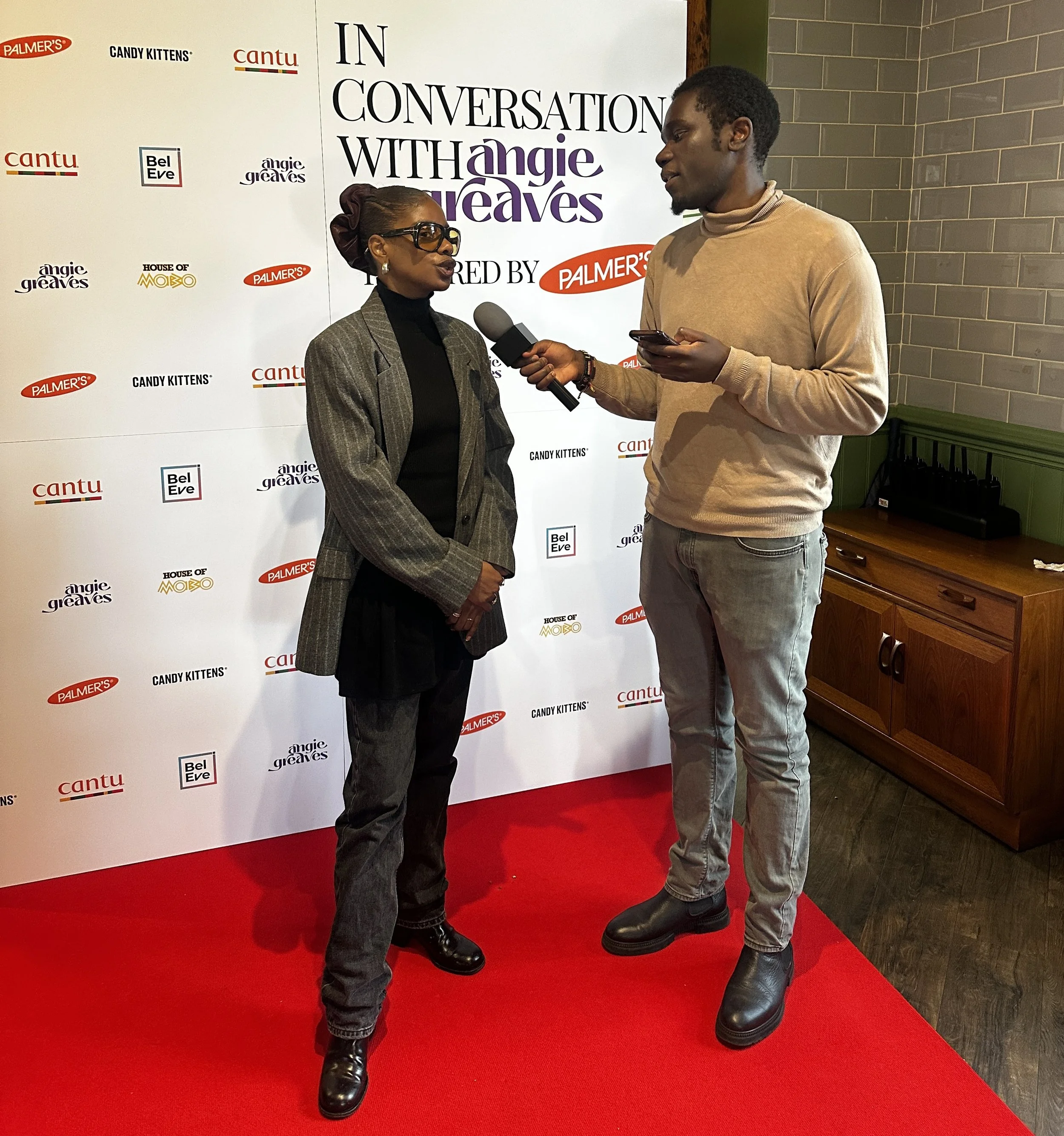
Pictured: Zeze Millz and Norman Busigu
We both agreed that our communities (in London) do not always share this same spirit of comradery and collaboration. For Zeze (Black) American spaces (as she’s experienced them by comparison to ours) are “less gatekeeper-ish” and “less cliquey” – and I wholeheartedly agree with her perspective on this. This is not to deny the incredible work being done by entities like the MOBOs, BelEve and others across the country that are working hard to bring the Black-British community in closer cohesion. However, this does not take away from the fact that this issue is something that we both believe needs to be urgently addressed, if things are to move the right direction.
Reflecting on how the media landscape has transitioned over the decades, Angie has observed more “unity” amongst the younger generation, who (she believes) are better connected to each other - because of social media. For her, social media has also given young people the canvas to display creativity “on their own terms” to the world, in a way that was not possible in the analogue (pre-digital world) which she existed in. Social media in turn, arguably, has been a significant mechanism that is shifting the pendulum of power away from Gatekeepers and toward creators. For Angie, addressing the issue of Gatekeepers therefore in part lies with the community, to intentionally make it a responsibility to pass information and opportunity amongst ourselves, and be the change that we want to see. This is something that we can all do in our own individual capacities. She finished this point with by posing a powerful rhetorical question for the audience to ponder upon: “if you aren’t sharing, then what’s it all for?”
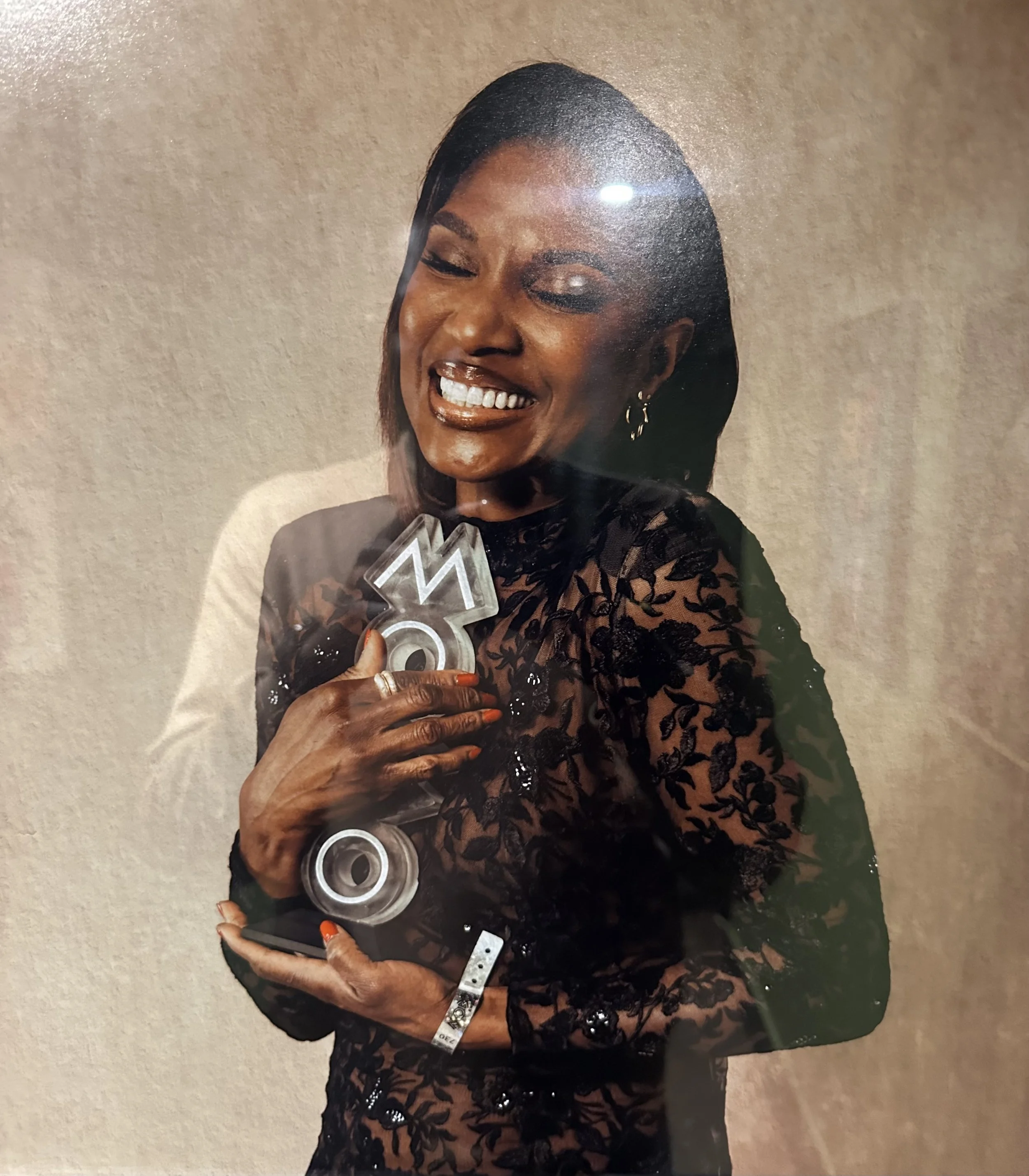
House of MOBOs Venue (London, UK)
2. The Pitfalls Of Pursuing Online Virality & Instant Success
In this constantly changing digital/social media space that we are all attempting to navigate without a playbook, attention spans are decreasing and the speed at which popular culture moves appears to be faster than ever. As a result, the sensationalism of seeing someone “blow up” overnight and having their life changed over a piece of content, can create an (unhealthy) desire for instant gratification amongst creators. Such an approach however, does not come without its negatives, with Angie going so far as to warn the audience to not “become a slave to the algorithm” (i.e. chasing trends and viral moments without clarity and purpose). Interestingly, for Zeze, one of the worst outcomes is having a viral moment. While providing detail on her thoughts, she explained the difficulty and internal pressure that can come with trying to sustain such rapid traction, given the fact that said person(s) truthfully may not be ready to receive the newfound attention/opportunities.
For Angie, the reality is simple – in her words “anything easily acquired can be easily lost”. The general advice from both women was to “build steady”, “hold onto your values”, and “be authentic” in your pursuits. As someone who has successfully sustained a three plus decade career, Angie also stressed the importance of “keeping your spark” i.e. your passions and love for the crafts/disciplines you commit yourself to. But within this, Zeze highlights, not being afraid to “pivot”, as she did from her early dreams of being an actor.
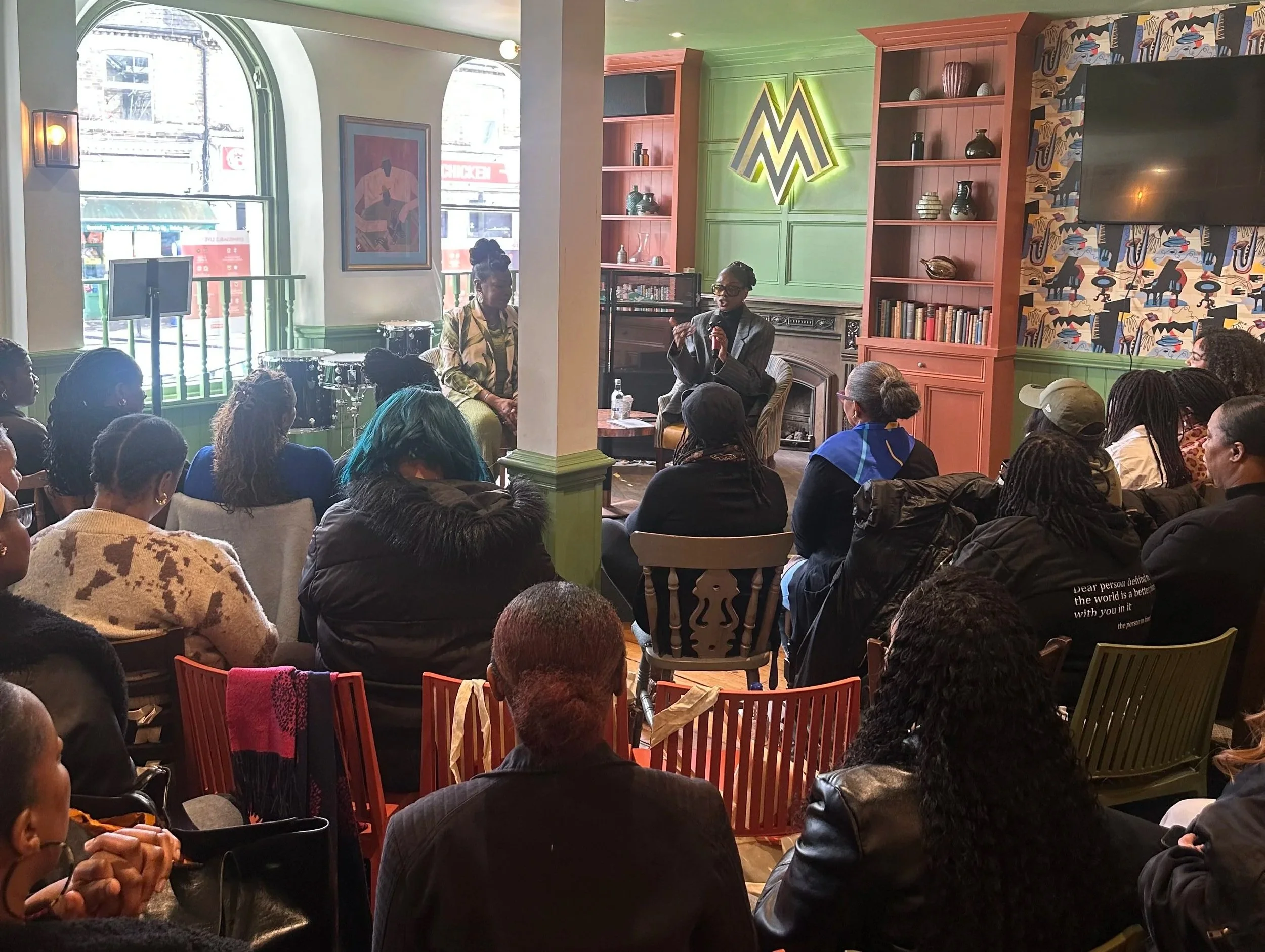
Pictured: Angie Greaves and Zeze Millz
A pearl of wisdom that I found to be particularly poignant that both women highlighted, was the importance of giving grace to yourself and protecting your peace while on your journey. Specifically, not making it your responsibility to feel as if you need to make content to “address everything” topical that arises, as this could lead to burnout/emotional fatigue, in one form or another. A recent example being the widely reported incident from the 2026 BAFTA Award Ceremony involving Oscar winning Actor Michael B. Jordan and Delroy Lindo – which was upsetting and distressing to Black communities worldwide for many reasons.
From this, both agreed upon the need to “switch off” from the virtual world, and to remember to never forget that this is meant to be fun! Beyond our online/work profiles (or even personas), we are real people, and it is important to take care of yourself, they highlighted. Going further, they repeated the importance of never forgetting to “love yourself”. A hint of caution was also given that aggressively pursuing online success can potentially make you forget these things, and lead to a decline in one’s mental health.
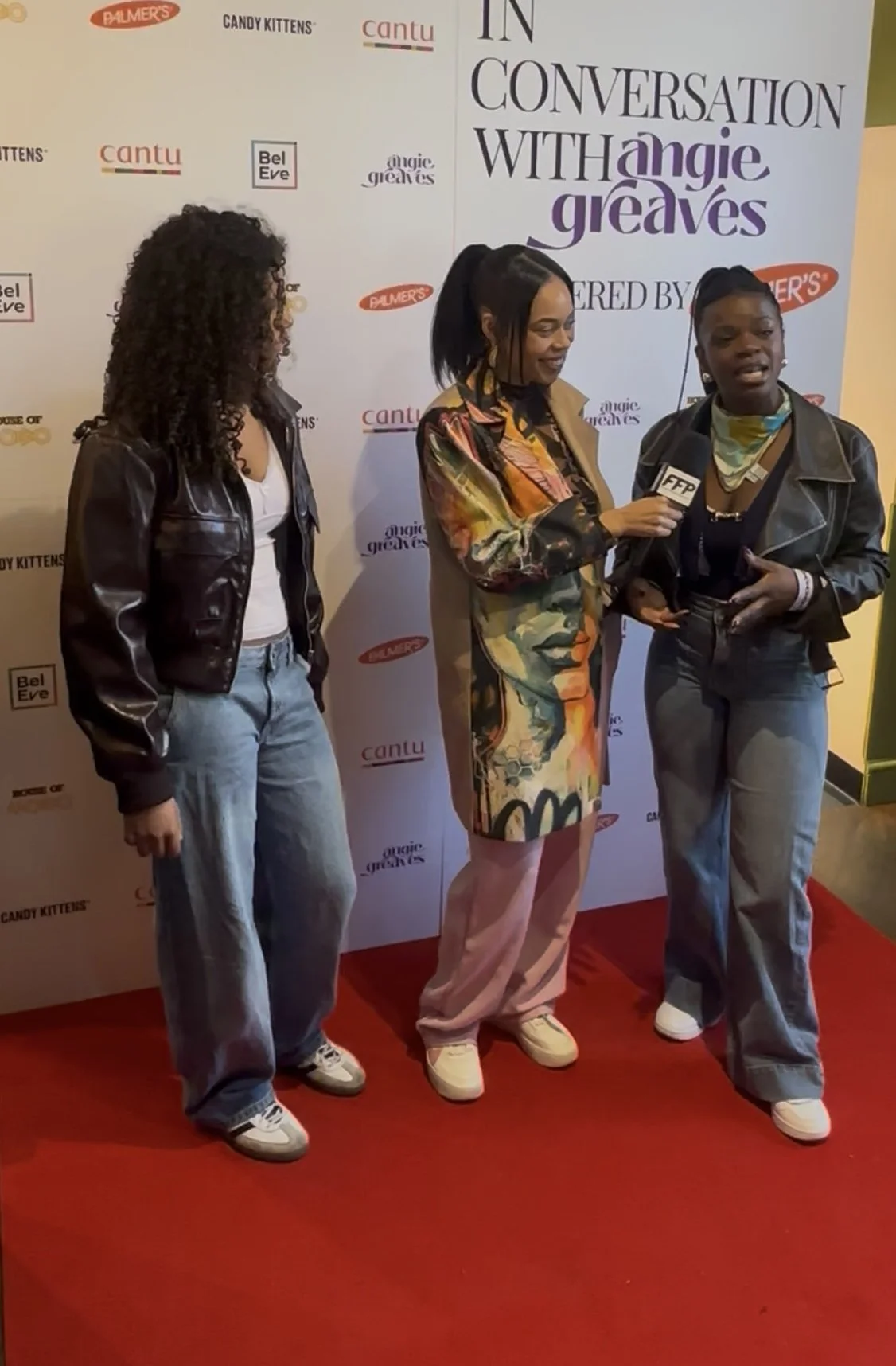
House of MOBOs Venue (London, UK)
3. The Decline Of DEI & Its Implications
Both panellists agreed that there has been much public discourse on this controversial matter, with Zeze expressing that she and some of her peers feel that the hands of time are reverting back to an era of how things were prior to the Black Lives Matter (BLM) movement. An immediate outcome of BLM, was the uptick of roles and DEI campaigns established to address in the racial inequalities that limited the hiring and retention of Black talents across industries, among other things. Angie is very aware of the challenges that exist, especially as someone who, triumphantly, is the longest running female radio presenter in the UK, and entered into the industry at a time where it wasn’t common for women to hold drive-time slots.
With a strong degree of compassion, she said “if we are struggling now, imagine what the kids are going to go through” – and one can only ponder what the impact of Artificial Intelligence will bring, as machines continue to replace humans in a working capacity… Empathetic and emboldened to make a difference, Angie firmly takes on the responsibility to help the next generation navigate the industry, explaining she never had the kind of help that she is providing through this event. To underscore the role that she now plays, she made a powerful analogy, using potholes as a metaphoric reference to obstacles that will be encountered: “I’ll go in the pothole first so that you don’t have to go so deep. You do have to go in it though”, acknowledging that while we will all stumble and face challenges (falling in the pothole). Optimistically, she explains that through standing on her shoulders, “it will be quicker for you to get out”, by virtue of the received wisdoms that are accumulated and passed on.
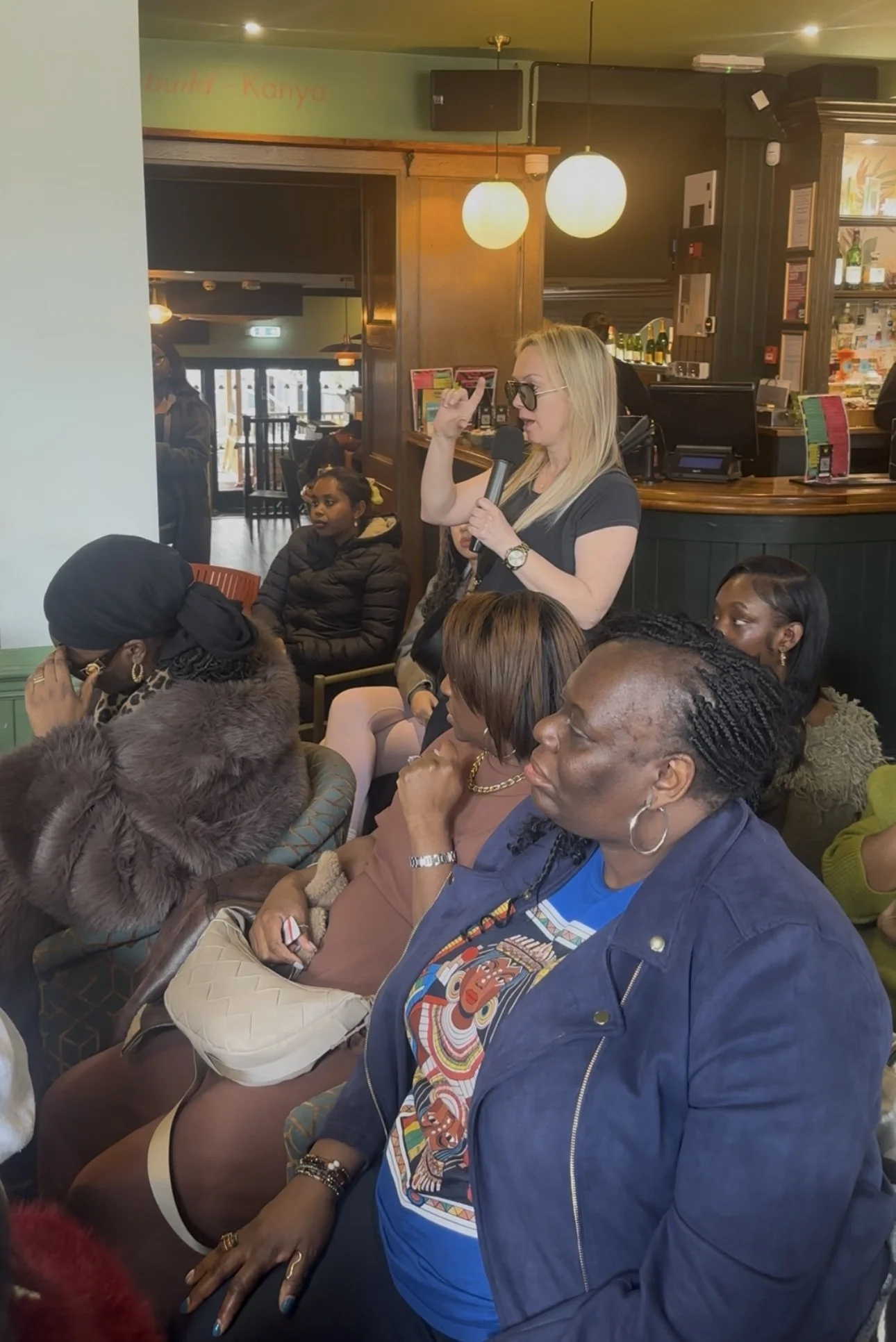
House of MOBOs Venue (London, UK)
Within this topic of discussion, often arises the notion of tokenism: being the “only one”. And this is something I explored with Angie. Speaking on the duty she feels those in such a position have, she expressed the followed: “If you are the only one, that is a responsibly and you need to take it very seriously”. That said, in providing honest reflection, she admits that “being the only one is tiring”. Hence, why it is imperative that “you’ve got to have support around you.” This appears to be a real is driving force as to why she is genuinely committed to helping others and contributing to the growth of the overall ecosystem, and seeing others rise with her.
Within this, also came the challenge of “speaking up” as a black woman when confronted with things that don’t seem right in a given situation – a scenario which Angie admits, is hard at times to navigate. In approaching this, she advises the importance to finding/creating safe spaces to address issues in the best way possible. Practically speaking, she also highlighted the importance of placing a focus on bringing value to whatever role you find yourself in. Also, accepting the fact that setbacks will happen along the way, so it is important to “keep going” – and ultimately understanding that every setback is an opportunity for a comeback.
House of MOBOs Venue (London, UK)